Tag Archives: financial aid

10 Steps to an Affordable College Education


college affordable

How can you assure that your student receives an affordable college education?

I received this comment on one of my blog posts from a parent:

I am so unprepared. I had no idea about the steps I should have taken. My daughter officially started class yesterday and I am struggling to figure out how to pay for it. She made above average grades and a wonderful ACT so I really figured she would get some kind of offer. She did not and we are middle class but FASFA says we make too much money. I am in such need of help and guidance.

This is the predicament of so many middle class families. Their student applies to college, is accepted, and receives no financial aid. They are stuck with the dilemma of sending them to this college and finding a way to pay, or disappointing their child and also incurring debt so she can attend.

Before you find yourself in this situation, here’s my advice on how to get an affordable college education and avoid this difficult conversation with your student.

Step 1—Get good grades in high school

There is nothing more important to receiving good financial aid than good grades. These habits actually begin in middle school and build until your student applies to colleges. Good grades represent a commitment to education and academic excellence—two things colleges look for in an applicant.

Step 2—Take AP Honors and/or Dual Credit classes

Colleges look for students who take these college-level courses increasing your student’s chances of merit aid. But the best benefit of these classes is the cost savings you will realize. If your student takes AP classes, takes the test and does well, he will receive college credit. Dual credit courses are taken during high school and once completed, count for college credit. Comparing the cost of an AP test or Dual Credit course to the cost of a course in college, you save thousands.

Step 3—Score well on the PSAT

If your student scores well on the PSAT and is a National Merit finalist, the financial flood gates from colleges will open. Your student should take this test as seriously as she does the SAT or ACT. It’s more than a practice test!

Step 4—Score well on the SAT and/or ACT

Standardized test scores will have an effect on the college’s financial aid award. Good grades, a good essay, and good test scores will make you a desirable candidate for admission which can mean merit aid.

Step 5—Apply for scholarships like it’s your job

Your student’s #1 job in high school is to apply for scholarships. Don’t wait until senior year. There are scholarships available for all ages. The more he applies, the better his chances to win. Keep applying during college too!

Step 6—Apply to the right college

If your student is at the top of the applicant pool, it is more likely she will receive financial aid. Colleges reserve merit aid for the students they want to attract. Applying to an elite college where there are hundreds of applicants with better grades and test scores the chances of being awarded financial aid are slim. But if your student applies to a college where most of the applicants scores and grades are average and your student’s are stellar, the chances of receiving financial aid are good.

Step 7—Search for colleges with good financial aid footprints

Use sites like CollegeNavigator and CollegeData to find colleges that award a high percentage of financial aid to admitted students. If your student applies to a college that offers a low percentage of aid, you are gambling with your financial aid. A sure bet would be a college that meets a high percentage of a student’s financial need.

Step 8—Compare financial aid awards and appeal

Once your student receives financial aid awards compare them with one another. Use the top awards to bargain with the college your student most wants to attend. Appeal the awards and ask for more aid. If you don’t ask, you won’t receive. Colleges have award money available from those students who declined admission.  If they really want your student, they might increase the award.

Step 9—Work during high school and college

You would be surprised at how much money your student can earn during high school. If he or she is too young to work at traditional jobs, there is always babysitting and yard work. Be sure you put the money in your own account, however. Student savings will decrease your EFC substantially. And during college, your student should work. Studies show that students who work are often better students and time managers.

Step 10—Go for the gold

If your student is open to attending a tuition-free college your worries will be gone! These colleges are not for everyone but they are worth investigating: 8 Colleges Where Students Attend for Free.

Best advice: Determine before your student applies to college how much you can afford to pay if he or she doesn’t qualify for financial aid. Even if you follow all of these steps, be prepared for this possible outcome. If you do, you and your student won’t go into debt or be disappointed when the answer is no.


Paying for College: The Best Strategy


paying for college

Last night I spoke with a relative whose son just had a baby. The parents were already developing a strategy for paying for college. When she told me they were planning to enter their child in beauty pageants to foot the bill, I had to interject. I told her this was certainly going to cost the parents money and  the rewards would probably not be worth the effort. Then I told her the best strategy to pay for college: good grades.

According to an NACAC survey, colleges rank the grades in college prep courses, the strength of curriculum, and grades in all courses as the top factors in the admissions decision. But here’s the added bonus, those grades can also net a student huge rewards in financial aid. Many colleges will award automatic full-ride scholarships to students with high GPAs and class rank.

Instead of placing all your college money “eggs in one basket”, in addition to saving, use these three strategies to create a plan that will pay the college tuition bill:

Focus on academics

The tone is set freshman year. Make it a goal to choose the pre-college courses (AP and Honors) and get the best grades possible in these courses. If your student does poorly freshman year, it makes it difficult to catch up later. All throughout high school, your student should place high value on academic progress: commit to study, prepare for class and tests, seek help when needed, and put academics before any other activity.

Apply for outside scholarships

Start applying for scholarships as early as possible. Waiting until senior year is a poor decision. There are scholarships available for all ages. It should be your student’s “job” during high school to search and apply for scholarships. An hour a day can produce huge rewards and start racking up funds each year to make a huge dent in the tuition bill.

Chose the colleges with the best financial aid footprint

What does this mean? Look for colleges with a high percentage of financial aid. Every college reports the statistics related to their financial aid profile. These statistics can tell you how generous they are with their scholarships and grants and also the percentage of students who receive help with their tuition.

The best resource available for these statistics is College Navigator. You can enter the name of the college, or search using criteria such as location, size, and degree plans. Once you’ve pulled up the data, you can use it to compare colleges.

If you use these three “paying for college” strategies, no matter where you are in the process, your student should be able to graduate from college with little or no debt. Additionally, you should be able to pay for college without borrowing or dipping into your retirement (which I never recommend).

Wednesday’s Parent: Why Can’t I Attend My Dream College?


dream collegeThis past week, I’ve been discussing the financial aid awards and how they affect your student’s college choice. When those award packages arrive, it may be time for some tough love. The award may not be enough to justify sending your college-bound teen to her dream college. If your student asks this question, “Why can’t I attend my dream college?”, be prepared for an answer.

I had to answer that question when my daughter was accepted to a college she had dreamed of attending since middle school. She worked hard to be accepted and when her offer of admission arrived, she was beyond excited. Her dream had become a reality–until the award package arrived. Then, she was crushed. The only aid they offered was federal student loans. She had been “gapped” and I knew we were going to be forced to cross that college off the list. Yes. She had applied to other colleges that offered substantial aid and scholarships. Yes. They were colleges she wanted to attend. But they weren’t her first choice and her dream college was within her grasp. Or was it?

I had to have a very tough conversation with my daughter. I explained to her the cost of the college was way beyond our ability to pay. We discussed student loans, parent loans and appeals. But we both knew that racking up debt to attend was not logical or financially practical. We had placed all her dreams on financial aid and when it didn’t measure up to our expectations, we were forced to move on; with many tears, much sobbing and tremendous disappointment.

We took a look at the other offers of admission. With scholarships and aid, she would only have to take out minimal student loans; making it manageable to pay back after graduation. One college even offered a full-ride scholarship. It was clear that these colleges wanted her and demonstrated it by backing it up with generous aid packages. There were some strong contenders among the other colleges and it was time to take a second look; and we did.

We visited the colleges that offered the greatest amount of financial aid. She toured the campuses (some for the first time) and was able to see herself at two of the colleges that offered similar aid packages. What was the deciding factor? Location. She chose the college that was in the same city as her dream college. Part of the lure of the dream college was the location and since this was at the top of her list, it tipped the scales for her.

What was the outcome? She fell in love with her second choice college. It was a perfect fit for her academically, socially and financially. But the real payoff was at graduation when she had minimal student loan debt and was able to start her life without the burden of unmanageable student loan payments. Our smart decision paid off; and she understand why she could not attend her dream college.

What is Financial Aid Front Loading?


My fellow college expert, Wendy David-Gaines, shared some insight into this college practice. This article originally appeared on her site: 5 Questions to Ask About Financial Aid Front Loading. 

financial aid front loading

If you think your washing machine is the only front loader, watch out because your college may be taking you to the cleaners. Front loading happens when colleges make their most generous financial aid award offers to applicants as a lure to attend. When students return the following year they may find their school has dropped their previously awarded grants and scholarships. Thousands of dollars may have been lost to the common practice of front loading.

“About half of all colleges front-load their grants, according to financial aid expert Mark Kantrowitz, who analyzed data from the National Center for Education Statistic’s Integrated Postsecondary Education Data System,” according to DailyFinance.

The lesson for parents and their college-bound students is to carefully scrutinize, analyze and question each item in their financial aid awards before bothering to compare one college’s offer to another. It may turn out that freshman year is a best deal at one place but if the total years until graduation are tallied, another choice may be the better bargain.

[ctt title=”Is the college front loading on your financial aid award to lure your student?” tweet=”Is the college front loading on your #finaid award to lure your student? http://ctt.ec/0dJdS+ via @suzanneshaffer” coverup=”0dJdS”]

Here are five questions to ask the college financial aid officer:

Is the grant/scholarship renewable and if so for how many years? What you want is the money to continue until the student graduates. Bear in mind it is taking longer, four to six years, for those who graduate to do so. Find out the maximum number of times the award will be made.

What are the strings attached to keeping the grant/scholarship? It’s important to understand the terms of receiving free money awards before acceptance to make sure the student can and will perform them. He may have to keep his grades up, play an instrument, or be a member on a team. Find out the eligibility requirements each year including any additional paperwork necessary to keep them.

If the grant/scholarship is lost, what will replace it? Often student loans are the college’s substitution plan. However, there may be other grants/scholarships available. Ask about them and the application process. Be prepared to continue searching for these and have a college finance Plan B.

Will the college bill increase in following years and if so, by how much? Those renewable grants/scholarships may no longer cover the same portion of college costs if tuition rises. See what if any cost components like tuition/fees and room/board are capped or held at the freshmen level.

Will the grant/scholarship be increased to keep pace with any raised college costs? Be aware most colleges will not match tuition increases or increase free money aid when tuition rates increase. However, the college bill must continue to be paid.

Bummed About Your Financial Aid Award Package?


financial aid

Picture this. A teenage daughter with her heart set on attending an expensive private college. A mother who knew it was simply not affordable unless the financial aid award package was substantial. Waiting, waiting, and more waiting for the package to arrive after she heard she was accepted.

I’m sure this is the scene in many of your homes today. As a parent, you know the financial realities of paying for college. Your student, on the other hand, is thinking with her heart. If she’s like my daughter, she can’t see the picture from a financial perspective. After waiting for the award to arrive, my heart sunk. When her first choice college offered her “zero” financial aid other than student loans, I knew we were headed for a tough conversation.

If you’re bummed about your financial aid award package, what can you do?

First, compare awards from all the colleges

My daughter applied to ten colleges. Not all of them offered aid beyond student loans, but several of them offered scholarships and school grants. Sit down and compare the awards. Many colleges have implemented the Financial Aid Shopping Sheet. If not, you can download the sheet and complete it yourself for each college. Look at the bottom line. Which college’s package gives you the best value: it’s what you can afford to pay and your student will graduate with minimal debt (if any)?

Second, if there are larger awards from other colleges, use them as leverage

Since one of the colleges that offered my daughter admission also offered her a full-ride scholarship, we had some leverage. If the college that your student is dying to attend doesn’t offer a substantial aid package and one of the other colleges she applied to does, use those figures for leverage. Have your student contact the college and let them know it is her first choice, but she needs more aid to be able to attend. Mention that other colleges are offering more aid and you would like them to at least match these offers. These appeals are common and most colleges will consider upping the ante if you just ask.

Third, if the college won’t offer more money, consider one of the other colleges that offer the best financial aid

After appealing the aid, and not being satisfied with the college’s decision, it was time for some tough love. I knew it was going to break her heart, but I had to be the logical one. If the money picture is bleak and her first choice college won’t budge, it’s time for your student to consider one of the other colleges that did offer financial aid. Take a deeper look at the other colleges, revisit if you have to, and make the final decision.

As it turned out, my daughter fell in love with one of the colleges that offered substantial aid. It was a perfect fit for her, and she was able to graduate with a very small amount of student loan debt. She thanks me every day that I led her in that direction. If she had attended her dream college, even with the outside scholarships she had won, she would have graduated with close to $75,000 worth of debt. It was a tough conversation, but one I’m glad we had.

Could this disappointment have been avoided? Absolutely. I should have had a serious talk with her before she applied about what we were willing to pay and what we expected her to pay. This way, she would have known that this college, although it was her dream to attend, was completely out of our financial reach.

Art Imitates Life: Opening the Financial Aid Award Package


What’s more scarier and nerve-racking than waiting for the college decision? Opening the financial aid award package. Families all across the country are waiting for the arrival of their financial aid award, knowing that their student’s ability to attend college depends on the amount of the award.

This is such a universal anxiety among parents, television shows have written episodes around the issue. My three favorites, Gilmore Girls, Dawson’s Creek, and The Middle paint a picture of how the award letter affects college attendance.

Dawson’s Creek

Joey Potter is accepted to a high-priced private university in New England. But accepting the offer of admission depends on her financial aid package. When she receives it, they didn’t offer her a full ride. She and sister meet with the admissions counselor, who tells them that since their business is doing well, Joey doesn’t qualify for financial aid.

financial aid award package

The counselor says, “Nearly everyone these days borrows some money to pay for college.” Joey replies, “I don’t want to do that. i don’t want to graduate with debt.”

Gilmore Girls

As graduation day approaches, Rory learns her financial aid was rejected. The irony, her mother received some financial assistance from her grandfather that altered the FAFSA results. Even though they were financially unable to pay, that money took them out of the running for aid.

financial aid award package

Rory’s mother explains, “We didn’t get financial aid for Yale. No scholarships, no hardship money, nothing.” Devastated, Rory questions, “I don’t understand what happened. Send them proof. A bank statement. I’ll take a student loan out from the bank. That’s what banks are for.” Her mother counters, “I don’t want you to be buried by loans the day you graduate from college.”

The Middle

Sue Heck opens her financial aid package and has problem deciphering it. She’s not alone. Many students and their families have difficulty understanding the award letter and don’t know how to compare awards from different colleges.

financial aid award package

As Sue is opening the package, her parents are screaming, “What’s it say!” Sue responds, “I don’t know. Is it one year or four years?” Her father grabs the letter and immediately exclaims, “Yes! They’ve given us everything we needed. We’re poor. If we had worked a little bit harder, none of this would be possible.”

In each of these episodes, the students managed to attend their first choice college without incurring debt. Two from generous benefactors who paid their tuition and one who received a full ride. But there are underlying realities that parents must face:

1. The college decision is first and foremost a financial one–I’ve said it before and I will say it again: have the “money talk” before you apply to colleges. This avoids any disappointment if the college does not offer enough aid to cover your costs.

2.  Even though a college offers admission, it doesn’t mean you will receive financial aid–Colleges use the money to attract the most desirable students. If they don’t consider that your student is desirable, they won’t offer aid or they will gap you.

3. Families anguish over the high cost of college–College has become increasingly expensive and it’s clear that the decision to attend college is not based on the education alone.

In the next few weeks I will be sharing my own personal experiences how to decipher the award package, how to compare with other colleges, and how to determine if a college is “gapping” you. Before the letter arrives, be prepared to take an honest look at your finances and have a discussion with your student about the weight the package plays in their acceptance of admission.

FAFSA Week: Reporting Parent Information on the FAFSA

Reporting parent information on the FAFSA

Reporting parent information on the FAFSA might make you want to pull your hair out.

If you are completing the FAFSA, some terms can confuse you. Today’s post addresses those questions in an effort to help you understand them more clearly and fill the ambiguous categories like divorced, separated, living together but not remarried, divorced and living together, separated and living together, and stepparent married to biological parent.

Here are some detailed articles that will help you discern which FAFSA parenting category you fit into.

From TeenLifeMedia, “How Divorce and Separation Can Affect Financial Aid”

When students apply to college, there are many forms to complete. And if they are applying for financial aid, the FAFSA is No. 1 on the list. This form asks the obvious questions: name, date of birth, Social Security number, address etc. It also asks questions about parents’ financial information to determine financial aid eligibility.

If you are separated or divorced, this part of the FAFSA raises many questions:

  • How will colleges treat the income of two separate families?
  • Which parent’s income is used for determining the expected family contribution, or EFC?
  • Do both parents have to report their incomes?
  • What do the words “custodial parent” mean?

Read the entire article for clarification.

Studentaid.ed.gov published a PDF, “Who is My Parent When I Fill Out the FAFSA”:

Maybe you know you’re considered a dependent student* by the Free Application for Federal Student Aid (FAFSASM), and you’re supposed to put information about your parents on the application. But what if your parents are divorced? Remarried? What if you live with your sister? Whose information should you report?

Below are some guidelines that might help. Unless otherwise noted, “parent” means your legal (biological and/or adoptive) parent or your stepparent. In addition, the rules below apply to your legal parents regardless of their gender.

Download the PDF for instructions on how to complete this section

EdAdvisors Network addresses the issue of divorce and separation, “FAFSA Tutorial: Divorced and Separated Parents on the FAFSA”:

The marital status and living arrangements of a student’s biological and adoptive parents determines whether the Free Application for Federal Student Aid (FAFSA) requires financial and demographic information from one or both parents.

These topics are addressed:

  • Who is Considered a Parent?
  • Parents who are Married to Each Other
  • Parents who are Unmarried
  • Who is the Custodial Parent?
  • Stepparents
  • Increasing Aid Eligibility

Read the tutorial for detailed explanations of each category

SmartAsset.com provides parents with an easy-to-understand guide and some examples, “Divorce, FAFSA, and the Financial Aid Process”:

The Free Application for Federal Student Aid, known as FAFSA is the Hydra that strikes terror in the hearts of even the most financially savvy parents. Rendering otherwise competent adults mumbling, muttering wrecks. Creative hyperbole aside for the moment, most people are intimidated by FAFSA to some degree but those preparing the form as divorcees face a special kind of torment.

There are several problems with FAFSA when divorce is involved, none of which are insurmountable but lack of understanding can tear open long healed wounds and foster a renewed sense of acrimony. However, knowing the rules of the game can make life and FAFSA easier.

To understand the rules and see some practical examples, read this article


Amping Up for the FAFSA


amping up for the fiefs

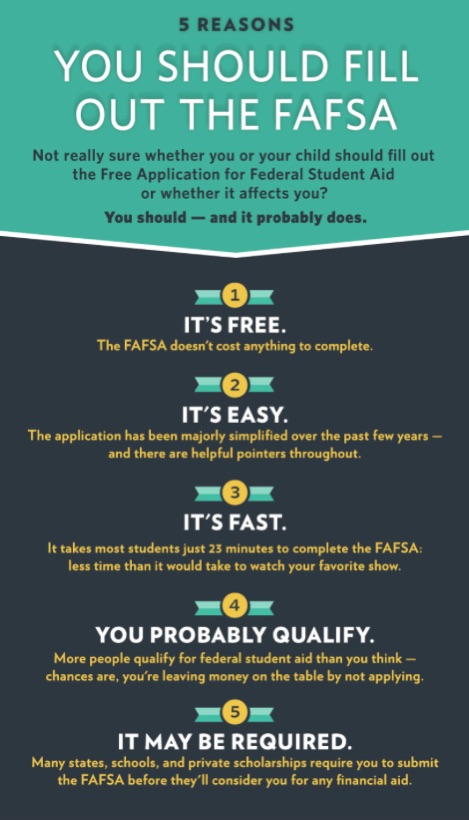
If you have a college-bound teen, the FAFSA is how you celebrate the New Year. Honestly, not many parents celebrate filling out the FAFSA, but you should. The FAFSA is your golden ticket for college money. Without it, your student won’t get a dime (even many scholarships ask if you’ve completed the FAFSA).

This should be your FIRST New Year’s resolution: complete the FAFSA within the first week of the new year. It becomes available online on January 1st and although I can’t picture you waiting by your computer at midnight, you should make it a priority over the next few days. And while you’re waiting during the countdown, you should be amping up for the FAFSA.

I wrote an article for University Parent last year (and it’s been updated for the changes) that should help you prepare: An Easy Guide to the 2016 FAFSA. Here’s an excerpt:

If there’s a piece of advice I give parents over and over again, it’s this: whatever your income, complete the FAFSA. Many parents believe that the FAFSA should only be submitted by financially needy students. Nothing could be further from the truth. Colleges use the FAFSA data to determine all types of financial aid, not just need-based. If your student doesn’t complete the FAFSA, he won’t qualify for any aid from the college or the government, including student and parent loans. You may be able to pay for your son or daughter’s education, but why not complete the form? It’s free and you have nothing to lose.

Take a few minutes to read the entire article which includes information about FAFSA basics, the documents you will need, how to team up with your student to get the form completed, and some technical terms, definitions and changes to the upcoming FAFSA.

It would also be good to read Diane Schwemm’s post: Changes to the FAFSA.

You can’t bury your head in the sand and ignore the FAFSA. Get pumped and start amping up for the FAFSA–your golden ticket to free money for college!

5 Tips to Avoid Debt After Graduation


debt after graduationAccording to US News, graduates from the class of 2013 averaged just under $30,000 in student loan debt. This is a lot of money considering the average graduate from that same class had a starting salary of just around $45,000. While it may seem like an impossible task to pay back these loans, if you make smart decisions about your finances you can slay the startling student loan dragon and avoid the student loan money trap. The following tips will help you pay off your student loans and avoid the crippling debt after graduation that many recent graduates deal with.

1. Know Your Loans

If you are like most graduates who have taken out student loans, it is crucial to know the ins and outs of them. You should know your monthly payment, interest rate, and the term of your loan. Knowing this information will ensure that you don’t fall behind on your payments and will allow you to come up with a game plan to pay them back. It is also smart to stay in touch with your student loan servicer. These people can help you if you need more time making a payment, want to change the terms of your loan, or want to explore options that may reduce your interest rate.

2. Refinance

Just like you can refinance your mortgage or car loan, it is also possible to refinance your student loans. You can usually consolidate and refinance your loan or loans into one single loan with a private lender. Because many graduates now have steady jobs and a better financial standing, the private lenders who deal with refinancing may offer much better rates than the initial loan. Refinance rates start as low as 1.90% for those with a very respectable credit score though most borrowers’ rates average around 3-5%. Even if you can lower your loans by a few percentage points, you will save thousands in the long run!

3. Student Loan Forgiveness

Student loan forgiveness is essentially just what it sounds like. After a certain amount of time or under certain circumstances, you are “forgiven” for your loans and are no longer required to make payments on any remaining balance. One of the most popular plans is the Public Service Loan Forgiveness Program from the Department of Education. This plan offers forgiveness for those who work in a public sector job, like the government or a not-for-profit, who have made at least 120 qualifying payments on their student loans. Starting in 2017 you can apply for this program on the Department of Education’s website.

4. Maintain a Budget

Whether you have student loans or not, it is essential to maintain a strict budget. Mapping out all of your essential expenses and sources of income will allow you to have a better understanding of how much you can invest or save and how much extra spending money you have. There are also countless apps to help you easily track your budget and spending. Make sure to keep updating your budget as you gain a better understanding of how much money you are spending.

5. Cut Unnecessary Expenses

There are countless ways to waste money in today’s society. In order to stay debt-free as you enter the “real world” you must identify and eliminate these wasteful habits. Some examples of expenses you can cut include eating out, memberships to entertainment services like Spotify or Netflix, and spending money at bars or clubs. Once you take a look into your budget and spending habits, you should be able to choose which expenses are unnecessary and cut them out.

________________________________

Today’s guest post is from Molly Day, the creator of StudentLoanDiary.com. Molly created her blog to help her stick to her goals and encourage other people to beat their student loan debt! Molly is working to pay off $30,000 in student loan debt over the next two years!


Mom-Approved Tips: Art Imitating Life–The Financial Aid Award Letter


What’s more scarier and nerve-racking than waiting for the college decision? Opening the financial aid award letter. Families all across the country have been doing this in the last few weeks. Some with excitement…as in this video:

…and some parents are wringing their hands wondering how they will pay for the college that offered their student admission. Sometimes a little levity helps, but even in the hysterical way The Middle addresses it, there are underlying realities that parents must face.

  1. The college decision is first and foremost a financial one–I’ve said it before and I will say it again: have the “money talk” before you apply to colleges. This avoids any disappointment if the college does not offer enough aid to cover your costs.
  2. Even though a college offers admission, it doesn’t mean you will receive financial aid–Colleges use the money to attract the most desirable students. If they don’t consider that your student is desirable, they won’t offer aid or they will gap you.
  3. Families anguish over the high cost of college–College has become increasingly expensive and it’s clear that the decision to attend college is not based on the education alone.