
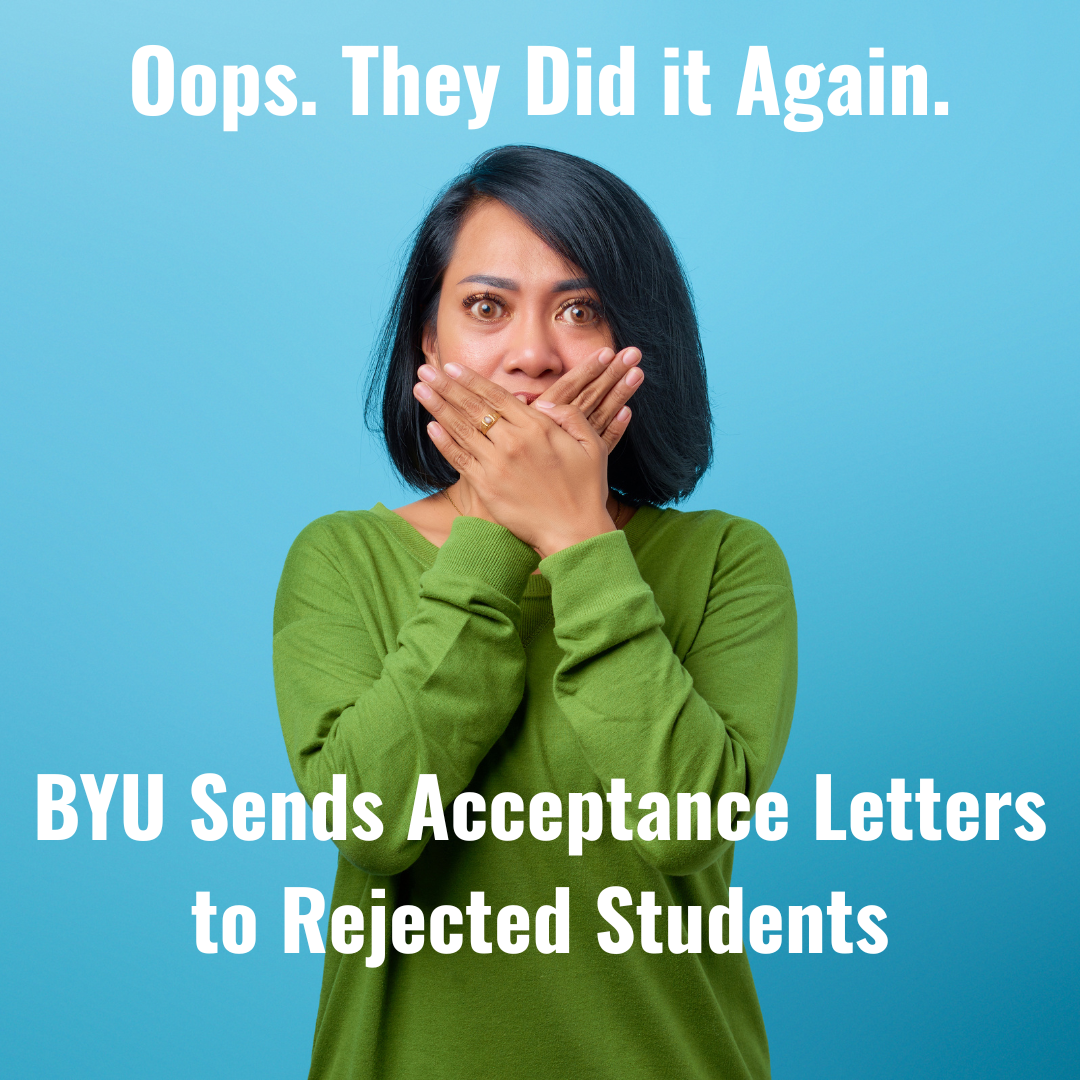
In February 2024 thousands of hopeful applicants experienced what every high school senior dreams about followed swiftly by heartbreak. Brigham Young University accidentally sent acceptance notices to students who had actually been denied admission. The congratulatory emails went out prematurely because of a system error, only for many recipients to later receive corrected rejection notices. This BYU acceptance letter mistake was a painful emotional roller coaster for families who had already begun celebrating.
Fast forward to February 2026, and a strikingly similar mistake happened again.
According to news reports, the university mistakenly sent congratulatory acceptance messages to nine students who had been rejected. When those applicants logged into their admissions portals, they saw “You’re accepted!” only to later find the message replaced by a rejection after the error was discovered and corrected. BYU has since apologized to those affected and acknowledged that the mistake caused confusion and disappointment.
One of the students affected, 18-year-old Owen Johansen, captured the emotional whiplash many experienced. “At first when I was accepted, I was really excited,” Owen told local media, a reaction that’s easy to imagine for anyone who has waited anxiously for college news. But when the acceptance notice was replaced with a rejection, his feelings turned sharply negative: “I was really mad,” he said, adding that he felt the situation could’ve been handled “way better.”
Owen’s mother, Talai Johansen, also spoke out, expressing how the family was initially thrilled and urging the university to offer more than just a formal apology. She suggested they consider admitting the mistakenly rejected students because “it is the right thing to do.” I have to agree with her.
Why These Errors Hit So Deep
College admissions decisions aren’t just another status update. They are identity-charged milestones. Especially when you’re parenting a senior, you know how deeply students attach hope and future plans to those emails.
When a school says “Welcome!”, even accidentally, it sparks:
- Emotional relief after weeks of waiting
- Celebration with friends and family
- Plans for housing, roommates, and next steps
And when that message is later walked back? The impact cuts deeper than a typical rejection. It’s not just disappointment. It’s confusion, frustration, and heartbreak all wrapped into one.
What This Says About the Admissions Process
Two things stand out from these errors at BYU:
- Technical glitches have very real human consequences. Admissions systems don’t just manage data. They deliver life-changing messages. A slip in code or logic can ripple through families’ emotions.
- Decisions still aren’t measures of self-worth. Whether it’s a mistake or an intentional decision, an admissions outcome should never define your child’s potential. It’s one pathway, not the only one.
How to Talk to Your Teen About It
Even if your own student wasn’t affected, a story like this can heighten anxiety during an already intense season. Here’s how to frame the conversation:
Normalize the Uncertainty
Let your teen know that every school’s process has quirks. Mistakes happen, but one email doesn’t determine their value or future success.
Separate Identity from Outcome
Their talents, work ethic, and potential aren’t wrapped up in an acceptance letter. Reinforce that with concrete examples from their journey so far.
Validate Their Feelings
If they feel nervous, sad, or even angry, acknowledge those emotions. You don’t have to fix everything. You just have to sit with them in it.
A Parent’s Reminder
This repeated admissions error highlights a larger truth: college decisions are deeply emotional, and they matter because your student cares.
Let them care. But also help them see that:
- Setbacks are part of life.
- Flexibility builds resilience.
- Sometimes Plan B leads to Plan A in unexpected ways.
So if you’re reading this amid a waiting season with fingers crossed, portal refreshing, email watching, take a breath.
No system glitch, no matter how disappointing, can change who your child is becoming.