
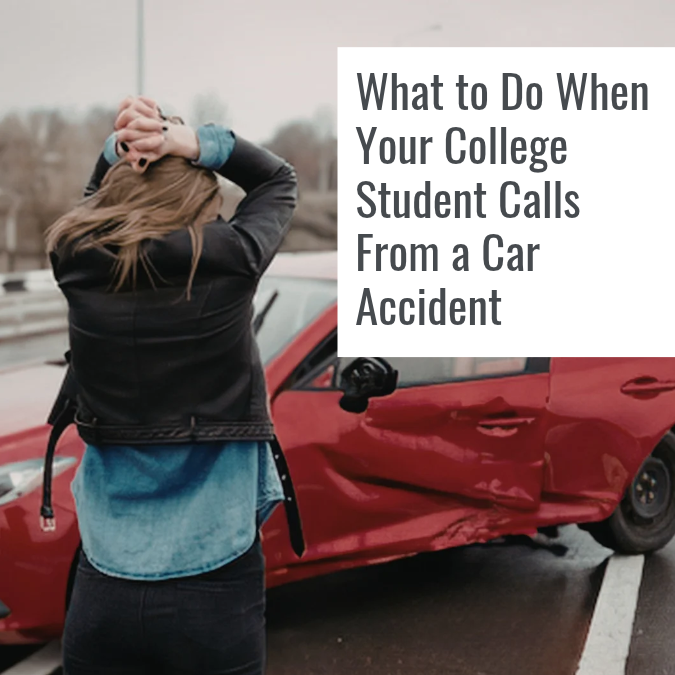
The phone rings at 9 p.m. It is your college student, and their voice is shaking. They were just in a car accident. You are hundreds of miles away. What do you do?
Most parent guides focus on teaching teens to drive safely. Few explain how to help from far away once a crash has happened. That gap matters. Your student is an adult now, but they still need you. This guide gives you a simple plan for the first call, the first day, and the weeks after.
Start with Safety, Not Fault
Your first job is to stay calm. Your student will copy your tone. Ask three quick questions. Are you hurt? Is anyone else hurt? Are you in a safe spot? If the answer to any of these is no, tell them to hang up and call 911. Tell them to turn on hazard lights and move the car only if it is safe.
Next, remind them to say very little about blame. Shock makes people apologize for things that were not their fault. A simple “I’m glad everyone is okay” is enough. They should share facts with the other driver and nothing more.
Many students feel fine at the scene. Adrenaline can hide pain. Headaches, neck stiffness, and dizziness may show up days later. If your student was hurt, or even just shaken, families can talk with a Chopin law firm in Houma to learn their options early. That step can help prevent small mistakes from becoming big problems.
Be a Calm Coach, Not a Commander
Your student is scared. Lecture mode will not help. Start with, “I’m here. What do you need from me?” Then listen. Let them breathe for a moment. Ask if they have a friend nearby who can sit with them. Offer to stay on the line while they talk to the officer. Your steady voice can keep them from rushing decisions.
Also, avoid the blame game later. A student who feels judged may hide details next time. A student who feels safe will call you first. That trust is worth more than any dented bumper.
Why You May Not Get Answers Right Away
Here is something that shocks many parents. Once your child turns 18, you may lose the legal authority you once had. A hospital may not share medical details with you. An insurance company may not talk to you either. You can be the loudest voice on the phone and still hear “we can’t discuss that.”
The fix is simple, and it works best before a crisis. Many families sign a college power of attorney and a health care authorization once their student turns 18. Online notarization has made that paperwork much easier to finish. Rules differ by state, so check the requirements where your student attends school.
Also build a one-page “crash card.” Save it in your student’s phone notes and share a copy with yourself. Include their insurance company, policy number, and claims phone number. Add the name of a doctor, your phone number, and a trusted friend nearby. Update it whenever the policy renews. When panic hits, nobody has to search for details.
Help Them Capture the Details
While your student is still at the scene, coach them through a few simple jobs. Ask them to photograph every car, the license plates, and the damage. Wide shots of the road, signs, and skid marks help too. They should also collect names and phone numbers from any witnesses. Finally, they should ask the officer for a name, a badge number, and how to get the report.
Memories fade fast. Notes do not. Tell your student to type a short summary into their phone that night. Time, weather, traffic, and what they remember all belong there.
Keep Watching in the Days After
Once the scene is handled, the next step is to report the crash to the insurance company as soon as it is safe. Some insurers let students start a claim online or in an app. Your student should be clear and honest, and give the police report number if they have it.
Then keep watching your student’s health. Pain from a crash can show up late. Ask every day how their neck, back, and head feel. Look for headaches, confusion, trouble sleeping, or mood changes. If anything seems off, they should see a doctor and mention the accident. Students often tough it out because exams are coming. Remind them that their health comes first. A student who skips care can make a small injury worse.
Keep every paper too. Save medical bills, repair estimates, rental receipts, and emails. Do not let your student sign anything or give a recorded statement before they understand it. Deadlines to file injury claims are strict and differ by state, so ask questions early rather than late.
A Little Prep Goes a Long Way
You cannot prevent every accident. You can prepare your student, though. Talk through this plan before the next road trip or holiday drive. Sign the paperwork, build the crash card, and agree on one rule: call 911 if needed, then call home. Being ready will not remove the fear of that late-night call. Your student will thank you the day they need it.