Category Archives: college prep

Don’t Let the Wrong Things Stand in the Way of Your Child’s College Dreams


college dreams

What are your student’s college dreams?

There are many reasons your child may not get into a specific college—but you should never be one of them.

Sometimes it simply comes down to other applicants being more qualified—whether that be through grades or extracurriculars, maturity level or how admissions officers feel a student will jibe with the university, its mission and the makeup of its incoming class.

But there are many external roadblocks we put on our children that can limit them. Here are three of the most common—and the most detrimental.

  1. Show me… money!

Of course, tuition is astronomically expensive, and no one wants to saddle their child with the huge debts that have been the bane of the current generation of post-grads. That being said, there are always scholarships and fellowships available to people with the right skill level.

If your student has a high level of achievement and is looking toward a trajectory that seems like it will break your bank, start your research on these opportunities early—at least a year in advance of application dates. Many scholarship applications are hard work and require essays, financial statements and recommendation letters.   

College counselors may be able to help outline solutions too, and there are also a great many free college fairs around the country. Check out the calendars for these, because they not only have people there as representatives of major universities, they also have resources to help your student find the financial aid that is necessary for him or her to achieve a college dream.

In the end, if you have to go with loans, don’t fret… it’s possible that all will be forgiven sometime soon!

  1. But where in the world is it?

Many students (and parents) get hung up on staying close to home, with friends, or in a warmer clime. Encourage your student to look deeper into the kind of education they will receive, rather than whether it gets too far below zero (at say the University of Minnesota). What you know (that they likely do not) is that four years is not a long time. Your child can always return to the bosom of the family, or back to sunny California, once they have a solid degree in hand. But who knows—maybe ice fishing will become a favorite new hobby.

  1. I don’t know where I want to go!

Another common roadblock to finding the right university is too many choices when it comes to the future. It’s important to sit down with your child and have a conversation about what they want in a school, even if they keep saying “I dunno.” Keep in mind there is no perfect place and there are many “right” schools to choose from. I know it seems like a massive decision, but it’s one you can get wrong and not suffer too much—a student can always transfer if things don’t work out.

Here are some areas to focus on to help your child whittle down their list of potential schools:

  • Size of school: Would they be excited about the opportunities of a large campus or prefer the individualized instruction of a smaller school?
  • Faculty: Look up the achievements of the professors in certain areas that might interest your son or daughter. Keep in mind elite professors may be on sabbaticals, but it demonstrates a level of commitment to a specific subject at a university. Research opportunities are another part of this. Is the University participating in cutting-edge research in an area that is exciting to your young student?
  • Extracurriculars: Actively investigate where extracurriculars that interest your child are strongest. This will be part of finding the right fit. See if clubs, athletics or performance groups have a high level of achievement.
  • Study Abroad Possibilities: Is this something your student wants to pursue? Make sure the options are available.
  • Post-Graduate Opportunities: It’s much easier to get into grad school at the university where you receive your bachelor’s. If your child is on a path that requires this kind of education, see if this added criteria helps make a choice of where to apply.

Ultimately, it’s imperative to give students the latitude to make their own decisions based entirely on their qualifications for college rather than on any other factor. Everything else can be figured out. Remember, where there’s a will, there’s a way.

___________________________________________

About the Author

Ryan Hickey is the Managing Editor of Petersons and EssayEdge and is an expert in many aspects of college, graduate, and professional admissions. A graduate of Yale University, Ryan has worked in various admissions capacities for nearly a decade, including writing test-prep material for the SAT, AP exams, and TOEFL, editing essays and personal statements, and consulting directly with applicants.

College Prep: A Podcast Interview with Prepped and Polished


college prep

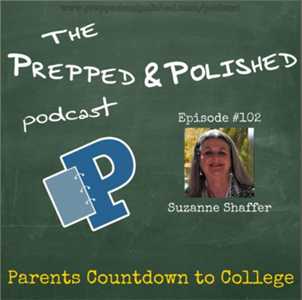
A few weeks ago, Alexis Avila from Prepped and Polished interviewed me on his podcast about college prep. The jest of the interview: how did you get involved helping parents with college prep? Of course, this is my favorite topic.

Alexis and I talked about college prep and the obstacles I faced. We discussed what I learned along the way and the mistakes we made. You will learn about my “Ah ha” moments. And also how I started helping parents along with what parents need to know to be an effective college coach.

Take 15 minutes out of your day and listen to the interview. Have questions? Feel free to email me at suzannemshaffer@gmail.com.

Need MORE expert advice, check out my posts here:

50 College Info Websites

50 More College Info Websites

College Prep Resources

Here are the experts I recommended along with Alexis’ podcast links (apart from test prep recommending Prepped and Polished):

Financial Aid: Jodi Okun and my podcast with Jodi Okun

College Visits: Kelly Queijo and my podcast with Kelly Queijo

College Planning: Paul Hemphill

College Essays: College Essay Guy 

Check out the interview with interview notes and links:
The Prepped and Polished Podcast-Parents Countdown to College

3 College Connections You Need to Make


college connections

If you are considering college, or headed off to college in the fall, you should make friends with these people on campus: admissions counselors, financial aid officers, and current students. Why? Because these three groups of college connections can help you with all the aspects of navigating the college maze:

1. Admissions counselors

It’s not secret that making friends with the admissions department can go a long way in securing your eventual acceptance. Admission officers keep track of how often you visit their campus, contact them regarding information, and express an interest in their institution. If you application is marginal, contact with an admissions officer could give you that extra push needed for acceptance. Schedule an interview when you visit campus, secure a business
card with contact information, and follow up after the visit. Recognizing your name when those thousands of applications arrive can help get your application on the top of the pile.

2. Financial aid officers

These helpful people can provide you with the information you need to know about financing your college education. Ask them questions about the total cost of college. This not only includes tuition, room and board, but additional costs incurred to attend. Once you have applied, you might also need to clarify some financial information related to the FAFSA, write an appeal letter for additional aid, or contact them about your aid disbursements. Schedule an appointment when you visit campus, secure a business card, and file it for future reference when/if you need a contact in that office.

3. Current students

Students who are currently attending college (specifically the one you are interested in attending) can be a valuable resource for information. You can connect with them on your campus visit, follow them on Twitter, and find them on the college’s Facebook page. Do some navigating on the college website for bloggers and for individual sites that are set up through the college itself. Connecting with students will help you get a feel for the type of student who is attending, and can help you once you are accepted by answering questions related to moving in, getting settled, and making that transition on campus. Networking is just as important in college as it is in the job world. Making those essential connections will ease the college application process and simplify the transition to college once you are accepted.

10 Twitter Chats for College Prep Success


twitter chatsWith today’s technology, information is everywhere–from blogs, to social media, to college websites. But when you’re looking for information wouldn’t it be great to actually SPEAK with the experts and ask questions for FREE?

That’s what Twitter chats can do for you. Experts in the area of college prep gather together on Twitter during Twitter chats to provide you with the most up-t0-date information on the college application process.

For those of you who are new to Twitter chats, #SEOChat has a very good explanation of how they work, how to participate and even some good resources to search for more chats. But here are a few simple instructions:

  • Mark the chat date on your calendar and set a reminder so you don’t forget
  • Follow the chat’s hashtag on Twitter by using programs like Hootsuite, Twitter Chat or TweetChat. These programs help you keep the conversation in one place and make it easier to respond.
  • Follow the feed and ask questions if you are unclear about something. If it isn’t answered in the chat, feel free to DM the moderator or guest after the chat is over. Sometimes chats can be a bit chaotic if there are many attendees.
  • Favorite any tweets with links or information you feel will be helpful to research after the chat.

Chat times and dates change, but if you follow their Twitter feed you will be notified of any date and time changes.

Still not convinced these chats are worth you time? Check out my post: Why you should attend Twitter chats.

10 Tips for Parents of the College Bound


10 tips for parents

Parenting a college-bound teen is a challenge. How much should you push? How much should you help? Where do you draw the line? How involved should you be? How do you help your student fulfill his college dreams?

Here are 10 tips for parents that should answer your questions:

10 Tips for Parents of High School Students

1. Don’t overparent

Much has been written lately about the damages overparenting does to students. Step aside and let your student take the wheel.

2. Make a visit to your teen’s counselor

Let the counselor know that you intend to be an involved parent and establish a relationship at the start. The counselor is an important source of information and of course guidance regarding your teen’s college pursuit.

3. Establish relationships with teachers and staff

Since most parents tend to drop out when their teen reaches high school, it’s crucial that you make it clear to the educators that you will be a partner in educating your child. Show up at PTA meetings and parent information sessions.

4. Read all school information

This means reading the school handbook, teacher handouts, letters to parents, guidance department newsletters, any rules and policies, and homework and attendance rules.

5. Stress the importance of good attendance

Attendance is key in high school. Missing even one class can put the student behind. Schedule appointments, when possible, before and after school. If there is an absence, make sure your teen does the make up work in a timely manner.

6. Encourage strong study habits

These habits will follow your teen to college. Set aside a regularly scheduled study time. Studying needs to be a priority before any added activities.

7. Stress regular contact with teachers and counselors

This contact will play an important role when your teen needs recommendation letters. It will also establish in the minds of these educators that he or she means business.

8. Be the organization coach

If you know where everything is, have a schedule and a plan, you won’t get stressed and frustrated. It’s your job as their parent coach to help them start and maintain good organization for their date planners, notebooks, folders, files and college related materials.

9. Stay informed and involved

This does not mean camp out at the school every day and follow your teen around. It means monitoring quizzes, grades, daily homework assignments and long-term projects.

10. Be proactive when you encounter problems

All types of problems arise in high school: academic, behavioral and even social. There is a logical solution for all of them, but the key is to be aware when they arise and address them quickly.

10 Tips for Parents of Seniors

1. Do the prep work

Get ready for the mounds of catalogs, test prep booklets, flyers and email reminders. Start your filing system now, create a landing zone for all college-related materials, start adding tasks on a calendar.

2. Do your best to control your emotions

It’s going to be an emotional time for both you and your student. Angry words will be spoken if you don’t make a conscious effort to bite your tongue.

3. Prepare for rejection

The upcoming year will most likely mean that your student (and you) will have to deal with rejection. It’s not personal, but you will feel like it is.

4. Decide what role you will take

Please. I beg you. Do NOT be the parent that shoves, manipulates, and actually does the work for their student. Be the parent who encourages, supports and offers help and advice when needed.

5. Prepare for emotional outbursts

This is one of the most stressful times in your family. There will be emotional outbursts as the stress intensifies. Your student will say things she does not mean. You will lose your temper and wish you didn’t.

6. Discuss the money

If you want to avoid disappointment when offers of admission arrive, have the “money talk” before your student applies to colleges. Decide what you can afford, what you will be willing to contribute toward the costs, and what you expect your student to contribute.

7. Accept there will be consequences to actions

Your student will most likely fail or mess up at some point during senior year. Rescuing your kids all the time only makes them into dependent adults and colleges aren’t impressed with those type of students or the parents that come with them.

8. Be open to all possibilities

Be open to any college choices your student might make. You will not be the one attending the college and it’s not up to you to choose for her.

9. Don’t push-it simply won’t help

If your student is unmotivated, it’s not going to help to nag her and push her to do the college prep work. If there is one thing I learned with both of my kids (and clients), if your student is not invested in the college process she won’t be invested in college.

10. Enjoy the journey

This is an exciting time in the life of your teenager. She has worked hard and will be planning her future. Enjoy the next year, even when you feel stressed and overwhelmed.

Wednesday’s Parent: Evaluate College Prep Progress Monthly


evaluate college prep

With all the tasks involved in college prep it makes sense to take a quick evaluation of your teen’s progress and evaluate college prep monthly. Deadlines will creep up on you, tasks will fall by the wayside, and your teen may drop the ball. By scheduling a monthly evaluation, you and your student will assure that every task and deadline is met, along with providing a time to have a conversation about any concerns you or your teen have during the process.

Wendy David-Gaines, Long Island College Prep Examiner and POCSMom, explains the importance of good habits during the college prep process:

This is not about avoiding sliding into a rut or fighting senioritis although both are specific reasons for reevaluation. This is concerning a normal and regular college preparation review. The purpose is to ensure students are still on track considering any recent modifications that may have occurred.

A lot can change during a school year that influences testing and college choice, field of study and student qualifications. Even subtle differences can highlight the revisions students need to make. Then families can put the alterations in place to become future habits that will eventually be reexamined, too.

College prep requires parents and students work as a team. Taking the time to evaluate your progress can make the process go smoother and avoid the stress of missed deadlines or college admissions requirements.

Read Wendy’s article: How habits can hurt college prep

College Interview Questions to Ask and Answer


college interview questionsThe college interview is your student’s first exposure to what a job interview after graduation will be like. Most students are nervous, just as my daughter was on her first college interview. These questions, and others, will be going through their minds before and during the interview:

  • What questions will they ask?
  • How will I answer them?
  • Will I answer them correctly?
  • Will I make a good impression?
  • Will they like me?

The key to approaching a college interview, or any other job interview for that matter, is to prepare in advance. Don’t walk into the interview without a game plan for answering and asking college interview questions.

Here are two articles I wrote for TeenLife Media about the college interview:

Can You Answer These 10 College Interview Questions?

Here is a list of 10 interview questions colleges might ask and suggestions on how to respond. They may not be exactly as worded, but they will fall into one of four categories: questions about your fit with the college, questions about your personality, questions about interests and goals, and broader questions requiring a more thoughtful response.

Read the 10 questions and possible answers

5 Questions You Should Ask on a College Interview

The very last question a college interviewer will ask you is, “Do you have any questions?” The questions you ask them can be just as important and can also help you make your final college decision. In the end, it’s not just them choosing to admit you, it’s you choosing to accept their offer of admission.

Read the 5 question you should ask and how to prepare for them?

SaveSave

Staying Abreast of Higher Education Trends


higher education The 21st century has become a synonym for modernity, advancement, breakthroughs and technology. The era has seen countless changes and transformations which have changed the course of the world. Among all other aspects, education was the one which saw the most massive changes and transformations as it was completely revamped and customized. Actually, it was education as a component which changed the world in the 20th century.

Right from school education to higher education, students now enjoy a more modern and transformed approach in studies.

Education became accessible

Before the 20th century, education was a privilege which was limited to the elite and the rich. Many countries lacked in educational resources and the few that were available to them were not accessible to the masses. In the late 1990’s and the beginning of the 21st century, efforts were started to make education accessible to all.

Organizations such as the United Nations along with many NGOs and governments started special drives and programs to spread education, especially in under developed and developed countries.

Education was made easy

The 20th century also saw the advent and advancement of technology due to which all aspects of human life saw a massive transformation. The new technologies developed new ways to decrease geographical distances. They brought new devices and methods to make education easier and interesting to acquire even with less financial resources.

New resources

Technology blessed education with thousands of new tools. Recording knowledge became a much easier and less time consuming activity and transportation of massive data and information became as easy as carrying a feather. The World Wide Web further enhanced this and made it possible to connect to huge amounts of data from anywhere by anyone.

New fields of study were discovered

Thanks to the newly attained boon of technology, new portals opened for research because of which new studies were discovered. In the last few years, education branched into hundreds of new streams. This further fuelled the advancement of technology and it moved forward with increased speed.

Along with other aspects such as economy, the most important changes came in the health sector as the study of medicine advanced and benefitted everyone.

More career options

The newly discovered fields of knowledge combined with increasing and diversifying businesses created new professions and fuelled new jobs. Students and professionals got a chance to pursue better jobs and explore more careers which matched their interests and aptitudes.

The United Nations started the famous Millennium Development Goals (MDG’s) in 2000 along with 70 other nations. One of the 6 goals stated that- one was to provide free and compulsory education for all. Since then, secondary education has considerably spread across many countries and regions where children earlier didn’t have access to even secondary education. According to statistics presented by United Nations, 70 countries have increased their public spending on education. The statistics also states that the number of secondary students has increased more than four times the increase in the number of primary students. New concepts and methods are being tried to spread education and special care and efforts are being made to ensure that girls don’t remain outside the education circle.

However, as impressive as these figures are, challenges still remain in the universalization of education. There are still more than 37 million children out of school and 55% among them are girls. Wars and invasions in certain countries have also affected the process of spreading education. A more practical and united approach is needed to overcome these challenges so that the world sees an era where all its inhabitants are literate and educated.

Wednesday’s Parent: Pick Your College Prep Battles


pick your college prep battlesWhen I was a young parent, my mother gave me some very wise advice: “pick your battles”. It began with my toddlers and ended up being the best advice she ever gave me with my teenagers. Did we butt heads over hair? No. Did I fight with them over clothing choices? Rarely. Did we argue over college selection? Sometimes. But, for the most part, the college process requires parents to listen, bite your tongue, and pick your college prep battles.

Long Island College Prep Examiner and POCSMom, Wendy David-Gaines drives home the issue when she cites a Beloit College 2019 Mindset List:

The 2019 List findings are based on the experiences of students who are heading into their first year of college this fall. It shows those in high school share more in common with the 18-year-olds who were born in 1997 than their parents. For example, it notes that these millennials never knew a world without Google, only know Ellis Island as being primarily in New Jersey, and never have licked a postage stamp. As parents span part of two centuries of living history, teens only remember the 21st filled with Harry Potter and wifi, but not Princess Diana and Mother Teresa.

The college process is full of stress-inducing moments stemming from an overloaded schedule, new tasks, looming deadlines, and important decisions. Which college, what to study, and how best to prepare are often at the front of the college prep battle line. It’s difficult for parents and students to be on the same page when their points of view develop from different backgrounds. With insight based on the past, families can focus on keeping communication flowing and finding common ground.

Parents would be wise to consider their student’s mindset and use that knowledge when communicating with them about college prep. Times have certainly changed since you applied to college and your student may not have the same ideas as you do about college choices. Keep an open mind and choose which battles are important and which battles should be avoided.

For more tips on picking your battles, read Wendy’s post: Parents, pick your college prep battles

The Summer Before Middle School (10 Tips for Moms)


middle schoolEntering middle school is a huge transition for students. They go from one classroom to multiple classrooms, lockers, multiple teachers, and more homework. The summer before your student begins middle school is the perfect time to begin preparation for the future. Although it might seem premature to start thinking about college, it’s never too early. Your child needs a strong middle school foundation in order to take the high school courses that colleges expect of a college-bound student.

A national survey by Harris Interactive found that while 92% of seventh- and eighth-graders said they were likely to attend college, 68% said they had little or no information about which classes to take to prepare for it. The National Association for College Admission Counseling emphasizes that parents should begin planning for college in middle school.

Here are 10 tips to jumpstart the middle school transition:


1. Broach the subject of college

By no means is it the time to push for Harvard or Yale, or any other specific college. But it is important to discuss goals, interests, and career aspirations. Once you start the discussion, it will make it easier to see how these interests can translate into a college and career plan.


2. Amp up your involvement in the school

Once your child has moved past grade school, parents often see this as a time to become less involved. However, this is the time your student needs your encouragement and guidance. He will be making decisions about course selection, struggling with academics, and searching for electives and extracurricular activities that will require your input. Some schools, such as Shrub Oak International School, make this quite easy, with programs for parents and plenty of extracurricular activities that have room for family members. But above all, make sure you’re aware of how your child is doing and what their school expects from them. Ask the counselor to evaluate your student’s school test scores and identify any areas of weakness that might require extra tutoring. Be involved and be vocal when necessary.

3. Be prepared for course selection

The courses your student takes in middle school will prepare him for high school. Make sure he takes math and science courses that prepare him for advanced courses in high school. In addition, he should take English every year, as many history classes as possible, any computer courses that are offered, and foreign language electives. If your student is interested in music, sports, or art, middle school is the time to explore those interests. In order to take the advanced course in high school that colleges require, he should prepare for those in middle school.

4. Create a plan to pay for college

Don’t wait until the college offers of admission arrive to think about how you’re going to pay for it. Do your homework and start aggressively saving if possible. There are also other ways to fund college like scholarships, taking AP classes, dual credit classes at a community college, and taking summer courses for college credit. Begin researching all these options and take advantage of all of them; but in order to do it, your student must be prepared.

5. Encourage reading

Reading is the best preparation for standardized testing and high school reading assignments. Reading also improves vocabulary and writing skills. You can make this a family goal by reading the same book and having a discussion or adding vocabulary words to the family dinner discussion.

6. Make a study plan

You student will need good time management and study skills to succeed in high school and college. Middle school is the perfect environment to focus on good study habits. Set up a study space, agree on a study schedule, and provide the necessary study materials before school begins. Discuss how important it is to get help if needed and encourage him to let you know if he’s struggling so you can help him get tutoring if needed.

7. Explore extracurriculars

Middle school is the perfect time to start exploring extracurriculars. Once your student finds one that interests him, he can carry it on into high school. Colleges look for consistency in this area and if the student finds his interest in middle school, he can begin his high school years focused and committed to that one activity.

8. Plan some nearby college visits

It’s never too early to visit colleges. Schedule some nearby college visits. It can be a family affair; even a mini-vacation. Early college visits will help your student get accustomed to the college environment and a feel for what college life is like.

9. Look at high school programs

Investigate the programs at the high school or schools your student might attend. Do they offer AP classes, honors classes, or college prep courses? Are there opportunities for creative options like art and music? Does the school have a strong college network of counselors and advisors? These questions can guide you as you prepare for the next step—high school.

Find out about school hours as well. Do  they have a shorter school day or a longer school day compared to the average. You can use this to help gauge the time your child will have for after school activities.

10. Start the organization process

Create a filing system for all future college-related information. There will be scholarship applications, college information, school calendars, and more. Set up a landing zone and a filing cabinet to keep all these documents organized.

It’s time to begin your homework to make college affordable for your student and your family. Apart from the obvious of financial planning, you should research all the nuances of college admissions—standardized testing, financial aid, college visits, college searches, academics and extracurriculars. It takes time to research and consider all your options. The days of waiting until senior year of high school are over.