Category Archives: college guidance

How to find the best college advice


Sign up for my FREE parent tips email and get my FREE Ebook on college financing! Or subscribe to my blog via email on the left.

adviceAdvice. Everyone gives it. Most of us don’t ask for it. Sometimes we need it.

The nature of the college beast is that we all need advice. Advice from other parents. Advice from college experts. Advice from the colleges. Advice from the high school counselor. For some it’s freely given, for others it’s withheld until asked. But there’s one underlying truth—everyone needs help and direction now and then, especially when navigating the college maze. But before you set out on this adventure to find the best college advice, beware-it’s a jungle out there!

Books

I gravitate towards books; probably because I’m old fashioned. I assimilate information easier if I can read it and stew on it for a bit. Books are excellent resources for information about college. There are the “big” books that many parents use which contain all the colleges in the United States and extensive lists of scholarships. But the books that seem to help parents the most are ones written to guide them through the college process and answer all of their questions.

My advice? Check out these 10 books that I believe will help you navigate the college maze with confidence and ease.

Blogs

There are websites and there are blogs. You can’t beat blogs for some good parent to parent advice and support. Subscribe to their blog or RSS feed so you will receive an email every time they post. This is the easiest way to stay on top of recent posts.

My advice? Subscribe to these: Dr. Strange College, PocsMom, The College Solution, Smart College Visit, More than a Test Score, Perfect Score Project and Best College Fit. There are hundreds more, but these are my fav picks. I find them to be filled with information and encouragement.

Social media

Believe it or not, you can get advice on social media. With social media sites like Twitter, Facebook, Pinterest and Google+ it’s easy to have information overload.

My advice? Follow me on Twitter and you will see I’ve made some lists of the accounts with good college advice: collegeinfo, tutoring, and scholarship info. Facebook is a good way to connect with colleges, other students and parents. Do a little research and find experts like me, University Parent, The College Solution, How to Win Scholarships and more. Pinterest is also quickly becoming another social media source for college advice. Follow me on Pinterest and you can follow my boards: college prep and scholarships. Look for colleges and follow their parent boards as well.

Websites

The world wide web is cluttered with college-related websites. Navigating them can be just a bit overwhelming. You can do Google searches and hope you find good advice and information, or you can trust the experts to steer you in the right direction.

My advice? Narrowing down the field should help a bit and keep you from pulling out your hair over hundreds of search results. Focus on a handful of websites that you consider to be most helpful.

It truly is a jungle out there, littered with all kinds of advice and opinions. Pick the ones who come recommended with an extensive network of experts who endorse them. The best way to find the best is to ask the best—it works every time.


Wednesday’s Parent: 5 Tips to help with application stress


Sign up for my FREE parent tips email and get my FREE Ebook on college financing! Or subscribe to my blog on the left and get email updates.

Wednesday’s child may be full of woe but Wednesday’s Parent can substitute action for anxiety. Each Wednesday Wendy and I will provide parent tips to get and keep your student on the college track. It’s never too late or too early to start!

Wednesday’s Parent will give twice the info and double the blog posts on critical parenting issues by clicking on the link at the end of the article from pocsmom.com to parentingforcollege and vice versa.

______________

application stress

5 Tips to Help with Application Stress

A study conducted in 2010 of high school and college students found that “five times as many high school and college students are dealing with anxiety as youth of the same age who were studied in the Great Depression era. Students themselves point to everything from pressure to succeed — self-imposed and otherwise — to a fast-paced world that’s only sped up by the technology they love so much.”

If they were to do the same study today, I would imagine they would find the level of stress and pressure students feel has escalated. There is no greater stress than application stress. Every component breeds stress: standardized tests, GPAs, the essay, and even the recommendation letters. It’s no wonder students are feeling the stress when they start the application process.

As a parent, it’s difficult for you to watch the stress levels increase as it gets closer to application time. And when stress levels increase with your student, the family stress goes up as well.

Following are 5 tips to help with application stress:

Preparation prevents panic

I used to tell my kids that I worked best under pressure. It may be true but with the pressure came added stress. As with any task, preparation removes the stress and allows you and your student to avoid the panic that ensues and causes stress.

Get help before you need it

Before senior year, do your research. If you find there are some questions that you need answered or some help with the overwhelming amount of components in the application, get help. Help is available online and a good bit of it is either free or at a minimal cost. There are also other parents who are going through this or have been through it before and are willing to help. Ask for help–don’t flounder around when help is available.

Stay organized

Organization is key when tackling the college application. Look at the college sites and the Common App site for a list of application components. Gather all the necessary documents before starting and keep them in one place (either on the computer or in a folder). Use calendars, to-do lists, and emails to keep all the documents organized. Once your student starts with the application they should be able to complete it easily.

Continue reading Wednesday’s Parent: 5 Tips to help with application stress

5 Tips to help manage your studies


Sign up for my FREE parent tips email and get my FREE Ebook on college financing!

studyingOne of the unnamed difficulties of college is the allocation of resources and time. All too often, students are blindsided by the sudden responsibility of managing and scheduling their classes, courses and homework dates without any overseeing parental body to guide their hand. The proper management of time can impact the success of academic and social lives, while the mismanagement of the many distractions and temptations will result in a convolution of unmet deadlines, incomplete assignments, and a schedule that always seems to be one step ahead of the output.

The Compromise

The college compromise means finding a way to have your personal time and your academic time with their own allotted schedules and time frames. A successful college experience doesn’t have to mean focusing on studies without enjoying the social niceties, or conversely, partying without bothering to practice and study for assignments and tests. As with much in life, moderation is a key. Managing academic chores in one hand with personal choices in the other is the kind of mature grace that the most successful students exhibit.

Of course, some of this comes from proper preparation. Making sure that you have all the materials you need to take notes, investing in a laptop ahead of time, installing note taking software, all of this can be worthwhile. The same goes for how you manage the logistics of living on or off-campus. For instance, Off Campus Living can provide a very worthwhile alternative to mature students looking for a more peaceful, mature approach to studying and university life, rather than jumping in with the ‘freshers experience’ and ‘party accommodation blocks’ we hear so much about.

Continue reading 5 Tips to help manage your studies

How baby boomers are affecting education choices


Sign up for my FREE parent tips email and get my FREE Ebook on college financing!

baby boomersBaby boomers are people who were born in the late 1940s to 1960s and are defined so because the birth rate increased significantly during that time period. Currently, baby boomers are reaching retirement age and are facing the many ailments that elderly people face. Because of their current condition, the baby boomer generation has influenced the college degree and career choices of the current generation.

Baby boomers have influenced the current generation to receive medical degrees and go into medical professions. More elderly people are in need of healthcare or medical assistance than ever before because of the large baby boomer generation. The nursing and healthcare job market is very stable, as medical professionals are needed regardless of the state of the economy. The job security rate for these professions is currently high because of this, catching the eyes of many young college students.

Jobs in the healthcare industry generally pay very well, with nursing positions on the lower end of the spectrum and doctors at the higher end of the pay scale. This is part of the reason why these positions are so attractive to college students. Another reason is altruism.

The baby boomer generation was inspired by their hard-working, depression-era parents, who instilled realistic goals and a good work ethic, as well as stressed the need for financial and economic security, in their children. These values were then passed down onto their children, along with the encouragement to follow their dreams. Many college students today are a product of the “follow your dreams” generation, and many of their dreams include helping others. The medical industry is probably the best place where one could practice helping others. People from all economic backgrounds, ages, and needs come to hospitals, clinics, and doctor’s offices for medical help and advice, whether their need is dire or not. The notion and opportunity to help a variety of people attracts young people as well because of their interest in uniqueness and diversity.

Continue reading How baby boomers are affecting education choices

Is medical school in your college-bound teen’s future?


Sign up for my FREE parent tips email and get my FREE Ebook on college financing!

medicalFor those who have a passion for helping others recover from injuries and sickness, a career as a doctor can be one of the most fulfilling and rewarding, as well as lucrative, available.  This does not mean, however, that becoming a doctor is easy: as little as six years and as much as ten may be necessary before you can provide a single patient with care independently.  Here are some tips to get over the first hurdle: getting into medical school itself.

High School Preparation

Not many high school students may know what career they want to pursue, but for those who are interested in medicine, early preparation will help.  When in high school, spend time thinking about what universities you could get into that would best prepare you due to strong coursework and good reputations.  Ask advisers about universities that have strong medical school placement rates.  Look for scholarships to help pay your way through university, so that you spend less time worrying about paying tuition or working to support yourself.

Apply Yourself In Undergrad

A doctor needs to have many skills, but above all else they need to be very good at remembering information.  Medical school, after all, can be summarized as instructors teaching students the entire book of human anatomy and known diseases.  Thousands of different bits of knowledge need to be committed to memory, so students should begin to work on their study skills once they enter into college.  Show medical school applicant reviewers that your time in a four-year university was well spent by doing your best to succeed in courses.  Pursue a life science degree, such as biology or biochemistry, which will give you prerequisite knowledge for understanding what health and life really means, right down to the cellular level.  You do not need a 4.0, but few medical schools will take applicants that do not get better than a B average.

Continue reading Is medical school in your college-bound teen’s future?

Common App Resources


Sign up for my FREE parent tips email and get my FREE Ebook on college financing!

CommonApp1

Listen up parents and students! The school year has begun and for seniors, it’s time to start thinking about that all-important Common Application. You know the one? The one that sells your student to the college. The one that asks pointed questions about your student, their high school career, and their interests. Yes. That Common Application.

You may have hundreds of questions in your head. Which colleges accept it? Can my student vary their essays to tailor them toward specific colleges? What exactly is included in the Common App?

When you have questions, you need answers. Zinch has provided you with the answers to all these questions and more. In their article they give you links, tips and videos to help you complete the process. Zinch may be the go-to site for scholarships, but their high school blog is the go-to site for helps with the college admissions process.

Read all about Zinch resource toolkit for the Common App on their high school blog

10 Must-read books for parents of college-bound students


I love books because, well, I just love books. They are some of my prized possessions. These college books are part of my collection because they are jam-packed with information about the college admissions process. Some of them are informational, and others help you relax and laugh during the process. Add these books for parents of college-bound students to your reading list. After all, who doesn’t like books?

college bound and gagged

1. College Bound and Gagged

Nancy takes the everyday aspects of the college admissions process and puts them into terms that parents can easily understand and relate to by using humor. And if that’s not enough, she sprinkles some of the best college admissions advice along the way by tapping into her own personal experiences and her network of college experts that she utilizes throughout the book.

pocsmom

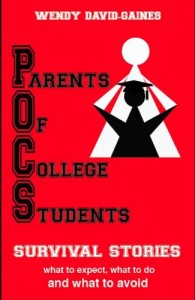
2. POCSMom Survival Stories

Wendy David-Gaines, the author, is famous for exposing the cliches about college. After giving the cliche, she gives you the “POCS reality”. In her book, Wendy does this effectively by compiling actual parent stories. The stories (both from pre-POCS and POCS) are simple, light-hearted, often humorous and an easy read. But here’s the clincher–they provide parents with added insight into each individual situation.

scholarships

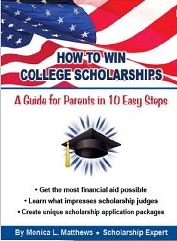
3. How to Win Scholarships

The best part about Monica’s e-book is that it’s simple and easy to understand. If you follow her easy 10 step program, the scholarship process becomes doable for any parent and their student. You can sit back and hope that your student does all the work, or you can offer help and support by grabbing a copy of Monica’s book, reading it, and rolling up your sleeves.

debt free u

4. Debt Free U

When Zac Bissonnette headed off to college, he had the funds to cover the tab. Bissonnette has seen the currently flawed system first hand. He’s a contrarian, and his book is packed with studies and statistics to back up his analysis. It’s a magical combination that college-bound students and their parents should read, even if there’s plenty of money set aside to pay the tuition tab. There’s no harm in learning ways to get the biggest bang for your buck and the best education available at the same time.

leadership

5. Why You’re Already a Leader

The author, Paul Hemphill, forces history to shout its powerful lessons about our least appreciated ability – leadership. A pre-teen, a parent, or a corporate exec doesn’t need to be trained for leadership because it’s already alive and pumping in your DNA. The proof is all here. Here’s the bonus feauture: it uses history as a motivational tool. Instead of stats and facts, you get more than 200 life-lessons from Gettysburg to help you succeed in any endeavor. What’s the number one quality admissions officers look for in a candidate for admission? Leadership!

Continue reading 10 Must-read books for parents of college-bound students

Keeping “overwhelm” out of the college application process


Today’s guest post is from a lovely lady I met at Blogher13 a few weeks ago. She’s written a book about attitude reconstruction and I thought some of her ideas might be helpful to parents and teens to alleviate feelings of stress.

______________________

Sign up for my FREE parent tips email and get my FREE Ebook on college financing!

college application stressThe college application process can feel overwhelming. Successfully completing this task requires breaking big jobs down into small doable pieces, dealing with the fear, keeping your thoughts constructive, and staying focused on what is in front of you today.

Find a buddy

Regardless of how involved your parents are in the process, find a buddy who also needs support and help each other. This will counter feelings of isolation. Decide how often you’ll check in to keep motivated, set up a regular time, and follow through. Offer each other appreciations for tasks completed and use this as a time to get clear on your next steps.

Outline your goals

Start the application process by outlining your goal in getting a higher education. Then identify potential schools that meet your qualifications. Assemble a list by going to the library, meeting with school counselors, or tapping into other resources, such as college guides. If this seems too daunting, do your research in small blocks of time. For example, make an appointment to talk with someone one day, visit a campus, or gather information by surfing the Internet for a half hour at a time (or even less). When your list is complete, select your chosen schools.

Continue reading Keeping “overwhelm” out of the college application process

ROTC in college


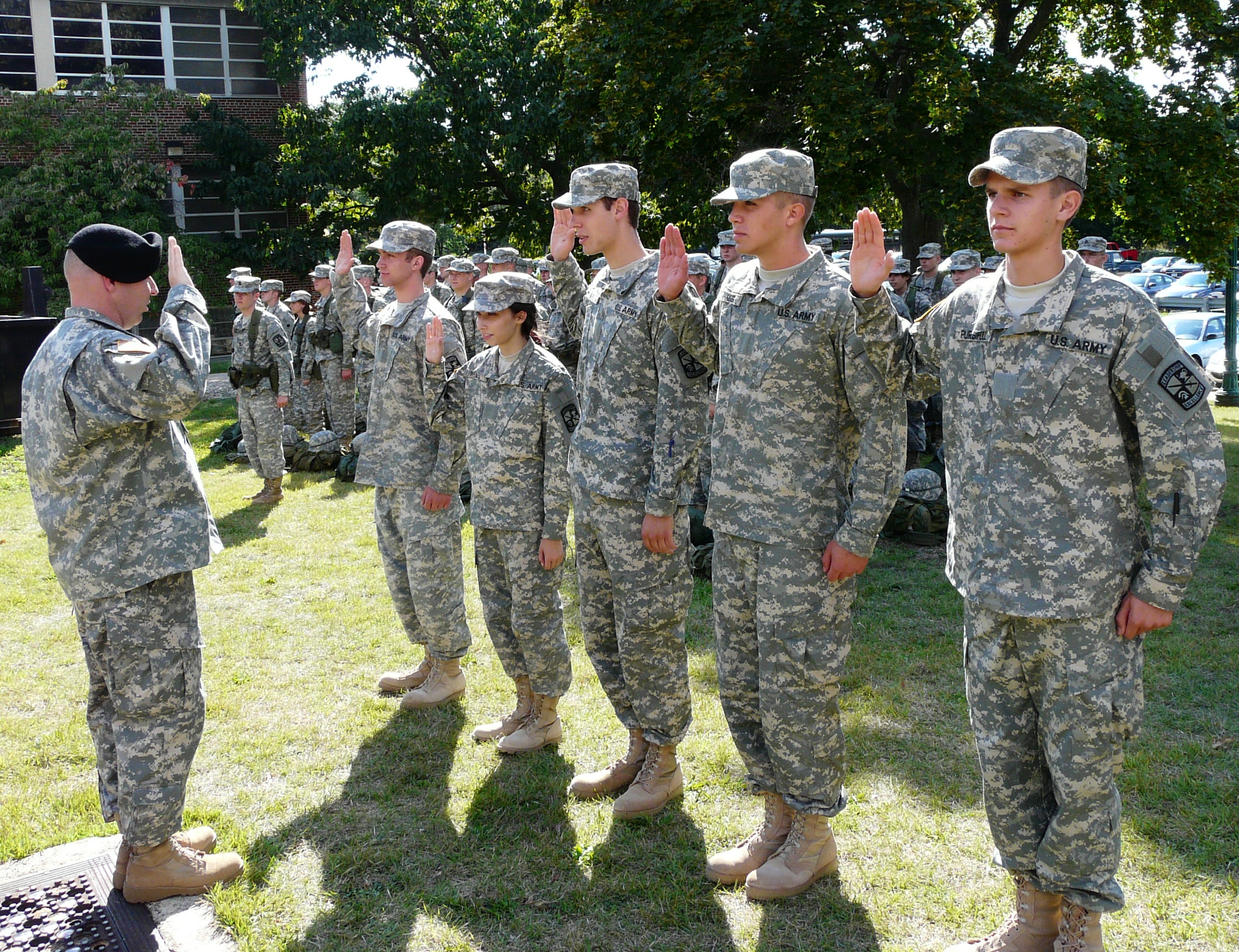
college rotcThe Reserve Officer Training Corps (ROTC) prepares college students for a career in the military by offering them field training. Students who take ROTC classes also have to complete their college coursework like other students. Admittedly, juggling grueling ROTC field training and the demands of schoolwork can be quite challenging. However, the rewards of overcoming such challenges are enormous. For instance, with the ever-increasing cost of college education, ROTC offers students some much-needed financial assistance besides equipping them with numerous important lifelong skills. Some of the other benefits of ROTC in college include the following:

College Scholarships

Students who enroll in ROTC programs stand a chance of receiving financial aid that they can use to pay for their college tuition expenses. In some cases, the ROTC offers full scholarships that cover tuition costs, living expenses and stipends for personal expenses. In view of this, students interested in military careers who qualify for ROTC can pay for their education and avoid debt.  However, because the ROTC offers scholarships based on merit, students who receive these scholarships have to maintain excellent academic scores for the entire duration of their course.

Guarantee Promising Careers

Upon graduation, college students who are part of the ROTC program can begin their military careers as second lieutenants immediately.  Depending on the skills different graduates have, they can easily rise through the military ranking system and start enjoying the benefits of a successful military career. Additionally, even in the rare cases where ROTC members decide not to pursue careers in the military after graduation, the skills they develop while they were members of the ROTC may make it easier for them to find employment in other sectors.

Continue reading ROTC in college

Should your college-bound teen consider a legal career?


legal careerWith law school applicants at a 30-year low, there has never been a better time to pursue a legal career.  Some top law schools are now accepting students that they would have overlooked in the past.  This does not change the fact that tuition prices are at all-time highs, which has been a deterrent to many prospective students.  The idea that law school graduates will not be able to find a lucrative job after graduation has stopped many prospective students as well.  Statistically speaking, though, employment for lawyers is expected to grow by 11% between 2006 and 2016.

The Demand For Lawyers

The demand for lawyers will continue to rise, due to growth in population and an increase in business activity.  These factors will lead to more legal transactions, criminal cases and civil disputes; therefore, corporate lawyers, criminal lawyers and civil lawyers are all expected to rise in their level of demand.

With the advent of universal health care in the United States, the need for legal professionals specializing in health care law will rise drastically.  Another consequence of universal health care will be a demand for lawyers specializing in elderly law.  With universal health care the longevity of the United States population is expected to increase.

Continued research into alternative energy will create a demand in environmental, intellectual property and corporate law, because they will be necessary for further progress.  Other forms of technology will also be in need of experienced intellectual property and corporate lawyers.  Disputes between who developed new products and technology will always keep intellectual property lawyers in high demand.

Furthermore, the increased affordability of legal clinics will lead to middle-class clients to seek legal consultation more often.  Hence, lawyers specializing in family, civil, criminal and personal injury will be more readily sought after.

Continue reading Should your college-bound teen consider a legal career?