
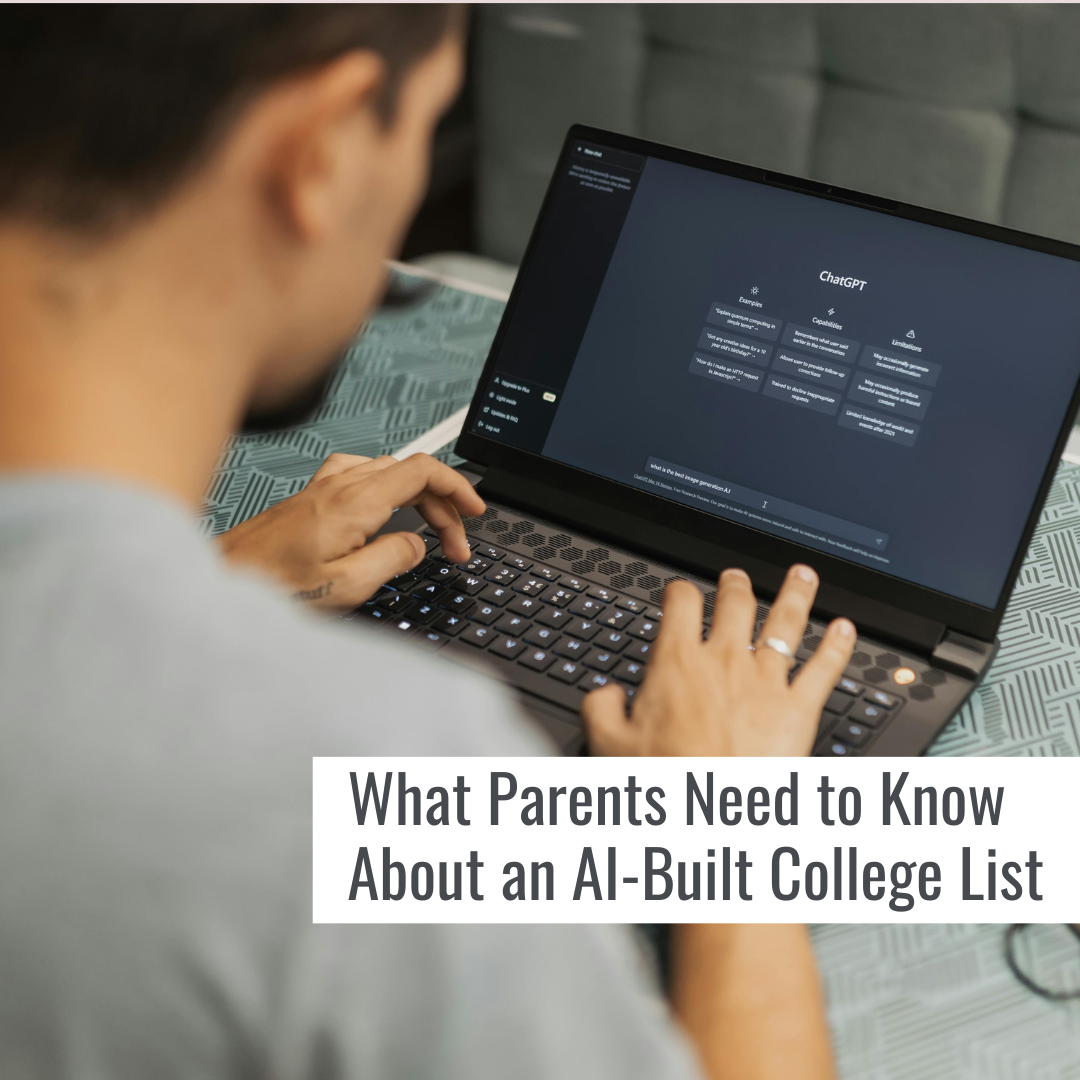
Your teen may have already assembled some of their college list using AI. About half of high school students have used an AI tool at some point in the search process, up from around a quarter six months ago, a survey of more than 5,000 students by education consulting company EAB found. Most parents learn of it too late.
That isn’t necessarily a bad thing. A chatbot will answer a question at 11pm that a teenager would never think to ask a counselor at 11am. But the same survey revealed that 18 percent of students had already started ruling out colleges because something a bot told them. That’s a real choice based on unverified data.
Here’s what to look for before that list is set in stone.
Where the data goes stale first
The knowledge that underpins AI systems is only as true as it was at one point in time. Three areas cause the data to become outdated most quickly, and these are the three that matter most to families.
Graduation and retention rates generally are aggregated into a single figure that obscures how widely their results vary by program. The average financial aid award from two cycles ago says nothing about what your family might actually pay this year, as those awards are recalculated annually. Admissions criteria are evolving, too. Testing policies have varied more than you might think, and a response you received last spring could be out of date by now.
Verify three things by hand
Before removing a school from the list, visit the college website for the application deadline, the testing policy, and the net price calculator. Every accredited US college must have one available. It takes roughly ten minutes and is the most helpful tool for a parent because it provides a figure based on a family’s finances, not some national average.
These three things apply to any school the AI suggests. Make sure the school exists, it still offers the program your teen desires, and that you could afford it before anyone gets even remotely involved.
Better questions produce better lists
Vague questions yield vague lists. Ask “what are good colleges for biology” and you get the textbook-echoing list of the most commonly appearing, and often most popular, schools.
More pointed questions are much more effective. Provide it with a GPA, a state or region, a budget, and one thing that actually matters to your teen. Then pose two probes that most students leave out: what are you unsure of and what are one or two schools here I would definitely not have heard of. That second question is where these comparison tools actually outdo a spreadsheet because a search that would take a family the better part of a weekend can be done in about a minute.
Plus, it’s useful to understand what type of tool you are using. A generic chatbot doesn’t have any information about your child. Custom admissions tools are based on the individual student’s profile; that’s why their recommendations tend to be more specific and easier to verify.
Have the essay conversation early
That’s where families run into big problems. Most colleges still haven’t published a clear policy on AI use in application essays. According to a Kaplan survey of admissions officers, about two thirds of schools don’t have any sort of policy.
Such silence is not consent. The boundary most counselors maintain is that AI can help a student conceptualize, draft and revise, but the words submitted must be the student’s own. Brainstorming, an outline and feedback are acceptable. Generated paragraphs are not, and college officials are catching on.
Get your teen to tell you what they’ve tried and how. That’s a conversation you can have in September, not in January.
Today’s guest post is by Martin Paukstelo, a co-founder of Unive, an AI college counselor for US high school students.