
All posts by Suzanne Shaffer

Scholarship Friday: Penn College Scholarships


penn college scholarships
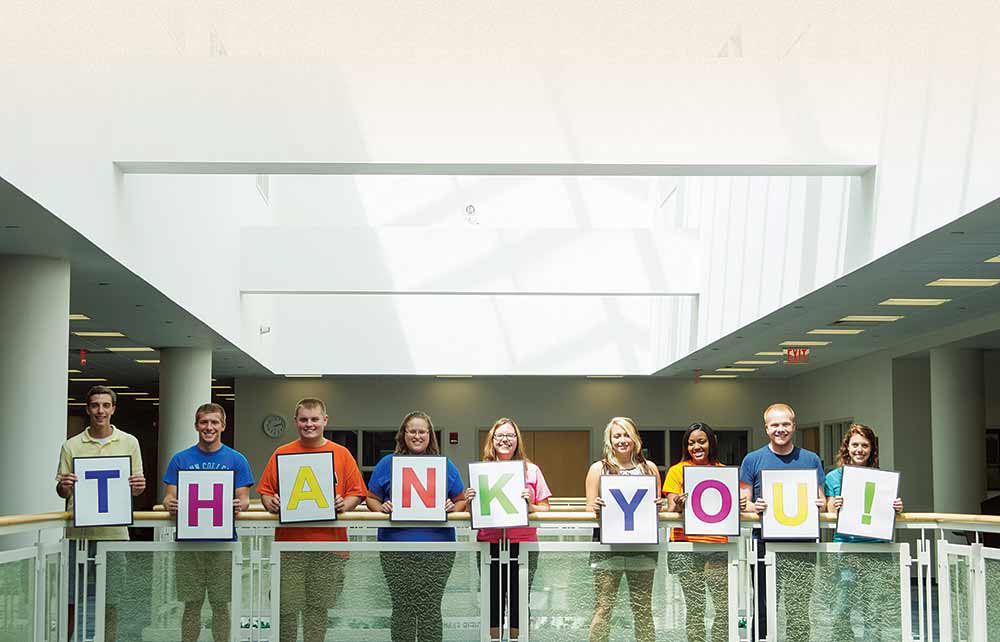
Penn College students showing appreciation for alumni scholarship fundraising.

As part of my #DegreesThatWork series, I thought it would be fitting to write about Penn College scholarships. They are committed to helping their students finance their education and have backed up that commitment with scholarships and merit aid.

As I mentioned in my first post, Degrees That Work: A College’s Best Kept Secret, the alumni of Penn College raised 6.4 million dollars last year for their scholarship fund. This money is earmarked for deserving students, both with need and with no financial need. This is no ordinary college. The lists of scholarships available to students is mind blowing–yes, I said mind blowing. And the good news is you only have to fill out their scholarship application once a year and it will match you with available scholarships, making it easy to find them and apply.

Head over to their scholarship page for an extensive list: http://www.pct.edu/scholarships/scholarships.htm

And…if that’s not enough, the page also provides you with an External Scholarship List for various majors, and a link to their STEM scholarship.

These available scholarships are just one more reason to consider Penn College when creating your college list.

Next week on #CampusChat, we will host @PennCollege as our guest. Bring your questions and learn all about the amazing opportunities available at Penn College and their Degrees That Work program.

Wednesday’s Parent: Talking to Your Teen About Irresponsible Behavior


irresponsible behaviorOne of the first things we learn growing up is that all of our actions have consequences. If we pull a glass of water off the table, it will spill all over us. If we touch a hot burner on the stove, it will burn. If we pick up a knife on the blade, it will cut us.

Selective memory loss

Teaching teens the consequences of irresponsible behavior can be challenging. Unfortunately, too many teens begin to make choices during their teen years that are life changing and life altering. They don’t rationalize that sleeping with someone you just met can have consequences: sexually transmitted diseases, AIDS, pregnancy, rape and even at the very worst murder. They don’t think that cheating on a test in school, even if you don’t get caught, robs you of an education and learning. They don’t see that getting in a car with a drunk driver could end in tragedy because most teens who are drunk believe they have the capacity to drive. They can’t look far enough into the future to see that going to a college they can’t afford could land them in overwhelming debt after graduation.

Running down the scenarios

I know. All those scenarios are a bit dramatic. But let’s just think before we discount them as viable examples of ignoring the consequences of our choices. Your teen would be well served if he did the same. The next time your teen is tempted to sleep with someone they just met, what would happen if they ran over the previously stated consequences in their mind before they decide to do it? There would be consequences to their decision: good or bad. Before they get into a car with another teen who is drunk or drive drunk themselves, imagine what would happen if there is an accident and their friends or other innocent drivers and passengers are killed. Before getting wasted, imagine what would happen if he got alcohol poisoning and his friends couldn’t recognize the symptoms or get help when it was needed.

All decisions have consequences

When you’re young and your whole life is ahead of you, you tend to function in the present. Twenty or thirty years from now seems like an eternity to someone in their teens. But time has a way of catching up with us and every choice we make when we are young has both good and bad consequences. The trick is to know when those consequences aren’t worth the risk. And the other trick is to pause long enough before taking those risks to weigh both the good and the bad.

If your teen gets anything from this bit of advice, let it be this: take time to think before you act. Weigh the good and the bad consequences. Then once they decide, make the best of their decision and swallow the good with the bad. Every path they take in life has the potential for greatness. Encourage your teen to be wise and think before they act, knowing that their choice could potentially be the wrong one.

Read Wendy’s Post: College Prep Red Flags

+++++++++++++++

Wednesday’s child may be full of woe but Wednesday’s Parent can substitute action for anxiety. Each Wednesday Wendy and I will provide parent tips to get and keep your student on the college track. It’s never too late or too early to start!

The bonus is on the fourth Wednesday of each month when Wendy and I will host Twitter chat #CampusChat at 9pm ET/6pm PT. We will feature an expert on a topic of interest for parents of the college-bound.

Wednesday’s Parent will give twice the info and double the blog posts on critical parenting issues by clicking on the link at the end of the article from parentingforcollege to pocsmom.com and vice versa.

Degrees That Work: Penn College Has a Vision for Tomorrow’s Students


This is the fourth article in a series about Pennsylvania Technical College: Degrees That Work. 

tomorrow's studentsPenn College is not only committed to its current students, but it has a vision for tomorrow’s students. While I was visiting the college, I had a conversation with a middle school teacher who had brought some her students to work in the computer lab. It was a yearly tradition for her and afterwards many of her students decided to attend Penn College.

The college offers opportunities for young people to help them discover careers that interest them and get some hands-on work with the professors in the process. In the spring and the fall, they host a career day for over 1000 middle-school students. The event is designed to give participants a taste  of a variety of tomorrow's studentscareer options, which will help them make informed decisions about their future education. In a program funded by the U.S. Department of Education, seventh and eighth graders in an after-school program visit the college once a week to explore career options. In the spring, Penn College offered more hands-on activities for children and their families at a Science Festival. The math and science demonstrations were geared toward elementary and middle school students, in an effort to make learning fun.

Summer Career Events

In the summer, Penn College has various events scheduled for students to give them more information about various careers that will help them decide a career path after high school graduation.

Business for the 21st Century Career Camp

This two-day camp introduces students entering grades 9-12 to a variety of digital marketing and sports & event management and promotion career areas. Students will receive information on management and marketing skills relating to sports, events, and digital marketing along with hands-on workshops.

Designing a Digital Future Camp

This two-day camp introduces students entering grades 10-12 to a variety of digital media-based careers. Participants will receive information on gaming, web, and graphic design careers along with hands-on workshops developing personal games, mobile applications, and Lego robots.

Future Restaurateurs Career Camp

This two-day camp introduces students entering grades 9-12 to a variety of hands-on demonstrations and explores careers in baking & pastry arts, culinary arts, and hospitality management. Students participate in menu planning and dining etiquette workshops  as well as developing kitchen and baking skills.

tomorrow's studentsHealth Careers Camp

This two-day camp introduces students entering grades 9-12 to a variety of health careers who also tour health facilities and network with current students and faculty as well as health employees.

SMART Girls

Penn College developed Science and Math Applications in Real-World Technologies (SMART) Girls to counter an alarming academic and social trend: girls tend to shy away from math and sciences as they enter adolescence and their important high school years. SMART Girls provides young females the opportunity to experience math and science as a foundation for careers in technology. It offers young girls, in grades 9-11, the opportunity to experience math and science as a foundation for careers in technology. Hands-on experiences will range from crushing concrete (working with compression strength) to cyber challenges (creating Web pages).

Creativity Art Camp

Creativity Camp at Penn College provides kids entering grades 4 – 6 the chance to explore art and creativity through a variety of art media. Campers work with professional artists to produce unique works of art, focus on the creative process, and develop their imagination and creativity.

Youth Training for Athletic Development Camp

The program format is specific to youth training based on National Strength and Conditioning Association (NCSA) guidelines, and is taught by Penn College Physical Fitness Specialist faculty. Participants in the camp learn injury prevention, technique fundamentals, sport-specific training, nutrition education, agility and speed progression, functional training, and resistance training.

Degrees That Work TV

Early exposure to technology and emerging career fields helps prepare students for rewarding futures. Educators (grades 7-12) are encouraged to use episodes of degrees that work.tv and corresponding free lesson planning guides to help make that connection. Each 28-minute episode of the documentary series reveals interesting stories and valuable information related to the U.S. Department of Education’s career clusters, which provide career awareness and direction for students.

Check out the other articles in the Degrees That Work series:

Wednesday’s Parent: 5 Reasons You Should Not Rely on College Ranking Lists


college ranking listsEvery year the college ranking lists roll out: U.S. News-America’s Best Colleges, Forbes list of America’s Top Colleges, Princeton Review’s The Best 379 Colleges and more. Parents often use these lists to create a list of dream colleges for their student. These lists may be jumping off points, but putting too much emphasis on them can harm your student.

Here are five reasons you should NOT rely on college rankings lists:

  1. Colleges and universities often cheat. Read this post from Lynn O’Shaughnessy about the cheating that goes on when colleges send incorrect, inaccurate and inflated data to the list makers. (Colleges and Universities That Cheat)
  2. Rankings don’t measure what sort of job a college or university is doing to graduate its students. No list even attempts to measure the education students receive or the quality of that education.
  3. Rankings encourage colleges to favor the rich. O’Shaunessy explains, “Many teenagers end up as collateral damage in the rankings race because schools that are more selective are rated higher, which encourages them to accept more wealthy students. US News awards schools which generate higher test scores and grade point averages from their freshmen. This focus on selectivity has been a boon for affluent high school students, who tend to enjoy better academic profiles. These teens can afford expensive test-prep courses and are more likely to have attended schools with stronger academic offerings.” The most elite schools boast that they reserve their aid to the families who need financial help to attend college, but most of these institutions offer admissions to a shamefully low percentage of needy students.
  4. The rankings encourage admission tricks. The US News rankings favor schools that spurn more students. Colleges increase rejection rates by recruiting students they have no intention of accepting.
  5. Rankings encourage debt. Rankings ignore how much debt students are incurring at the colleges. The colleges at the top of the lists are expensive and middle income students who aspire to these schools and are accepted are often forced to take out huge student loans in order to pay the high tuition. In this case, the prestige of the college often outweighs the cost in the mind of the student and the minds of the parents.

The bottom line: don’t rely on these rankings to create your college list. Create your own list by researching the data yourself. Websites like CollegeData and CollegeNavigator will provide you with data that is not inaccurately reported or inflated to rank the college higher on a list.

Read Wendy’s post: 7 Great Ways to Use College Rankings Lists

++++++++++++++++

Wednesday’s child may be full of woe but Wednesday’s Parent can substitute action for anxiety. Each Wednesday Wendy and I will provide parent tips to get and keep your student on the college track. It’s never too late or too early to start!

The bonus is on the fourth Wednesday of each month when Wendy and I will host Twitter chat #CampusChat at 9pm ET/6pm PT. We will feature an expert on a topic of interest for parents of the college-bound.

Wednesday’s Parent will give twice the info and double the blog posts on critical parenting issues by clicking on the link at the end of the article from parentingforcollege to pocsmom.com and vice versa.

Mom-Approved Tips: Student Behavior Can Impact College Admissions


student behaviorDid you know student behavior in high school can have an impact on college acceptance? The vast majority of colleges and universities use disciplinary records to help determine whether to accept or reject a student’s application, according to a new study discussed in an Education Week article.

The study, released on Friday, was conducted by the Center for Community Alternatives, a New York-based organization that advocates on behalf of students who’ve had prior court involvement. It found that roughly 3 out of 4 colleges and universities collect high school disciplinary information, and that 89 percent of those institutions use the information to make admission decisions.

The study, titled “Education Suspended: The Use of High School Disciplinary Records in College Admissions,” also found that half of all high schools disclose such information to colleges, even though they are not required to do so.

Is this discipline sharing fair?

Defenders of the use of disciplinary records in college admission decisions say it is an important way for universities to keep students with a history of behavioral problems off their campuses as they build incoming classes of freshmen. But opponents say high school disciplinary records have little predictive value, needlessly stigmatize students for infractions that are often minor, and reduce their opportunities for higher learning.

They also argue that the practice is a civil rights issue because of the well-documented fact that students of color and students with disabilities face disciplinary actions in K-12 schools at disproportionately higher rates than other students.

What are the implications for parents?

These findings make it even more critical for parents to begin creating students who respect authority and submit to the instruction and guidance of authority. In today’s world of helicopter parenting, it’s easy to step in and help students avoid the consequences of their actions. But that type of parenting only produces entitled children who rebel against teachers and school administration. Students should understand that the consequences of their bad behavior will quite possibly affect their college admissions options.

Scholarship Friday: Maximizing College Scholarship Options


college scholarshipWith the rising tuition costs every year, it is getting difficult for students and their families to pay for the college because the financial aid packages they get from college are not sufficient to cover the other costs including room, books and other necessities. If they can apply for scholarships, this additional college debt can be covered. The college scholarship money is offered by the private sector sponsors, foundations and corporations and is rising year by year.

Make the mark

The organizations who grant scholarship always ask for academic achievements or grade point average i.e. GPA. Therefore, you need to get high grades in every year of your high school, as well as sometimes even in middle school, to avoid putting your scholarship chances at risk.

Know scholarship options – where to look

Scholarships are gift aid and thus the best option for the students with high skills.  The first place you can ask for the scholarships is your school or college or you can check their websites. Some personal organizations, businesses and other country foundations also provide scholarships. If you are an employee in some company, you can also look in your company. Many companies offer programs for their employees like tuition reimbursement programs.

Participate

During your high school years, you should involve yourself in outside activities, which can reflect your leadership abilities. The students who are in need of scholarships who are also involved in several community organizations have a stronger application. Most organizations that offer scholarships consider all the skills beyond academic, as they like to give scholarships to people they believe are well-rounded applicants. You need not to switch your activities randomly just to make your list of accomplishments big. It is important that you are making a difference, giving your focus only a few organizations. You can go for volunteering at local non-profits, student clubs at school or raising money for a cause; there are many more other options.

Make the match

You should make sure the scholarships for which you are applying to must match your skills. Therefore, you may want to build up those special skills required because many scholarships offered only to the people having certain skills. The organizations sponsoring scholarships may look for the applicants who are a certain gender, studying specific degrees, planning to work in certain fields, in need of financial aid, and many endless other skills. At LendEDU, we have a scholarship search that allows applicants to filter off many fields.

Good writing skills

It is highly required having strong writing skills as it is the important part of the application process for scholarships. Essay writing is a must in most of the applications. While this part of the application is often self-explanatory, many scholarship committees review essays as their opportunity to “get to know” the applicant. Having a strong essay with a powerful story or strong reasoning can boost your application to the top of the pile, even if you do not have the strongest grades or test scores.

Apply, apply, and apply

The one and only way you will be getting a scholarship is to apply! All other things come secondary. However, people get disheartened soon just by looking at the amount of time the scholarship process takes and don’t apply. Always remember, the investment is worth it and soon you will be getting hundreds and even thousands of dollars in scholarships, free money that you do not need to pay back!

Determine what makes you special and start searching for the good college scholarships to see the kinds of awards you could have for a chance to win.

+++++++++++++++++

Today’s guest post is from Matthew Zehr, Content Marketing Manager at LendEDU.com! LendEDU is a marketplace for student loans and student loan refinance. LendEDU helps borrowers find the best terms and rates available with one application.

Degrees That Work: Planning for a Career, Not Just a Job


careerWouldn’t it be great to graduate from college with a career and not just a job? Students all over the country dream of graduating from college with a job. Penn College students graduate with a career.

During my time on campus I spoke with students from all career concentrations and the overwhelming response was, “This education is preparing me for a career, and for a career that I love.” That’s the key—students at Penn College don’t just earn a degree; they discover their true passion and learn the skills to pursue it.

There’s no better way to see the impact of this college than through the words of its students and the companies who employ them.

94% of graduates responding to a survey were employed, continuing their education, or serving in the military within one year of graduation.

“I will … not be left with what so many college graduates are left with … uncertainty about the future. All the degree programs at Penn College prepare students for having a job and take away the uncertainty.” — Matthew Stoltz, Physician Assistant

“My major was a mix of theory and lab … that’s why I came here (Penn College). The reward for completing this major is job security.” —Jorgette Grosso, Systems Application Engineer, Schneider Electric Co.

“In this field (Building Automation Technology), you can write your ticket before graduating … I couldn’t have picked a better place to go.” — Adam Yoder, Service Energy Analyst, Honeywell International

“Throughout each day I am faced with a very wide variety of troubleshooting issues. From networking and communication, to PLC programming, to component and other circuit issues, Penn College has prepared me for it all. I would not be as successful as I am today if I hadn’t made the decision to get my degree from Pennsylvania College of Technology.” –Francis “Dave” Nevill, Controls Engineer, First Quality Enterprises, Inc.

“The hands-on education from Penn College allowed me to hit the ground running from day one on the job. I was able to contribute to my company with the technical skills I’ve learned from college.”—Zachary Brook, Pennsy Corporation

“I attribute the hands-on, strong, and practical work ethic I received from Penn College as the building block to my accelerated career path.”—Sean Stabler, Business Development Engineer, Arkema, Inc.

“Industrial and technological change is inevitable and these changes require a deeper understanding of asset procurement, integration, and organizational-change management … take advantage of the diverse curriculum and extracurricular activities at Penn College to advance in industry, as well as in life.”—Robert Blauser, Manufacturing engineer leader, Harley-Davidson Motor Company

In 2013-14, more than 75 employers participated in on-campus recruiting information and interview sessions, 34 Fortune 500 companies recruited Penn College students and alumni, and 367 employers offering more than 5,200 jobs attended the Penn College Career Fairs.

“We are proud that we have added another Penn College graduate to our team.” — Roger Kipp, Vice President-Engineering, McClarin Plastics, Inc.

“Pennsylvania College of Technology has provided Synthes, USA with a valuable talent pool of manufacturing engineers, engineering technicians, and CNC machinists over the past eight years … In fact, our #1 source for manufacturing engineers over the past several years has been Penn College alumni.”—Mike Sticklin, SPHR, Human Resources Manager, Synths USA Brandywine Plant

Penn College is providing its students with more than a college education. It is preparing them for a career coupled with a unique college experience, a college with all the offerings of any four year university, and a faculty committed to giving their students a hands-on education.

Check out the other articles in the Degrees That Work series: Degrees That Work: One College’s Best Kept Secret; Degrees That Work: A Working World Within a College

Wednesday’s Parent: What is a Perfect Fit College?


perfect fit collegeWhat is a perfect fit college? When asked, “how do you determine if a college is the right fit?”, overlook all the emotional motives:

  • Your friends are going there
  • Your parents went there
  • You like the football team
  • Your boyfriend/girlfriend has chosen it
  • You want to impress your friends by the name
  • You want to stay close to/or move far away from home

Once you remove those emotional motives, you can concentrate on six criteria that will help you determine whether or not the college is a “perfect fit”:

  1. A place you can afford.
  2. A place that provides the academic program that meets your needs.
  3. A place that provides the style of instruction that best fits your learning style.
  4. A place that provides a level of rigor and challenge equal to your ability.
  5. A place that feels like home.
  6. A place that values you for what you do well.

You will notice that #1 is about the financial fit. Before you even look at 2-6, you MUST be the “voice of financial reality”. This will save you much heartache in the future. In an article on University Parent’s blog: Reality, fit and substance—The ultimate college list, financial fit is key:

Before your student gets her heart set, get clear on what your family can afford. Take half an hour to work through the “net price calculator” available on most school websites, or use the FAFSA4caster to estimate federal student aid. These tools calculate your family’s financial need — essentially the difference between the college sticker price and what the formula says you are able to contribute.

Net price calculators don’t assess potential merit aid — institutional money set aside for students based on varying factors like GPA, standardized test scores, advanced courses, etc. Some institutions include merit calculators on their websites; many do not. To learn how specific schools determine merit aid, don’t hesitate to call the admissions office and ask.

With net price and merit aid estimates in hand, your student’s list can be more economically viable. If you and she have assumed that private scholarships and loans will fill gaps, the amounts you are supposing are now clearer, and that’s a good thing.

Once #1 is addressed, you should encourage your teen to “chew” on each of those remaining and think about what it is they want to get out of a college education. College is more than bricks and mortar and a place to get a diploma. It’s a place where the mind is challenged, social interaction abounds, friendships are formed and a place your college-bound teen will call home for at least four years of their life. That “perfect fit” will assure your teen is comfortable, challenged and ready to learn.

Read Wendy’s Post: The Prime Relationship Between College List and College Fit

+++++++++++++++++++

Wednesday’s child may be full of woe but Wednesday’s Parent can substitute action for anxiety. Each Wednesday Wendy and I will provide parent tips to get and keep your student on the college track. It’s never too late or too early to start!

The bonus is on the fourth Wednesday of each month when Wendy and I will host Twitter chat #CampusChat at 9pm ET/6pm PT. This week’s guest will be Jessica Velasco (@Admissions411) discussing college fit.

Wednesday’s Parent will give twice the info and double the blog posts on critical parenting issues by clicking on the link at the end of the article from parentingforcollege to pocsmom.com and vice versa.

Mom-approved Tips: 6 Ways To Prepare the Summer Before College


summer before collegeThe Disney Pixar movie Toy Story 3 offers an unexpected insight into the lives of parents with teens going off to college. As young Andy prepares to leave home, his toys try to deal with what his departure means to them. Just as the old saying goes, Andy realizes that it’s time to put away childish things.

That doesn’t mean you have to incinerate your child’s toys, but it is time to think of things in a new light. How can you help your own “Andy” transition into college life? Consider these six tips and you’ll be well on your way to help your college-bound teen prepare the summer before college.

1. Put them to work.

If your teen has not been working, now is the time to make sure they are given some kind of responsibility. Encourage them to get a job, an internship, or volunteer for the summer. This work will give your child confidence and a taste of the “real” world. Also, it allows them to meet other professionals in a work setting. Any job will do, but if it is something that ties at least loosely into a set of career goals, all the better.

2. Offer a crash course in Adulthood 101.

There are probably many things that you think your child knows that he or she simply does not. For one thing, encourage your son or daughter to do their own laundry all summer long. Also, teach them rudimentary accounting skills: how to balance a checkbook and make a budget (a job helps here, too). Depending on where they’re going to school, how to use public transportation might be something to work on; most freshman don’t have access to a car, and you won’t be there to drive your son or daughter around. Some basic cooking and grocery shopping skills should be included as well—one way to augment this is to have your teen cook for the family at least one night a week. You’ll still be surprised by the late night calls asking, “How do I make a doctor’s appointment?” or “What do I do if I’ve locked my keys in my car with the engine running?” But at least they’ll be prepared with the basics.

3. Take a look in a book.

To prepare for the amount of reading that will be necessary in college, get your child into the habit of reading as much as possible—reading every day on the bus to work would be grand! This is more about building study habits rather than worrying about specific material, however many colleges have books they would like freshman to have read before they start classes. These titles will be a great place to begin. If your child knows what classes he or she is taking, then gear the books toward these courses.

4. Teach time-keeping.

Encourage your child to maintain a schedule or planner by themselves. Show them how to keep track of work, social, and family events—they should refer to the schedule all summer and write down their comings and goings. It’s easy enough to do that on a computerized calendar or in a datebook.

5. Don’t let go quite yet.

Of course, your teen is going to want to spend the summer with friends, but you can still get your time in surreptitiously. Schedule a few family outings and meals at favorite restaurants. Fit in a vacation if possible—even a weekend or a Fourth of July outing can have real future value. P.S. Going to the store for college shopping doesn’t count as family fun.

6. Be true to their school.

Learn everything you possibly can about your son’s or daughter’s new school, and talk with them about opportunities. Go over the information on classes and extracurriculars. In particular, check if there are any “superstar” professors and encourage your child to take their classes. Also look for a history of achievement in any particular extracurricular, such as a winning debate team. It’s wonderful to work toward being part of a tradition of excellence.

Most importantly, be patient and keep lines of communication open. There’s no getting around it—it’s going to be rough emotionally, but you can help your child be prepared for everything that is to come. And isn’t that what parenting is all about?

+++++++++++++++++++

About the Author

Ryan Hickey is the Managing Editor of Peterson’s & EssayEdge and is an expert in many aspects of college, graduate, and professional admissions. A graduate of Yale University, Ryan has worked in various admissions capacities for nearly a decade, including writing test-prep material for the SAT, AP exams, and TOEFL, editing essays and personal statements, and consulting directly with applicants.

Scholarship Friday: 3 Social Media Scholarship Strategies


social media scholarship strategiesYour teens live on social media (and you do too!) Why not parlay some of that recreational social media time into a productive scholarship search? These three social media scholarship strategies can add some scholarship dollars to your college fund!

Facebook

Looking for scholarships? Why not use your Facebook time to your advantage. All you have to do is “like” some Facebook scholarship pages and watch the scholarship information fill your timeline.

Here are 10 Facebook pages that dispense regular scholarship information:

http://www.parentingforcollege.com/2015/05/08/scholarship-friday-10-facebook-scholarship-pages-to-like/

Pinterest

Pinterest is an excellent place to find scholarships. If you follow these boards, you could unearth some scholarships, get scholarship tips, and gather a wealth of scholarship information. If you aren’t on Pinterest, you should be. It’s easy to follow these scholarship boards—just click on the links and start gathering scholarships.

http://www.parentingforcollege.com/2015/04/24/10-scholarship-boards-to-follow-on-pinterest/

Twitter

Twitter is a wealth of resources for parents of college-bound teens. Just about any question you have about college prep can be answered on Twitter. And if you’re looking for scholarships (and who isn’t) follow these Twitter scholarship accounts

http://www.parentingforcollege.com/2014/11/14/20-twitter-scholarship-accounts-to-follow/