All posts by Suzanne Shaffer

Is Your Student’s Screen Time Affecting His Vision?


vision

The average person now spends just short of seven hours a day staring at some sort of screen, either on their computer, smartphone or TV.

Students have grown up in a digital age and probably don’t consider how vulnerable they might be to a condition known as computer vision syndrome. A growing number of patients contemplating the idea of laser eye surgery on the NHS, is testament to the fact that many of us are experiencing eye strain and other problems with our eyesight. You can find out more about NHS options here.

Here is a look at what computer vision syndrome is and how you can take steps to try and prevent it happening to you.

Computer Vision Syndrome explained

You might also hear the syndrome referred to as Digital Eye Strain, but the end result and the symptoms are the same.

These terms are generally used to describe a specific group of eye and vision-related issues that are associated directly with prolonged use of your computer and other devices that have a screen.

Typical symptoms you will experience with Computer Vision Syndrome are eye strain, regular headaches, blurred vision and discomfort from neck and shoulder pain.

In basic terms, viewing a computer or a digital screen, will often involve making your eyes work a bit harder in order to adjust to the glare of the screen and if you have not adopted a good posture or setup to view the data, this will have consequences sooner or later.

You will be vulnerable to Computer Vision Syndrome if you spend two or more continuous hours looking at a screen each day, creating visual demands on your eyes that exceed their normal abilities.

Feeling the strain

There are a number of things that you might be doing every day at your desk, which will aggravate an existing problem and lead to you suffering from eye strain.

The performance of computer screens has greatly improved in recent years, so if you are still using a low-resolution screen, this will be harder on your eyes and lead to an increased risk of eye strain, so consider switching to a high-resolution flat panel version, which should be easier on your eyes and put less strain on them.

Sitting on an ergonomically designed chair to do your work at a screen will also help, as it should improve your posture and put you at a comfortable viewing distance if used correctly.

Lighting and glare

It is not just your computer screen that can aggravate your eyes and lead to strain, as many of us are not working under the correct lighting conditions.

Eye strain can often be caused by excessively bright light that is either coming from sunlight or from harsh interior lighting. You should aim to try and get ambient lighting that is about half the brightness of a typical strip light in an office.

If you already wear glasses, you might want to consider getting an anti-reflective coating, which will minimize glare and reduce the risk of eye strain.

If you are a student spending plenty of time in front of a computer screen, make sure you don’t ignore any warning signs like regular headaches, and get your eyes checked regularly to ensure that you are not suffering from Computer Vision Syndrome.

___________________

Hannah Fox is at medical school and wants to be an ophthalmologist doctor. When she can find a quiet moment she enjoys using her new-found knowledge to write articles about eye health. These appear on health blogs around the web.

The Path to Your Child’s Dream College


dream college

If you think about it, getting your child into the right college is essentially the final step of parenting. Don’t get the wrong idea here; we’re not saying that your job is over once your child attends college. For one thing, you’ll almost certainly still need to pay for their tuition. However, rather than leading their life, you are sidelined to offer advice and guidance only when it is needed. Your child transforms into an adult and makes the decisions to shape their destiny. Of course, it can be argued this happens long before they reach college. But while they are still in school, you can help, you can guide, and you can instruct. Ultimately, this will lead to them getting into a great college and setting them towards a fantastic future. So, what steps do you need to take as a parent, eager to get your child that ever increasingly important college degree and assure your child gets into their dream college?

Encourage Extra Curricular Activities

This has become of such great importance for children hoping to get into some of the best colleges across the country and around the world. You would be amiss in thinking that great grades will get your child into their dream college. On the contrary, great grades are only a small fraction of what they will need. Typically, they will have to show that they have extra activities and have excelled in areas that are not purely academic.

This could mean being a member of the school sports team, or perhaps the chess club. Maybe they helped write the school newspaper or organized events. All of these things can demonstrate your child has skills that colleges look for. It may even lead them to get a scholarship, and this will lessen the load of the costs of college for you.

It’s true that many children won’t want to participate in extracurricular activities. You should be encouraging your child to do something like learn to play a musical instrument. Or perhaps even learn a second language. These extra activities will give your child a unique selling point when applying for college. You have no idea how important this can be. It can be the difference between getting a college interview and being immediately dismissed.

Aiding Them With Their College Essay

The essay is an important part of the college application. A reflection essay, for instance, is where the writer discusses experiences and thoughts or feeling that they have had. It’s difficult to know exactly what makes a great reflective essay. But some advice would be to ensure your child writes about something that means a lot to them. Encourage them to share their true feelings. A mistake many college applicants make is to fake the essay. They imagine an experience because they can’t think of something meaningful enough. This hardly ever works. Even the best writers find it difficult to convince someone that something has actually happened to them when it hasn’t. That’s why writers of fiction will often visit the places they are writing about. Or, participate in the activities and experiences of the character. Thus for a reflective essay, you must make sure your child writes about something that as real.

When you inevitably read their college essay, make sure it is confident. It’s important not to use words such as I think, I might or I could. Instead, the application needs to be more assertive. I know, I will, and I am are the keywords to use. Think of it like writing a cover letter for a job application and you will be on the right track.

Preparing For The Interview

You should also help your child prepare for the college interview. The college interview is again, quite similar to a job interview. The interviewer knows what they are looking for, and you have to understand what that is. Again, confidence is key here. You must make sure that your child is confident before attending the interview. You should practice with them, taking the role of the interviewer. Remember, there are questions that are always asked. For instance, why do you want to go here, what made you apply for this college and what can you give us? Colleges are always looking for applicants that can provide something for their school. You can help your child show that they have that potential.

Getting The Grades

Don’t forget we said that the grades weren’t the only thing you need. However, you can’t get into college if you don’t have serviceable grades. Again, it will be up to you to ensure that your children study because they may not do it on their own. When they are younger, you can set study periods at home. Encourage your children to study for at least one hour each day and maybe more during exam seasons. It is not enough to expect them to study without guidance or to study during school hours. Bare in mind that a lot of parents hire tutors for their children.

A tutor can give your child the extra hours they need to push an A up to a B. If you hire a tutor, make sure you use someone who is trained and qualified. It is not always a good idea to use a student trying to make some money. They may be intelligent, but they probably have no skills at teaching.

A good diet is also important for getting good grades. If you want your child to do well in school, you must make sure they are eating healthily. This has been shown to boost cognitive performance. At many times, what your child eats will be out of your hands. Just make sure they are getting at least one good meal every day.

If you take this advice, your child will be on the right path to being accepted to their dream college.

The Best of Wednesday’s Parent College Prep Tips


college prep tips

I’m somewhat sentimental about these posts. I shared them with Wendy David-Gaines each week, but this past year, Wendy lost her battle with ovarian cancer. She was not only “college smart” but had a tremendous sense of humor. She was positive, energetic, and saw life as an exciting journey. I miss these collaborations and I miss her wit and wisdom.

These five posts are the “best of the best” and offer parents some top-notch tips college prep tips.

Wednesday’s Parent: Scholarships With Strings Attached

Everyone knows that you must do something to win a scholarship: write an essay, complete an application, or simply enter. Scholarships won’t give you money for nothing. Some scholarship sponsors ask for more, and these are scholarships with strings attached to the award.

Wednesday’s Parent: College Prep Peer Pressure

Last month, I was speaking with an interviewer about college prep peer pressure in the context of how it relates to the stress factor. Parents need to factor in peer pressure when they think about how your student will react to it, how it will affect his college choice, and how the stress surrounding it can affect his emotional health.

Wednesday’s Parent: Talking to Your Kids About Financing College

As their parent, it’s up to you to make sure they don’t fall prey to debt that they cannot repay after graduation. Before they ever accept an offer of admission, you need to talk to them about financing college. In my Parents Countdown to College Crash Course I call it “the money talk”.

Wednesday’s Parent: 6 Emotional College Prep Tasks

It’s no surprise the middle name of college-bound teens is “stress”. According to a recent survey, 76 percent of college-bound students say they are stressed. If you live with one, you’re stressed too; and not just you, but your family as well. Granted, there are plenty of reasons to be stressed. And plenty of reasons why it’s impossible to avoid feeling stress (try as you might). Add to the stress emotional teenagers and parents and you have volatile home environment.

Wednesday’s Parent: Cultivate the Counselor Relationship

You would be surprised at the amount of material that comes across your high school counselor’s desk: from scholarship opportunities, to college admissions counselor recommendation requests, to leadership positions, to volunteer opportunities. Making friends with your counselor may well be the most important and valuable relationship your teen cultivates during high school.

App Tuesday: Budgeting App for Students


budgeting app

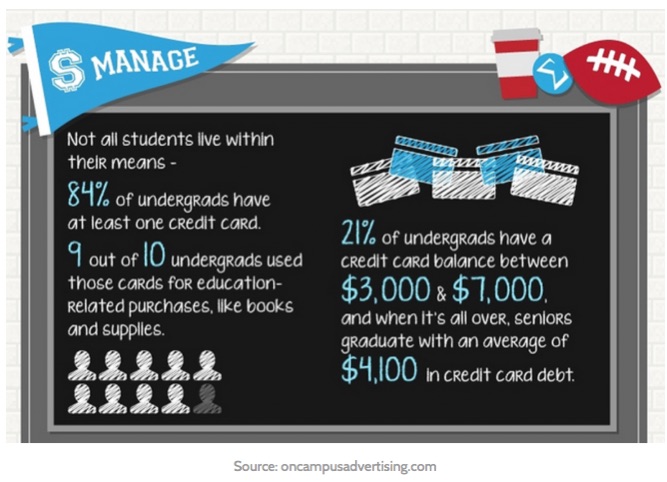
It’s the summer before college and you watch your student spend money like a maniac. You feel like an ATM and you wonder how on earth she will ever manage her money in college. Will she accept multiple credit card offers and charge pizza and Starbucks daily? Will she spend all her work study money on entertainment? Will she call you weekly and ask for more money to be deposited to her account?

The best way you can teach your student about money management is to implement budgeting tactics the summer before college. And since they are “all about the apps” for every task from shopping to communicating to entertainment, why not add a budgeting app to their smartphone?

According to the creators of Bapp (a budgeting app for students):

It is also a growing problem for students to spend more than they anticipated on basic wants and needs, also known as discretionary spending. We’ve learned that college students’ annual variable expenses like coffee, snacks, meals, travel, entertainment, clothing, and online shopping have been steadily rising each year. Due to the extensive time spent on social media, advertisements continue to grab the attention of smartphone users and encourage more spending. Powerful marketing campaigns are targeting college students more than ever because of their impetuous and increasing spending power. Cumulative student discretionary spending is expected to reach half a trillion dollars.

With their app, students can:

  • Set and track your variable and fixed expenses each month
  • Quick view of how much money you have to spend for a specific category
  • Establish a budget for basic monthly necessities
  • Curb bad spending habits
  • Monitor and set a plan to eliminate your debt
  • Keep track of spending trends
  • Set up a savings goal for yourself
  • Get on the fast track to building wealth

Each week on Tuesday, I’m going to highlight a “must-have” app for your students. From studying, to safety, to budgeting, to organization. Stay tuned for more great apps to pass along to you student.

College Essay Tips for Students (and Parents)


essay tips

Summer has arrived and for those students who will be a senior next year, the dreaded college essay looms in the distance. Most students spend hours staring at a blank piece of paper or a computer screen. What will you write about? How will you even begin? What topic is best? What are admissions officers looking for in the essay? The list of questions goes on and on.

If you are looking for advice or help or just need some tips about how to begin, these guys know what they are talking about: College Essay GuyEssay Hell and Essay Edge. Ethan Sawyer, the College Essay Guy, gives parents and students tons of “free stuff” to help with the essay, personal statement, and supplemental essay. Essay Hell offers tips on the Common App essays, University of California Essays, Coalition for Access Essays, and Apply Texas essays with a great blog filled with additional tips as well. Essay Edge provides tons of sample essays on their site (just for ideas–not for copying!) along with a great blog with tips on the Common App essay prompts.

Most students just need a starting place–a jumping off point. These sites will provide excellent ideas and help. They are perfect for summer reading and research. And if you’re so inclined, consider hiring one of them as an essay coach. The cost is affordable and the benefits (along with handing your student over to another person to avoid the stress) will be well worth the price you pay.

I wrote a great post for TeenLife Media: How to Write the Best College Essay. It is a step-by-step guide on how to write the essay, along with resources to help students avoid plagiarism and help with editing.

My best advice: use the essay as a tool to give the college an inside look into who you are. It should give them an idea of what type of student you will be and who you are (much more than words on a sheet of paper).

How to be a Helicopter Parent Without Being a Helicopter Parent


helicopter parent

That sounds crazy, doesn’t it? How can you be a helicopter parent without being a helicopter parent? Stay involved without taking over. Encourage without making decisions. Support without rescuing. Not all helicopter parenting is bad. Parent involvement is important to a successful college experience. However, too much involvement means you’re hindering your student’s independence and journey into adulthood.

recent article in the Washington Post discussed the helicopter parent problem explaining why it happens and how parents can let go without overparenting:

[This type of parenting is] the way things are now for many people. The kids who have been raised by parents who watched their every move, checked their grades online hourly, advocated for them endlessly and kept them busy from event to activity to play date are tucked away in college. But that doesn’t mean their parents have let go. They make themselves known to schools, professors, counselors and advisers. And yes, college presidents.

Studies have shown that there is a line to be drawn between parental involvement and over-parenting. Even though parental involvement can be a huge benefit to student success, students need to build confidence by doing things on their own–socially, academically and emotionally.

A student whose parent jumps in the car and races to the college to deal with a roommate issue, a homesickness problem, or problems with the professor will be a student who has trouble after graduation in the workplace. Learning how to solve these problems in college helps them learn how to deal with conflict and self-advocate when they land their first job. Parents who over-parent are actually hindering their student’s ability to survive after college.

How can parents parent without over-parenting? Listen. Encourage. Support. Give advice. But in the end, let your student solve the problem. It’s understandable when a child cries on the phone day after day about a roommate issue wanting to call the college and get involved. But the better scenario is to let your student speak with the resident assistant or resident director. This gives the student power over the situation and confidence they can solve their own problems.

An additional note: helicopter parenting is not just swooping in to solve problems. It is also calling, texting and emailing continuously to inquire about their day, their tests, their friends, their roommates and every single college experience. Let your child contact you. Assume that no news is good news and establish a regular communication schedule, giving your child the freedom to be independent without constant supervision. This might include a few texts a week and a Skype or Facetime call on the weekend. It’s important to understand that your child’s ability to adapt to college life means they need space and time to develop skills, friendships, and independence.

Sometimes College Isn’t the Right Choice


right choice

When our student graduates from high school we flaunt college names like a badge of honor. “My daughter is going to Harvard.” “My son will be attending college at Texas A&M.” You get the picture. Sometimes our desire to prove we raised a successful teenager clouds our judgment and causes us to push our children in the wrong direction. The simple truth is: college isn’t for everyone. And that’s ok. There are alternatives to college.

For some young adults, the thought of college terrifies them. They didn’t do well in school and they know college is academically more difficult. For others, they are simply burnt out—the prospect of another four years of school does not appeal to them. Others prefer to take a different path such as the military or trade school.

With all the talk about college during high school, other options are rarely discussed. My son never saw himself in college. He was an average student but from the time he entered high school he had military aspirations. He joined the Naval Junior ROTC program and as a senior, he enlisted in the U.S. Marines. It was a good decision for him at the time, even though I protested strongly because I wanted him to go to college.

If your student seems disinterested in college there are other options to consider. A gap year might be in order. During that time he can work at an internship, learn a trade, or find a volunteer opportunity abroad. He could always work for a year, take a few classes at the community college and test the waters. Another bold initiative would be to become an entrepreneur–start a business or invent a product to sell. All the college acceptances in the world make your child happy if he’s not invested in the process or willing to commit to study.

The bottom line: college is not always the right choice for every student. And, as I said, that’s ok. The important thing is that you know your child. Don’t push if you sense strong resistance.  Discuss options and make a plan. It’s perfectly acceptable to delay college, work to discover a career path, or concentrate on a trade. College isn’t for everyone.

Reflecting on Memorial Day


memorial day

While my daughter was studying abroad in Paris, my husband and I made a trip to visit her. Being a history buff, my husband wanted to visit Normandy. I remember staring at those cliffs along the beach in awe of the men who knew they were most likely going to die trying to scale them and take the enemy’s stronghold there. Standing in the enemy’s machine gun bunkers, I looked at the beach below and thought of all those brave men who simply would not give up. There was a price—and they paid it with their lives.

Afterwards, we visited the graves of all those men who died during the Normandy invasion. There are no words to describe the feeling you get standing there gazing at the endless crosses above the graves of those military heroes.

About 30 years ago, my son came to me and said he wanted to join the Marines. You can imagine–as a mom my heart dropped. I felt pride and angst all at the same time.

My father was a World War II veteran and I always loved to hear his war stories. Of course, I’m sure he spared me the painful ones, but I know he had some.

Neither of them paid the ultimate sacrifice but were well aware of the risk they took when they volunteered to serve. They knew every day their lives were at risk, but they also knew that freedom has a price.

On this Memorial Day, I am sharing some past articles that are appropriate today as we celebrate Memorial Day and remember the true heroes who died protecting our freedom.

Veteran’s Day—Thanking Those Who Served

Scholarships for Military Dependents

Is Military College Right for Your Student?

Steps for Attending a Military Academy

Watch for Pre-College Anxiety This Summer


pre-college anxiety

High school graduation is here and parents are proudly snapping photos, bragging about which college their student will attend, and basking in the fact that they raised a successful high school graduate. Then comes the summer before college . . .

Right now, your student is probably looking forward to “gelling” during the summer: spending time with friends free from the worries and stresses of the past year. Some students will be looking forward with anticipation to the fall and becoming a college student. But others might be experiencing noticeable pre-college anxiety about this next big step.

It happened in my house. My daughter dreamed of going to college in Boston. She worked hard during high school and her dream became a reality. The campus was gorgeous, the academics were superb, and the student body was a perfect fit for her. The icing on the cake was the many Greek organizations on campus. Her grandmother was a Zeta and she always dreamed of following in her footsteps in college.

But as the summer dragged on, I began to notice measurable hesitancy on her part. She didn’t want to discuss the topic of college. She started voicing thoughts of transferring after the first semester to a college in her home state. She didn’t want to start discussing dorm specifics or communicate with her future roommate. What was happening?

If you start seeing any red flags like these, you should ask yourself, “What’s really going on?” Is it simply nervousness related to the change? Is there another person or persons influencing her sudden change in mood or direction? Is she truly changing her mind about college and you need to discuss other options with her?

Once you diagnose the problem, it should be easier to determine what action you need to take.

I’ve outlined the six red flags in this article I wrote for Teen Life Magazine: Watch for These 6 Red Flags the Summer Before College. If your student is exhibiting any of these symptoms, take action. Don’t assume they will pass. Start a non-judgmental conversation and listen to what he is feeling.

My daughter and I were able to find the cause of her problem and I was able to ease her concerns. Just because the decision was made in May to go to college, keep an eye out during the summer before college for any signs of pre-college anxiety.

10 Books for Parents of Soon-to-Be College Students


books for parentsIt’s graduation gift time. High school students are graduating with aspirations of college in the fall. Graduation gift guides are dominating the online world. But why not treat yourself to a few gifts that will help you with the transition from high school to college?

These books for parents should provide great summer reading and future reference as your teen heads to college in the fall:

Naked Roommate: For Parents Only

If your child is starting life in college, there’s a surprise around every corner…But that doesn’t mean you can’t be prepared! This book is a witty and wise guide to everything you need to know about the college experience. Harlan Cohen, America’s most trusted college life expert, delivers the best advice, facts, stats, tips, and stories from parents, students, and experts across the country to ensure that you and your child will have an incredible and meaningful college experience.


Parents of College Students Survival Stories

Wendy David-Gaines, the author, is famous for exposing the cliches about college. After giving the cliche, she gives you the “POCS reality”. In her book, Wendy does this effectively by compiling actual parent stories. The stories (both from pre-POCS and POCS) are simple, light-hearted, often humorous and an easy read. But here’s the clincher–they provide parents with added insight into each individual situation.


University Parent Guide to Supporting Your Student’s Freshman Year

This guide is divided into time segments throughout your student’s first year of college: summer, early fall, late fall, and spring. Each division provides parents with all the information they need help their student through each segment of the first year of college.

The summer segment (Get Ready), deals with topics related to the changes you will face as your role changes, what to expect at orientation, roommates, budgeting, and campus culture. The fall segment (Settling In), discusses topics like move-in day, greek life, parent visits, and how to deal with struggling students. The late fall segment (Adjusting), deals with care packages, holidays, diet and exercise, studying abroad. The spring segment (Looking Forward), talks about sophomore topics like housing, student stress, transferring and student loans. The final chapter gives you areas to write down phone numbers, important dates and a typical 4-year checklist.


Secrets of a Financial Aid Pro

Jodi Okun’s book launched today and the presales put it on the Amazon #1 Best Seller list. This book is more than help for financial aid questions. In it you can find out how to give your student the financial skills they’ll need for life, with talking points and scripts to help you with important conversations you need to have before college. Jodi provides parents with expert advice and in this book shares her experiences of helping parents pay for college.


Letting Go: A Parents’ Guide to Understanding the College Years

This bestselling guide has already helped hundreds of thousands of parents over the past decade, and it remains one of the best guides for parents of new college students. Now in its fourth edition, this guide is based on the real-world experiences of students and parents. It’s filled with practical, compassionate, and timely college tips for parents going through the college experience.


Don’t Tell Me What to Do, Just Send Money: The Essential Parenting Guide to the College Years

This book offers a whimsical, humorous, but also practical guide for parents with college-bound children. Featuring real-life examples and dialogues, the author provides parents with need-to-know fundamentals as their student goes off to college.


You’re On Your Own (But I’m Here if You Need Me)

Many parents struggle with setting the appropriate boundaries for their college students and this book can be a big help. Marjorie Savage has some of the best college tips for parents on how to respect a student’s boundaries while still providing emotional support.


From Mom to Me Again

When her children left for college, Melissa Shultz was certain that she had prepared them well for their new lives-but her own life was a different matter entirely. Her house was empty, her purpose unclear. If her life was no longer dominated by the day-to-day demands of being “Mom,” then who exactly was she? And how would she ever move forward? Shultz’s struggle with the empty nest and the transformation of her marriage, friendships, career, and ultimately herself, is part memoir and part self-help guide.


How to Raise an Adult: Break Free of the Overparenting Trap and Prepare Your Kid for Success

In this book, Julie Lythcott-Haims draws on research, on conversations with admissions officers, educators, and employers, and on her own insights as a mother and as a student dean to highlight the ways in which overparenting harms children, their stressed-out parents, and society at large. While empathizing with the parental hopes and, especially, fears that lead to overhelping, Lythcott-Haims offers practical alternative strategies that underline the importance of allowing children to make their own mistakes and develop the resilience, resourcefulness, and inner determination necessary for success.


Debt Free U

Zac Bissonnette has seen the currently flawed system first hand. He’s a contrarian, and his book is packed with studies and statistics to back up his analysis. It’s a magical combination that college-bound students and their parents should read, even if there’s plenty of money set aside to pay the tuition tab. There’s no harm in learning ways to get the biggest bang for your buck and the best education available at the same time.