
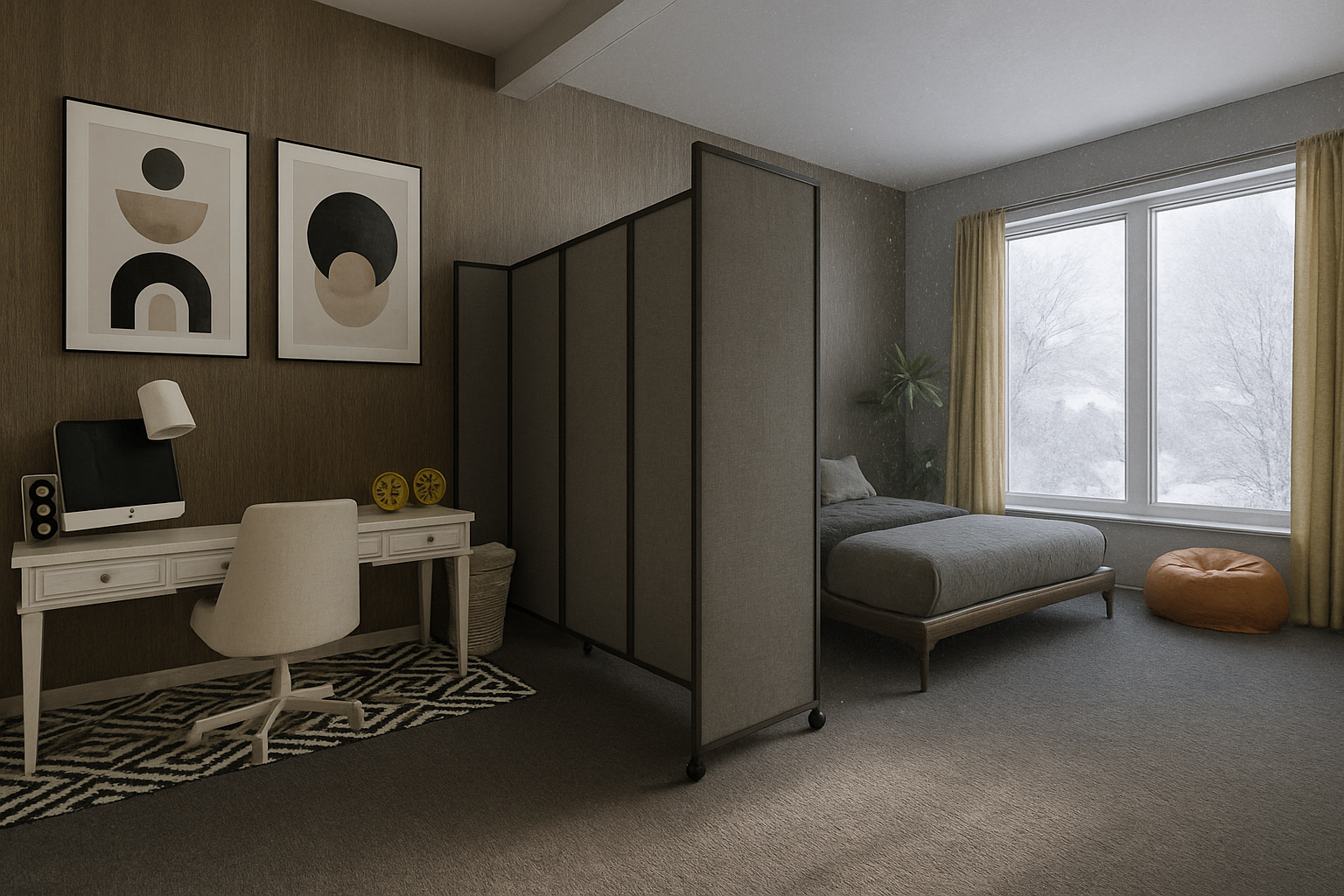
College move-in season brings plenty of excitement—but making a small dorm room feel comfortable, functional, and personal can be a challenge.This is especially true when sharing space with a roommate. Between two beds, desks, wardrobes, and everything else needed for the school year, there may not seem to be much room left for privacy or personality.
The good news: Creating a space that feels functional and personal does not require expensive furniture or permanent changes. With a little planning, students can establish healthy boundaries, create dedicated zones, and make even the smallest shared room feel more like home.
Start by Defining Your Own Space
One of the biggest adjustments to dorm living is learning how to share a room while still maintaining a sense of individual space. Even if the room is small, each roommate should have an area that feels distinctly their own.
Start by identifying which areas belong to each person. This includes obvious spaces such as sleeping areas, desks, and storage, but also less obvious areas like refrigerator shelves, closet space, and shared surfaces. Agreeing on these boundaries early can prevent small disagreements from becoming bigger roommate conflicts.
Students can also use visual cues to distinguish their areas. Bedding, photos, artwork, desk accessories, and other removable decorations can give each side of the room its own character without violating dorm rules or making permanent changes.
Create Privacy Without Closing Off the Room
Privacy can be one of the hardest things to find in a shared dorm. Students may want a quiet place to study, change clothes, decompress after a long day, or simply spend some time alone.
A flexible room divider can help create separation without permanently changing the room. Unlike a wall, a freestanding or folding partition can be repositioned as needs change. It can provide a visual boundary between beds, help separate a study area from a social space, or create additional privacy when needed.
Before bringing in a divider, students should check their residence hall’s policies and make sure it will not block doors, walkways, vents, sprinklers, or smoke detectors. The goal is not necessarily to divide the room in half. Even creating a small visual barrier can make a shared space feel more personal and give students a greater sense of control over their environment.
Give Every Area a Purpose
A small dorm room can quickly become cluttered when the same space is expected to serve multiple purposes. Creating dedicated zones can make the room feel larger and help students transition between different parts of their day.
For example, a desk can serve as a designated study zone, while the area around the bed can be a place to relax and unwind. A small floor cushion or comfortable chair can create another spot for reading or talking with friends without turning the bed into the default location for everything.
Storage is another important part of creating functional zones. Under-bed containers, hanging organizers, and vertical shelving can help keep belongings off the floor and clear of desk surfaces. When everything has a designated place, the room is easier to keep organized, and roommates can more easily respect each other’s belongings.
Establish Boundaries Before There Is a Problem
Good roommate relationships are not just about decorating; they also depend on communication. Before the semester gets busy, roommates should have a conversation about expectations. When is it okay to have friends over? How should quiet hours work? Is it okay to borrow belongings? What happens when one person needs to study, but the other wants to socialize?
These conversations may feel awkward at first, but establishing expectations early can prevent misunderstandings later. It is also important to recognize boundaries may need to change throughout the semester. A roommate who is comfortable with late-night conversations during the first week of school may need more quiet time when midterms arrive.
The best shared spaces are flexible enough to accommodate those changes.
Make It Feel Like Home
Finally, don’t underestimate the impact of small personal touches. A favorite blanket, photos from home, familiar artwork, or a few meaningful objects can make an unfamiliar room feel more comfortable. Students do not need to completely transform their dorm. Instead, they can focus on creating a space that supports how they actually want to live, study, and relax.
A successful shared dorm room is one in which both roommates feel comfortable, respected, and at home. By creating clear boundaries, incorporating flexible privacy solutions, and giving each part of the room a purpose, students can turn a temporary shared space into a place that works for them throughout the school year.
Today’s guest post is fromTodd Marshall, CEO of Versare, where he leads the company’s growth in flexible, design-forward space solutions for workplaces, schools, commercial environments, and more. With a background spanning McKinsey & Company, Target, Patterson Companies, and Shutterfly’s Lifetouch division, he brings deep expertise in scaling operations and translating customer needs into practical, high-impact design solutions. At Versare, Todd focuses on helping organizations adapt spaces quickly without costly renovations by using flexible walls, room dividers, and other reconfigurable solutions. He is based in Minneapolis, Minnesota.