Dorm tips for new college freshmen


Female College StudentMoving into the dorm as a college student is exciting— so exciting that germs and bacteria are the last worry on a freshman’s mind. The come-and-go sense of independence, co-ed hallways, late-night weekend hangouts— by sharing such close communal spaces though from the dorm room to the bathroom, immunity from germs and sickness is impossible.

Teach your kid these dorm tips to keep your future college student happy and healthy.

Communicate About Cleanliness

Mix laziness, zero communication, assumptions and passive aggressiveness and you have an ongoing unclean room shared between two people. Encourage your kid to be upfront and communicate with the new roommate by discussing who cleans what and when. Open the doors for discussion and explain that holding in irritations will only worsen the living situation and energy exchanged. Also, your own college student may be the dirty culprit himself. Remind him that a those nasty food plates will bring in bugs and a dirty room will make him sick. Gross!

Stock Up on Sanitizing Wipes

Regularly wiping down the doorknob, microwave oven, computer keyboard and mouse, and other areas that are highly touched eliminates germs and bacteria from growing. Shop for sanitizing wipes in bulk and your college student can just easily take an antibacterial wipe to anything for a quick clean. Whether you prefer Clorox or Lysol, these wipes are an easy cleaning solution for a college student who struggles with maintaining a spotless space.

Use Hand Sanitizer

Public surfaces like the dormitory bathroom door handles and classroom stairway railings are hotspots for germs. Sanitizing these surfaces before using them is a faux pas, okay — and who has time for that anyway? Do the next best thing. Tell your kid to keep a small bottle of liquid hand sanitizer with her. She can discreetly spritz hands after touching something in a public area, especially during cold and flu season.

Keep Multiple Sets of Sheets

Buy several sets of sheets so it’s always easy to put fresh and clean ones on dorm bedroom mattresses. The desire to be clean is likely to be trumped by the desire to not do laundry, or at least frequently. By having plenty of spare sheets, trips to the laundromat are kept to a minimum and the bed stays clean for healthy nights of sleep.

Take Vitamins

College kids live on pizza and chips? Unfortunately, dining hall food choices, dorm room snacks and alcohol aren’t the most nutritious. Make sure your college student keeps his immune system strong by taking a multivitamin daily. Although vitamins can generally be expensive, there are less costly options. Try Vitacost’s Synergy Once Daily Multi-Vitamin for a supplement that is high-quality, reasonably priced and easy to take between classes.

Work It Out

The value of exercise isn’t groundbreaking news, yet emphasize to your kid how staying active improves the immune system. Walking for 30 minutes a day can prevent colds, for instance. Nobody wants to wake up with a sore throat and sit in the germ-infested waiting room at the on-campus clinic. Between cramming for exams and hanging out with friends, the gym can be a place of neglect. During that weekly phone call with your son or daughter, remind them that an active body is a healthy body!

Let’s face it though–rarely do students listen to us or take the time to follow these healthy habits. I know my kids didn’t, in spite of my constant insistence. The best we can hope for is that they grasp onto just a few of these tips. And it’s our right to “remind” them every chance we get!

5 Tips for taking campus tours


campus toursCampus visits are an important part of the college selection process for any student. Higher education is a significant investment of both time and money, and you and your teen should both be proactive about finding the perfect school. When you visit colleges for campus tours, don’t simply follow along silently. Remember these important tips for making the most out of every one of your campus tours.

  1. Give Yourselves Plenty of Time
    Rushing yourselves through a campus tour will defeat the entire purpose of visiting at all. You won’t be able to see everything, and you’ll be so frazzled by the stress of rushing about that you won’t remember anything either. Plan ahead to give yourself plenty of time to enjoy every campus tour at a leisurely pace. Set aside a whole day for excursions to local colleges, and consider planning an entire weekend around your trips out of town.
  2. Explore the Whole Town
    If you’re visiting a college campus in an unfamiliar area, take some time after the tour to explore the whole town outside of campus. Surrounding areas can play a major role in the college selection process. Some schools are tucked away in rural areas with little city life to speak of, while others are situated in the middle of dense, exciting metropolitan neighborhoods. Take your campus tour beyond the campus itself, and explore the surrounding areas to get a sense of where you are and where your teen will be living.
  3. Ask Lots of Questions
    The campus tour is your greatest opportunity to have your burning questions answered. Veteran students and faculty members typically conduct these tours, and they can give you the insider information that can’t be found in web pages and pamphlets. Ask lots of questions during campus tours, and encourage your teen to do so as well. Inquire about anything that springs to mind; computer centers, extra-curricular activities, academic advising or whatever piques your interest. You won’t get another opportunity like this, so let the questions fly.
  4. Request to See Dorm Rooms
    Your campus tour may or may not feature a tour of dormitories and student living spaces or it may be a “model room”. Some colleges encourage prospective students and parents to explore these spaces, while others do not. Whatever the situation may be at your campus tour, request to make a visit to the dorms. If your teen is going to be living on campus, rather than attending an online university, the dormitory accommodations will be a very important deciding factor in the college selection process. A college may have several different options for dorm living, so try to see as much as you can during your visit.
  5. Bring Home Lots of Literature
    Start a catalog of college literature from your campus visits, and bring home as much as you can from each school. Obtain pamphlets and brochures on everything from major programs to financial aid, from international study to career placement. School literature will help you and your teen to remember the details of every campus you visit, making each tour educational and worthwhile in the college selection process.


Should your teen attend community college first?


community college

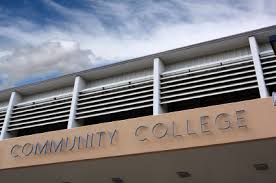
Higher education is a complicated issue for many students and parents today. College education is a necessity for finding success and prosperity in many career paths, but rising concerns about student loan debt and graduate unemployment are making the process of pursuing education more stressful and uncertain than ever before. Community colleges are becoming increasingly popular options for students everywhere, as a means of securing foundation credits before transferring to a university. Is this a path that your teen should be considering?

Community college gets a bad rap

Community colleges are often viewed as being stigmatized in many academic circles. Students and parents alike disdain the idea of a community college education because they believe that more prestigious institutions will look down upon them. Worries about how an employer will view community college education on a resume are disconcerting as well. However, you shouldn’t be concerned about such fallacies. Your teen can study at a community college before transferring to another school, and still have access to all the same opportunities as every other student.

Community college will save you money

Many students are uncertain about their futures, and the prospect of choosing a college can be very daunting for them. A college education is a very expensive investment, and students should be going into their college years with both high confidence and defined goals. Students entering college without a goal in mind tend to spend up to two years exploring different lines of study in an effort to find the right path. While this is a healthy process, college is not the best place to do it. If your teens go into college without goals, they will take longer to finish their degree programs and incur more debt. This is where community college can be very beneficial.

You’ll quickly find that community colleges are, with almost no exceptions, much less expensive than any other school. Community colleges draw on local populations for their student bodies, and they offer education with much lower tuition rates than even public universities. Studying at a community college allows your teen to gain important foundation education in key subject areas without spending full price on college tuition. This can be a life saver, especially for families with tight budgets.

Community college will help develop career interests

While studying key academic subjects like writing and mathematics at a community college, your teen will also have the opportunity to explore other lines of study through elective courses. This helps students to find the paths that will lead them to prosperous careers. Exposure to philosophy in community college could spur an interest in law studies for your teen. A course in the arts or writing could unlock a previously concealed passion for creative work that leads to a prosperous and fulfilling career. Community colleges give students the opportunity to explore a variety of subjects without the financial stress that comes from university study.

Your teen may have his or her heart set on a four-year university like Howard University, but attending a community college first is often a very smart choice. Give your teens the option of exploring several academic possibilities without incurring debt, and help them find the paths that will lead them to success in college and beyond.

How to help your student set long-term goals


goalsMany students headed for college have never had to deal with long-term goals. You provide them with a roof over their heads, a bed to sleep in, clothes to wear, and food on the table. They barely have to set short-term goals, much less those that take time and concentrated effort to accomplish. So when they leave home to pursue a college degree, they might not have the first idea how to go about creating and reaching goals that will take longer than a semester to complete. And this short-sighted attitude could make for some very serious problems.

Take a major, for example. Although students spend the majority of their freshman and sophomore years finishing general education credits, most also begin taking prerequisite courses for their major. If your student hasn’t decided on a major, any additional classes they take during this time could end up being a waste (of time and money). But you can give your teens the tools they need to make a solid, long-term plan. Here are a few tips to get them on track for setting and reaching overarching goals.

The first thing you’ll want to do is sit down with your teens to talk about a 5- or 10-year plan. This might sound like a long time to your teens, and it is. Throughout their late teens and twenties, most people develop and change in a variety of ways, which can make it extremely difficult to lay out a long-term life plan. But you don’t necessarily have to start with a college major and a career, which are extremely finite goals. You can begin by discussing more general plans. For example, you might ask your teens what they’re interested in and what they enjoy. Do they like helping others, working in groups, or being responsible for only themselves? Are they concerned about the environment, the economy, human rights, gun control, or any other current issues? Do they want to have a home, children, and money for vacations or are they happy having no commitments to tie them down?

Believe it or not, the answers to these questions can help your college-bound students to narrow their focus and come up with a major that will help them to reach certain life goals, rather than those that are simply career-oriented. Knowing what we want from life can help us to determine the types of jobs that will lead to happiness and fulfillment on a personal level. From there you can start to discuss more targeted issues like a career, a major, schools and programs, and even specific coursework. You can talk about which clubs and activities are going to contribute to successes in a chosen field. You can look into growth in particular job markets, types of jobs available, and even the prospect of benefits like health insurance and a retirement plan.

By starting with broad likes, interests, and desires you can begin to focus in on long-term professional goals. And when you make your teens consider their answers carefully, you are giving them the skills they need to objectively approach their goals in order to lay out a path to success on their own. Of course, they may still change their minds along the way, hopping from political science to arts and humanities to CNA certification training. Who knows how they will grow and change when they’re out on their own? But the hope is that they will eventually settle on something they love in order to enter a profession that is challenging and fulfilling, and that the process will teach them how to set and achieve long-term goals on their own.

Exploring career options with your college-bound teen

Photo by Ian Schneider on Unsplash

Kids either know what they want to do with their lives or they don’t. Some kids might even know what they want to do with their lives at an extremely early age, which makes it a lot easier for parents. However, a lot of kids have no idea. In this case, it is up to the parents to work with their teen to start exploring career options and even gauge what some of their interests might be. It is crucial for parents to start before the child enters their first year of college, because this will determine what classes they should be taking and even what major they should declare. Here are some ways to explore career options with your college bound teen.

Assess their strong points

First off, assess what some of their strong points are. If they are good at writing and they are interested in language, there are a plethora of jobs tailored for them. If they are good at writing, this doesn’t immediately mean that they have to become a novelist or English professor, but they can also land a job in communications, advertising and any other field where having a grasp of language makes them an asset. So make sure you find out what your teen’s strengths are in order to go through the list of available job positions within a certain field – some of which they might not even know about. Moreover, if they are interested in a specific field, it is important to make sure you dispel any myths or rumors about the field.

Determine their passion

Next, what is your teenager passionate about? If they are passionate about politics you should encourage them to pursue their studies towards this particular field. If they are interested in the healthcare field, there are a number of degrees they can acquire to have a sustainable and fulfilling career in the healthcare field. After getting their undergraduate degree, they can acquire a health care management MBA to land a position in careers ranging from finance, to biopharmaceuticals, to insurance and beyond. If they are interested in current events, they might pursue a career in journalism, television or radio media.

Analyze Job Market Trends

In addition to exploring personal interests and strengths, it’s vital to consider the demand in your teen’s chosen career field. A practical approach is to look at trends in job availability and growth projections in various industries. For example, unfilled residency positions 2024 is quite common, indicating a potentially high demand in certain healthcare specialties. This insight can guide your teen toward professions with greater long-term stability and opportunity. By analysing these market trends, you and your teen can make more informed decisions about selecting a major and planning their educational path, ensuring that they not only pursue a career aligned with their passions but also one with promising future prospects.

Take a career test

Another way to explore career options with your teen is to find out what they are good at by having them take a standardized test. There are a number of tests your teen can take that will determine what they have a natural inclination for. This option is usually best for those teens that are really struggling with what they want to do with their lives. For instance, a test in math will determine whether or not they are good with numbers and another test might be able to determine that they are more inclined towards abstract modes of thinking. Either way, this is a great way to get quantitative proof of your child’s strengths and weaknesses, which can motivate your teen to really start thinking about their career aspirations.

At the end of the day, it is important to not get frustrated with your child and let them come to their own conclusions, especially if they are going off to college. They might need a few years to think about it and in the meantime they might even go undeclared. However, after a few years of college, your teenager will eventually realize what they want to do with their lives, which can be an incredibly relieving moment for most parents and well worth the wait.

Packing for College?


college-bound studentThere are plenty of things your student will want to take to college, including a massive wardrobe, appliances, furniture, bedding, bath supplies, decorations, and so on. Of course, if you have any knowledge of the standard dorm room, you know that all their stuff is not going to fit in the shoebox-sized space they’re allotted, especially since they’ll have to share it with a roommate. For this reason you’re probably going to have to pare down what they pack, and you should do it long before you start loading up the car. Consider compiling a list of everything your college-bound student wants to take when packing for college and then go through and cross off the things they really don’t need. But don’t forget to include items that they really can’t live without. Here are a few you’ll certainly want to add to the list.

  1. Comfortable bedding. College students are notorious for burning the candle at both ends, so when they actually have time to catch a few zees, comfy bedding is a must. Now, you might not think it’s necessary to purchase quality sheets, not to mention pillows, blankets, a warm comforter, and perhaps even a cushy topper for the mattress. But the more rested your student is, the more sleep he’s likely to get, improving focus, grades, and more. When you weigh the cost of comfortable bedding against the cost of a semester of school down the drain thanks to insomnia, you should be able to see your way clear to shelling out a little dough for the linens.
  2. Portable devices. A computer is great, but these days a portable device can provide a lot more use value for the average student. For example, a laptop or tablet (with a keyboard) can not only act as a dorm-room PC, but it can also carry an entire library of books (and other media). And thanks to numerous apps designed for college students, it can also be a notebook, a recording device, a way to deliver class presentations, a schedule, and more. In short, it can provide for all kinds of academic needs in a lightweight and portable frame.
  3. College cookbook. The freshman fifteen is more than just a clever quip. Students living in dorms have limited options for food preparation. Often, they are granted a meal plan, which can definitely help them to eat regularly and observe a balanced diet should they so choose. But many dorms restrict students to items like a mini-fridge and microwave, making it extremely difficult to eat healthy. So think about packing a dorm-style cookbook (there are several options to choose from) so that your student can stay on track with healthy eating.
  4. Noise canceling headphones. Living with a roomie is not going to be easy, even for kids that have had to share a room with a sibling. But the worst part may be listening to other students snore all night, talk in their sleep, or blast music or the TV as they fall asleep. Noise cancelling headphones can not only help your student to fall asleep, but they can also work for study sessions when a roomie or students on the other side of a paper-thin wall are making noise.
  5. Storage. Dorm rooms are infamously small and cramped. Dorm rooms like you see in the movies simply don’t exist, whether your student is at Texas A&M or the University of Florida. Ample storage solutions are a must. Vacuum-sealed space bags are an option, as are stacking and under-bed bins. A shower caddy, drawer organizers, and perhaps even a small file cabinet could also work wonders when it comes to maximizing usable space and keeping the dorm room free of clutter.

Summer is a busy time for families of college-bound teens. These five tips might help you with your to-do list and help relieve some of the anxious, stressful days ahead.


FindTheBest offers test prep comparison


For seniors, the end of the college application process has come to an end.  Acceptance letters should be rolling in and they should now start gathering information and comparing different schools to see which one they want to spend the next four years.

But for juniors, the process has just begun (if it hasn’t already).  Spring is not just the season of flowers and birds; it is also the season of standardized testing.  And since it is generally advised to take the SAT or ACT two to three times in order to get your best composite score, students should start taking the tests now.

For those who have already taken their first SAT, taking it a second time is almost statistically guaranteed to improve your score.  But what can improve your score even more is doing test prep.  Compare test prep courses based on exam, class size, category, total cost, and total hours.  

Of course, there’s also always the option of buying one of those giant blue practice exam books and teaching yourself through discovery.  But it is usually worth it to just attend even a few hours of class, even if it is just to learn a few basic tips that will allow you to squeeze every point that you can out of the SATs and ACTs. Remember, however, that not all test prep companies are alike. Do the research, ask around and talk to some experts on Twitter before you drop some serious cash on test prep.


[findthebest container_style=”width:500px;margin:0 auto;” width=”500″ height=”300″ style=”vertical-align:top;” src=”http://test-prep.findthebest.com/w/srp?new=2&w=500&h=300&filter_by=class_size,cost” after_style=”text-align:center;” link_href=”http://test-prep.findthebest.com” link_style=”font:10px/14px arial;color:#3d3d3d;” link_text=”Compare Test Prep Courses”]

An app for parents and students from Edupath


edupathEdupath is like three apps in one. College Explorer lets you browse 1300 colleges to find the right fit. SAT Training is optimized for short sessions so you can use it anytime, anywhere. And Dashboard, an Edupath exclusive, allows parents to follow along in real-time.

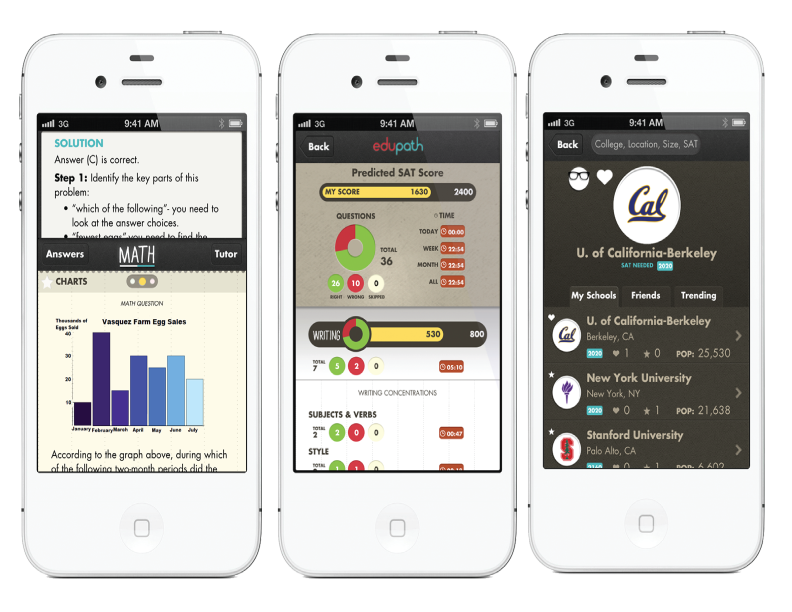
Effective SAT prep starts with finding the right school. That’s why Edupath’s College Explorer helps students find the schools that fit them best, then train for the target SAT score of those schools. You can read what actual students say about their schools, and follow the schools that your Facebook friends are looking at.

Edupath offers SAT training designed for today’s students’ busy schedules. Students can develop their skills in short sessions that maximize information retention—and their time. The app has thousands of questions, written by PhDs from top universities, and tips and solutions for every question. Real-time analytics let you monitor your progress as you go.

The industry-first Dashboard for parents and counselors is the only solution for real-time tracking of students’ progress in the app and with any SAT class or tutor. You can track a student’s predicted SAT score, score improvement by section, time spent studying, and college choices.

Following are some screenshots of the app:

edupath-shots

Download Edupath at edupath.com/download


Direct Hits: SAT Vocabulary resource


direct hits booksEvery SAT coach and college professional will tell you that vocabulary is the key to every aspect of the college application process–from the SAT/ACT tests to writing the essay vocabulary plays an integral part. The Direct Hits SAT Vocabulary books address this issue by helping your student enrich their vocabulary. According to Direct Hits, “A rich and varied vocabulary enables us to speak more eloquently, describe more vividly, argue more compellingly, articulate more precisely, and write more convincingly.”

A powerful and extensive vocabulary has a correlation with success in school, business and of course, standardized tests. However, increasing  your vocabulary can be exhausting unless your have the right tools. Direct Hits have addressed the vocabulary study issue by providing a list of core vocabulary (1-225 words) and tough vocabulary (226-440). What’s unique about these books is that a) it’s a manageable list, b) word definitions, c) use in a sentence, and d) the Greek origins of suffixes and prefixes. At the end of the books, there is a simple list of all the words with quick definitions, along with a test to check out how much you have learned.

What I like about these books? They don’t overwhelm you. Your junior high school student can take both of them and in one summer, easily master these 440 vocabulary words. Or if your student is just beginning high school, they can take one word a day and master each one successfully before moving on to the next.

Direct Hits explains their approach: “We study the SAT, research trends of the test, and publish Direct Hits books … that have proven to increase student success.” Their group of educators works hard to improve the books (currently in the 5th Edition) as the SAT changes. To help you see how effective these books can be, they offer free downloads in PDF format to check the books out.

If you are looking for a good summer reading/study course of action for SAT vocabulary, these books will fit the bill.

Here’s a PDF excerpt from the SAT Vocabulary book about “Words with Multiple Meanings“.

Direct Hits vocabulary books are also available as e-books. They can be read on a computer or on mobile devices through the free Kindle app?

Direct Hits Core Vocabulary

Direct Hits Toughest Vocabulary

Free Kindle Reading apps for MAC, PC, iPhone, iPad, Blackberry and Android Smartphone

You can also make contact with Direct Hits online:

DirectHits website

DirectHits Twitter

DirectHits Facebook


Getting the best college advice: POCSMom


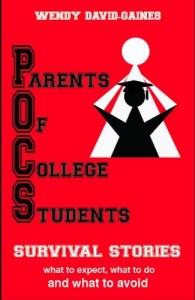
One of the joys of posting on this blog is that I get to recommend other college prep professionals. Over the course of the last few years, I have gotten to know Wendy David-Gaines (aka ParentsOfCollegeStudentMom). She offers some of the best college advice from the parent community. I’ve read her book, Parents of College Students: Survival Stories, and I’ve collaborated with her on blog posts. Not only is she a wonderful person, but her knowledge of the college-prep process and issues that occur once your student enters college is second to none.

college survivalWendy is famous for exposing the cliches about college. After giving the cliche, she gives you the “POCS reality”. In her book, Wendy does this effectively by compiling actual parent stories. The stories (both from pre-POCS and POCS) are simple, light-hearted, often humorous and an easy read. But here’s the clincher–they provide parents with added insight into each individual situtation. For instance, Wendy has a story about college touring in her book. The cliche: different strokes for different folks. The POCS Reality: just because a parent likes a college does not mean his student will. The story tells about the often-experienced reality of a college-bound teen not “feeling” a campus like his parent does. If you haven’t experienced it yet, you will.

Here are just a few comments from parents who have read her book:

“The cliches used in this story don’t seem like cliches anymore. The way David-Gaines reinterprets them makes these cliches into lessons that may otherwise be overlooked for parents who are about to send their children off to college. The short stories are quick, easy reads. I read the book through from beginning to end, but you could start with any particular chapter or even open to a random page for a good lesson and laugh. I recommend this as a fun, enjoyable, helpful read for parents who are starting or already involved in the college process.”

“Being the Parent of a College Student (POCS) is hard work and can be very frustrating. I felt like Wendy had been with me on my journey through the college admission’s maze. Her book is very entertaining and packed with lots of helpful information whether you are just starting the process or have a student in college. I thought I would skim through it, but I was hooked after the first story. I wholeheartedly recommend it!”

Wendy doesn’t stop with her book, however. She authors a blog on her website, and she also writes for Examiner.com on a regular basis. Do yourself a favor and check her out on Twitter (@pocsmom) as well because she tweets great information for both pre-POCS and POCS.

Get your copy of her book, Parent of College Students: Survival Stories today!