Category Archives: Uncategorized

Comprehensive List of College Info Websites

college planning

Here’s a current comprehensive list of my picks for college info websites. Do you have any additional suggestions?

COLLEGE BLOGS

ParentingforCollege.com–You will find the MOST information ere olege news. Come here first to find the latest and bhest tools to hn our blog: college guidance, college planning, college coaching, and colelp you navigate the college maze.

TheCollegeSolutionBlog.com–An excellent resource for college-bound teens and their parents: admissions, testing, and financial aid.

UniversityLanguage.com/blog–Great blog articles about everything related to college admissions geared toward students.

GreatCollegeAdvice.com/blog–An excellent resource about the college admissions process providing expert advice helping students map their college journey.

USNews.com/Education–The education channel of U.S. News and World Reports providing the latest news and information related to college.

CollegeBasics.com–An excellent resource for information about college essays, college applications and high school resumes.

InsideHigherEd.com/blogs–Several different blogs related to higher education.

CollegeAdmissionsPartners.com/blog–An expert blog dedicated to helping students find the right college.

CollegeFocus.com/colleges–A virtual clearinghouse of blogs related to college life, parenting, college searches, etc.

Road2College.com–You can find just about any topic related to college prep at this site: financial aid, college planning, student loans, test prep, and more.

PARENT SITES

UniversityParent.com–A site where parents can ask questions, gather information, and download and view college guides and campus newsletters.

CollegeParentCentral.com–A blog created to give parents useful information about college and the college admissions process.

YourCollegeKid.com–A site with parent forums and other college prep tools.

CollegiateParent.com-A site dedicated to providing parents with information for their college students.

FINANCIAL AID

Fafsa.ed.gov–The official government website for the Free Application for Federal Student Aid.

SallieMae.com/plan–A FREE education investment planner that will help determine college costs, compare college costs, and provides information about student loan repayments.

SavingForCollege.com–Everything you need to know about financing a college education.

FinAid.org–An excellent resource for the answers to all your questions regarding college financial aid.

CollegeFinancialAidAdvisors.com–Help with the college financial aid process.

SCHOLARSHIPS

Fastweb.com–An extensive scholarship search website with a massive database of scholarships, along with articles and helps designed specifically for parents.

Chegg.com–A free service for students and parents where students can showcase themselves, connect with colleges, and search for scholarships.

Cappex.com–The place to go to find merit scholarships and academic scholarships from colleges across the country.

Scholarships.com–An extensive scholarship search engine that helps you search and schedule alerts for deadlines.

How2winscholarships.com–A guide for parents and students on how to effectively apply to and win scholarships.

COLLEGE VISITS

SmartCollegeVisit.com–Created to provide information about college visits, help parents and students plan, and view personal accounts from both parents and students.

CollegeWeekLive.com–A virtual college fair that sponsors free LIVE events with archived presentations, student chats, and college booths.

Youniversitytv.com–Learn about colleges by watching video tours, chat with students on campus forums, post questions and get answers.
CustomCollegeVisits.com–Offer custom tailored to your family’s needs, whether you’re visiting college & university campuses close to home, across the country or from overseas.

COLLEGE PLANNING

Cappex.com–A site created for students to help them simplify their college search, create a profile and search for scholarships.

CommonApp.org–The common application site used by 400 colleges and universities across the country.

PrincetonReview.com–The best value colleges list for public and private institutions across the country.

UPromise.com–UPromise partners return a portion of eligible purchase money back to you. Those earnings accumulate in your Upromise account until you decide to use it to invest in a 529 plan, help pay down eligible student loans or assist with college expenses—all tax-free!

CollegeBoard.com–It’s here you’ll find the CSS Profile application (required by many private colleges), register for the SAT, and read articles about planning for college.

CollegeXpress.com–A search site that groups colleges in categories and provides college “hot” lists (i.e. top college for late bloomers, colleges for students needing a second chance)

VolunteerMatch.org–Find local volunteer opportunities for your college-bound teen and teach them about the importance of giving back to their community with the added bonus of adding that service to their high school resume.

KnowHow2Go.com–A college planning site for college-bound students providing helps and aids from middle school to senior year: interactive and fun!

 BigFuture.collegeboard.org–A planning tool to help parents and students get ready for college.

TEST PREP / TUTORING

TutorsForTestPrep.com–An SAT expert and coach offering tips to help your college-bound teen improve their SAT/ACT scores.

FairTest.org–The site for the National Center for fair and open testing providing information about colleges who do not use the SAT/ACT for admissions decisions.

QuincyTutoring.com–A resource to find a tutor and schedule a tutoring session.

LaunchpadEducation.com–Tutoring to help students with learning disabilities and ADHD.

CramBetter.com–CramBetter uses bite-sized video lessons to help you focus on the material that’s most likely to show up on your exams in math, physics and chemistry.

TEXTBOOKS

ECampus.comFind textbooks, sell textbooks, search for college supplies and college apparel all on this one site.

Chegg.com–A hub for students to compare textbook prices, study for exams, and choose the right courses.

RECRUITING

NCSASports.org–The college recruiting site for athletes.

BeRecruited.com–If you have a teen that’s a student athlete, they can create an online profile here and help colleges and coaches find them and be recruited.

Direct Hits: SAT Vocabulary resource


direct hits booksEvery SAT coach and college professional will tell you that vocabulary is the key to every aspect of the college application process–from the SAT/ACT tests to writing the essay vocabulary plays an integral part. The Direct Hits SAT Vocabulary books address this issue by helping your student enrich their vocabulary. According to Direct Hits, “A rich and varied vocabulary enables us to speak more eloquently, describe more vividly, argue more compellingly, articulate more precisely, and write more convincingly.”

A powerful and extensive vocabulary has a correlation with success in school, business and of course, standardized tests. However, increasing  your vocabulary can be exhausting unless your have the right tools. Direct Hits have addressed the vocabulary study issue by providing a list of core vocabulary (1-225 words) and tough vocabulary (226-440). What’s unique about these books is that a) it’s a manageable list, b) word definitions, c) use in a sentence, and d) the Greek origins of suffixes and prefixes. At the end of the books, there is a simple list of all the words with quick definitions, along with a test to check out how much you have learned.

What I like about these books? They don’t overwhelm you. Your junior high school student can take both of them and in one summer, easily master these 440 vocabulary words. Or if your student is just beginning high school, they can take one word a day and master each one successfully before moving on to the next.

Direct Hits explains their approach: “We study the SAT, research trends of the test, and publish Direct Hits books … that have proven to increase student success.” Their group of educators works hard to improve the books (currently in the 5th Edition) as the SAT changes. To help you see how effective these books can be, they offer free downloads in PDF format to check the books out.

If you are looking for a good summer reading/study course of action for SAT vocabulary, these books will fit the bill.

Here’s a PDF excerpt from the SAT Vocabulary book about “Words with Multiple Meanings“.

Direct Hits vocabulary books are also available as e-books. They can be read on a computer or on mobile devices through the free Kindle app?

Direct Hits Core Vocabulary

Direct Hits Toughest Vocabulary

Free Kindle Reading apps for MAC, PC, iPhone, iPad, Blackberry and Android Smartphone

You can also make contact with Direct Hits online:

DirectHits website

DirectHits Twitter

DirectHits Facebook


Getting the best college advice: POCSMom


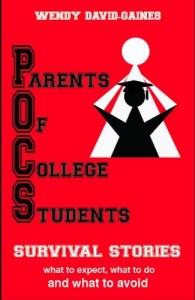
One of the joys of posting on this blog is that I get to recommend other college prep professionals. Over the course of the last few years, I have gotten to know Wendy David-Gaines (aka ParentsOfCollegeStudentMom). She offers some of the best college advice from the parent community. I’ve read her book, Parents of College Students: Survival Stories, and I’ve collaborated with her on blog posts. Not only is she a wonderful person, but her knowledge of the college-prep process and issues that occur once your student enters college is second to none.

college survivalWendy is famous for exposing the cliches about college. After giving the cliche, she gives you the “POCS reality”. In her book, Wendy does this effectively by compiling actual parent stories. The stories (both from pre-POCS and POCS) are simple, light-hearted, often humorous and an easy read. But here’s the clincher–they provide parents with added insight into each individual situtation. For instance, Wendy has a story about college touring in her book. The cliche: different strokes for different folks. The POCS Reality: just because a parent likes a college does not mean his student will. The story tells about the often-experienced reality of a college-bound teen not “feeling” a campus like his parent does. If you haven’t experienced it yet, you will.

Here are just a few comments from parents who have read her book:

“The cliches used in this story don’t seem like cliches anymore. The way David-Gaines reinterprets them makes these cliches into lessons that may otherwise be overlooked for parents who are about to send their children off to college. The short stories are quick, easy reads. I read the book through from beginning to end, but you could start with any particular chapter or even open to a random page for a good lesson and laugh. I recommend this as a fun, enjoyable, helpful read for parents who are starting or already involved in the college process.”

“Being the Parent of a College Student (POCS) is hard work and can be very frustrating. I felt like Wendy had been with me on my journey through the college admission’s maze. Her book is very entertaining and packed with lots of helpful information whether you are just starting the process or have a student in college. I thought I would skim through it, but I was hooked after the first story. I wholeheartedly recommend it!”

Wendy doesn’t stop with her book, however. She authors a blog on her website, and she also writes for Examiner.com on a regular basis. Do yourself a favor and check her out on Twitter (@pocsmom) as well because she tweets great information for both pre-POCS and POCS.

Get your copy of her book, Parent of College Students: Survival Stories today!


Care Packaging 101


Last week, I wrote about putting together care packages. After being contacted by Doteable.com about their care package service, I asked them to write a guest post.

Here at Doteable headquarters, we spend all of our waking hours thinking about how to package care and love. We know how much thought and effort our parents put into, well, everything. Allison Tate, mother of four, writes:

“People, including my children, … don’t know how I walk the grocery store aisles looking for treats that will thrill them for a special day.”

She continues, “I spend hours hunting the Internet and the local Targets for specially-requested Halloween costumes and birthday presents.”

It’s stressful and time-consuming. Four ways Doteable helps:

college care package

  1. Relevant. We’re recent college grads, we were there. My mom sent care packages sporadically, and after the third flashlight I received, I thanked her – but, please, Mom: cease and desist. I heard this story over and over when talking to other parents, aunts, and uncles: we want to send our students care packages, we just don’t know what to put in them. Our duffels receive great reviews from subscribers and always include healthy surprise treats.
  2. Value.  1) We don’t operate a brick-and-mortar store with sales and real estate costs, and 2) our subscription model minimizes the cost of holding unsold products. We pass on these savings to our subscribers: that’s why our dorm duffels have a retail value of over $70 (pre-shipping costs, which we also cover). If you don’t like an item in our duffel, you can pass it on to a friend, guilt-free.
  3. Time. Allison Tate spends “hours hunting the Internet” for gifts. We are expert Internet-hunters and are more than happy to help free up your hours.
  4. Lend a hand. For every duffel we ship, we donate a pair of socks to a family in need.

Ultimately, we’re here to simplify the transition to college – for both parents and students. Below are our top five resources for transitioning to and thriving in college:

  1. CollegeConfidential.com
    I pored over the College Confidential forums before and during my college application process – but these institution-specific discussion boards are just as useful after you’ve gotten in.
  1. Course reviews
    Picking your major, what courses to take, and what extracurricular activities to participate in can be a daunting task for someone with two dozen different interests and talents.
  1. Professors
    Professors are intimidating, but they’ve been at your institution much longer than you have – take advantage of that wisdom! They are intimately familiar with the resources that are available and how to best utilize them.
  1. On-campus advisors
    It’s part of their job to guide you and answer your questions. And trust me, they love to be helpful. They too are well-versed in the various opportunities your school has to offer.
  1. Upperclassmen
    At the end of the day, you trust the people closest to you. Ask your upperclassmen friends for guidance: What courses should I take? How do I do well in those courses? What fellowships or internships should I pursue, and what do I need to focus on to successfully pursue them?

Taking full advantage of the aforementioned resources requires asking the right questions. Articulate what you want to accomplish long-term (think five and ten years out) and write out what you want to get out of a conversation before seeking out mentorship. This will help you figure out what questions to ask. I think you’ll find that people love being helpful if you come to the table prepared.

And for parents and students transitioning out of college life? Well, there’s always this helpful guide from the New Yorker’s Simon Rich.

___________

Giselle Cheung is CEO at doteable.com. She is a 2010 graduate of Harvard College and a former Morgan Stanley research analyst. She tweets from @doteable and is on hand to answer your questions here.

Do you see yourself in any of these parenting styles?


I heard some new terms the other day to describe parents. These were new terms to me so I did a little research online. Parents have become so involved in their student’s lives they had to coin two more terms to describe parenting styles (the first you most likely heard of before): helicopter parent, snow plow parent, and bulldozer parent. I can’t judge because if I were to be honest, I have exhibited some of the traits each one embodies.

But, seriously, has it become so bad that school administrators (from grade school to college) have to label us? Apparently it has. When it comes right down to it we should realize that this type of behavior only hurts the student. Of course, the student may not see the harm. After all, their parent is rescuing them from difficult situations in life. But in the long run, it hurts their quest for independence and causes strife within the family.

The Helicopter Parent

helicopter parentsA helicopter parent hovers over their child. They keep tabs on their every move, text them 24 hours a day and have tracking apps on their smartphones to keep track of their child’s location at all times. Helicopter parents are ready to swoop in at a moment’s notice to help their child in any situation. Forgot their lunch—they take off at lunch to bring it to them. Forgot to bring a permission slip—they drop everything and bring it to them. Forgot to register for the SAT—no, problem; we’ll pay the late fee. Receive a text or non-emergency call during a meeting—they drop everything to respond. Overslept for school—they write a note to explain the tardiness.

The Snow Plow Parent

The snow plow parent goes beyond the hovering. They clear paths for their children and plow any obstacle that stands in the way of their happiness. Their children never learn how to advocate for themselves and head off to college to get lost in a sea of problems. As they get older, it’s harder for them to resolve conflict and overcome adversity. Honestly, I have to admit I did this with my daughter. The good news—I knew when to stop. The bad news—I did it much too long.

The Bulldozer Parent

A bulldozer parent is one who is involved in their child’s life, especially in school. This type of parent calls the teacher to complain about a grade they feel is undeserved. As their kids get older, they call the admissions office to plead their college-bound teen’s case for admittance. They spend the night in their son’s dorm the first week of college—the entire first week! (Yes, it’s a true story). Bulldozer parents bulldoze their way into their kid’s lives. They want to be friends with their friends. If their kids get into trouble, they are right there waiting to bail them out and make excuses.

How do we stop?

Be honest. Haven’t you been guilty of some of these? As with any problem you have to want to stop. You have to examine your parenting style and decide whether or not you are helping or hindering your kids. And once you determine the problem you should make an effort to correct it. Back off a bit, give your kids some space, and allow them to make mistakes and learn from them.

Always remember that an independent adult will be a functioning adult and a happier adult. You may say now you don’t want them to grow up, but when they are asking for your help at 30 you will be sorry you encouraged they dependence.


What to do when your college student’s grades drop


college gradesWhen kids are in grade school, junior high, or even high school, parents have a great deal of influence when it comes to grades. For one thing, you have the ability to offer or deny rewards based on performance, including allowance, gifts, or even activities like slumber parties, trips, and so on. But you can also levy punishments for poor grades that include grounding kids, removing privileges, or taking away their toys (including video games and cell phones). And of course, they live in your home, so you can sit with them from the time they get out of class until they go to bed if that’s what it takes to ensure that they get their homework done. You can also call their teachers or even embarrass them by showing up for their classes to make sure that they’re paying attention instead of goofing off (chances are you’ll only have to use this tactic once in order to turn it into an effective threat). In short, you have many tricks up your sleeve to ensure that your kids work hard to get the good grades they’ll need for admission to their college of choice. But what can you do to keep them at peak performance once they fly the coop, head for campus and your college student’s grades drop?

Money talks

While you might not think that any of your old strategies will work once your kids head off to college, the truth is that you probably have a lot more sway than you imagine. This is particularly true if you happen to be paying for a significant portion of your students’ expenses. There’s nothing that says you have to put your kids through college, although of course, most parents want to ensure that their children have the best possible education and prospects for the future. The point is that college is a privilege, not a right, and it’s one that your students have to earn. So you should make the terms of your contributions conditional. Even though your kids might not be footing the tab for their time in school, they have to hold up their end of the bargain by receiving at least passing grades. Otherwise they’re throwing your money away.

Outline the rules and guidelines

What you need to do is enter into an agreement with the college-age kids in your household before they leave for school. If they want to have fun and waste time while they’re on campus, focusing on socializing rather than studying, make it clear that they can pay their own way. But if they’re willing to work hard for a degree and maintain a certain GPA, you should definitely do what you can to help them. Now, this is not to say that you shouldn’t give them a little leeway. One bad grade doesn’t necessarily mean they’re slacking – it could just be a particularly hard teacher or class.

Use tough love

However, should your students persistently suffer from poor grades, chances are good that they’re either clowning around when they should be studying or they’re simply not ready for the demands of a college schedule. In this case it might be time to cut them off financially or demand that they move home and attend a local college (where you can keep an eye on them) until they’re back on track with their grades. Further pursuit of education, such asHarvard Law or  a USF MPA online, means they need to make their studies the main focus of their time in school. And if they simply aren’t getting the grades needed to graduate, you might have to draw a line in the sand on your end so that they learn a valuable lesson about decisions and consequences now, instead of later in life when you’re not there to catch them and set them back on their feet. Learning this lesson before grad school or permanent employment is much easier while they have your support in college.

Creating a college care package


care packageIf you think sending your kids off to college is stressful, just think how your students must feel, alone and solely responsible for themselves for the first time in their lives. While they can always call you up for advice, and you’re no doubt helping immensely on the financial end, the truth is that they will have to make their own decisions, and live with the consequences (or hopefully, reap the rewards of their good choices). And if you’ve done a good job raising them they should be able to face their conundrums head on and do the right thing. But still, they will likely be pulled in many directions, what with a demanding schedule of classes and studying, peer pressure to socialize, and any number of other obligations to attend to, such as clubs, Greek life, internships, and for many, a job. This can raise the stress level of the average freshman sky high. So when you start to hear that tremor in the voice that tells you a breakdown is imminent, here are just a few things you may want to throw in a college care package and ship off immediately.

Send a little piece of home

In addition to the other stressors college freshman face, many are beset by homesickness. They might not admit it, considering how gung-ho they were to get out of the house in the first place, but they’ll be missing your cooking, their own bed, and of course, you. Anyone striking out on their own for the first time is bound to miss the comfort and familiarity of home. So the first thing you might want to include in your care package is something you’ll know your college freshman has been missing. Perhaps you could mix up a batch of cookies, brownies, or another favorite baked good. You can’t exactly send frozen lasagna by freight and expect it to keep, but with proper packing your baked goods will certainly hold up for the couple of days it will take them to get from point A to point B. As a bonus, this type of care package will make your student a hit with peers.

Add a personal item

Next you should think about adding a personal item that your student may have left behind, something comforting like favorite quilt that family members use when they’re ill, or an old sweatshirt that has smells like home thanks to recent laundering. When your student is feeling alone and the pressures associated with schooling are high, getting an item like this unexpectedly can provide a welcome dose of familiarity that brings with it a sense of comfort and calm. Just knowing that someone is thinking about you and that they know just what you need to feel better can have an incredibly therapeutic effect, so don’t hesitate to forward a care package that includes one or two personal items.

Surprise them with an unexpected gift

Of course, you could go the extra mile by including a few new items for the sake of diversion. For example, you might pick up a new DVD or video game release that you think your student will enjoy as a way for him/her to blow off some steam. Or if there’s a band you both enjoy, create an MP3 mix and send it on disc. You could even include an iTunes or Amazon gift card. You might also add bath products or pre-packaged snack foods (healthy options, of course), which college students are always in need of. And don’t forget a long letter telling your student about everything that’s happening at home.

Whether your freshman is at Columbia, Northwestern, Boston University or Marylhurst University, the stress is bound to be high. So take your time and put together a college care package that is sure to bring with it the comfort that only a parent can provide. It’s the best way to ensure a happy, healthy student.

Job vs. No Job in College


job in collegeCollege is an exciting time for students and parents alike. Children are taking their first major steps toward maturity and independence, while you get to cheer them on with pride and see how far they’ve come. Of course, getting into college is just the beginning. Succeeding throughout those difficult academic years and finding a career after school will be the real challenges. Youngsters need guidance during this time of challenges and changes, and they’ll be looking to you for advice. One question on everyone’s mind has to do with whether or not students should get a job in college. Well, should they?

The Cons

You might be worried that encouraging your student to find a job in college will put too much pressure on them, especially as a freshman. Many students have a tough time adapting to college life, and being pushed to find work may not be the best thing for them. Heavy course loads and early morning lectures can make it difficult just to find time to study and stay on top of homework. After all, your kids are going to college to obtain an education, and that should be their primary focus at all times. If you worry that your kids won’t be able to focus on their studies if they work during college, then don’t push them to look for jobs.

The Pros

However, many students can benefit greatly from working while they go to school. In most cases, students are in school because they want to expand their possible career options in the future. Graduates without relevant work experience will find it difficult to secure employment, even with their prestigious degrees and high marks. Job markets are very competitive today, and the experience your kids gain while working in school could be priceless. They can learn valuable skills, network with influential people, and start applying their knowledge early to become great candidates for future employment.

Furthermore, it is no secret today that college is expensive. Even students who qualify for financial aid and receive partial scholarships can find themselves amassing large student loan debts throughout their years in academia. Working through school can be a great help in relieving this burden, both for your student and for you. School supplies, text books and regular living expenses can add up quickly. Many students cover these expenses by taking out additional loans or asking their parents for help. By encouraging your kids to find work, you can help them decrease their debt burden and start becoming independent right now.

The Bottom Line

Whether or not you encourage your student to find a job in college is up to you, of course. It can be highly beneficial, but it may be too much for some students to handle. Working builds character and helps kids develop into responsible young adults, so if your student is ambitious enough to find project management jobs in college it will benefit them in the future. Students who seize opportunities are sure to be successful in their careers, and finding a job in college can be a great step in this direction.

Selecting a college degree that brings reward


selecting a college degreeWith a tough job market awaiting those college students that will graduate within the next few years, selecting a college degree that brings reward has become paramount to finding gainful employment. So while parents certainly want to encourage their kids to shoot for a career they’re going to love, they definitely don’t want them staring down the barrel of student loan debt with nothing to show for it but a job at Starbucks and a stack of useless resumes.

The key for most parents is helping their students to find a major that they love that leads to a growing job market. This is no easy feat, but with a few simple tips and tricks at your disposal you should be able to uncover options for any student, regardless of their strengths and preferences. Here are some suggestions to get your student on track for a college degree that will really pay off after graduation.

Do the research

The first thing to do is compile a list of industries that currently seem to be expanding, and there are a few that fit the bill. Anything having to do with the medical industry seems to be on the rise these days, thanks in part to health care reform, but also related to the fact that the baby boomer generation is entering the age of retirement just when there looks to a drought of qualified medical professionals. So the healthcare industry is a solid choice for now and perhaps the next 10-20 years, if forecasts are to be believed. Engineering of all types is also growing, but especially the field of computer engineering (no surprise there). Also taking off is green industry, due in large part to the current administration’s eco-friendly policies, although a growing consumer market for green solutions doesn’t hurt. In truth, green technology is growing by leaps and bounds, so an eco-engineering sort of degree could be extremely lucrative in the years to come. There are, of course, other fields to consider, as well. Not only are kids strong in math and science doing well right now, but those who are creative are finding jobs in the online arena thanks to the growth of blogging and internet marketing campaigns (textual, graphic, and even video).

Match your student’s interests with the career paths

Once you’ve compiled a list of job markets that are growing steadily (without suffering periodic layoffs) it’s time to sit down with your student to talk about finding interests, talents, and skills that may match up with some of the exciting career paths that appear to be taking off at the moment. This is a great way for students to think about what they like and want and how their preferences align with markets that are currently growing.

Select the right fit colleges

From there it’s just a matter of selecting schools that offer reputable and highly-regarded programs in the specific major your student has chosen, whether that means attending MIT for a computer science degree or considering University of Miami masters degrees as your student plans for their future in engineering. The right fit colleges should not only offer these preferred degree plans, but fit your student’s academic and social needs.

Once you and your student have done the research to discover which types of degrees are currently in demand, all that remains is to select a major that best suits your student’s interests and abilities and choose a school that delivers the best opportunities for job placement. College isn’t “all about the money”, but you want your student to be able to enter the job market in their chosen field after graduation.

High School Students Test Drive College


Here is an excellent program designed by the Columbus College of Art and Design that offers students the opportunity to test drive college courses related to their interests. Sounds like a great idea!

___________________

COLUMBUS, Ohio (February 25, 2013) – Deciding on a college is one of the most important decisions teenagers and their parents will make. This is especially true when considering an art and design school because of the focused curriculum.

college previewFortunately, before teens make this investment in their future, they can take a test drive of a potential college, career and often a new part of the country. Columbus College of Art & Design offers students entering grades 10 to 12 in the fall a three-week college emersion experience in art and design with the College PreView program.

“I knew I wanted to pursue art, but hadn’t chosen a college or area of study, “ said Lillie Templeton, who traveled hundreds of miles from her home in Wadesboro, N.C. to attend CCAD’s College PreView the summer before her high school junior year. “It was a great experience, helping confirm my desire for an fine arts education, exposing me to different majors and giving me ideas for possible career opportunities.”

Teens live in CCAD residence halls, take classes taught by college faculty, meet professional artists, exhibit their work, explore Columbus and its art scene and have an option of extending their experience with an excursion to New York art galleries. They learn about everything from fashion and interior design to advertising and graphic design and animation to photography. Students earn three college credits for participating in the program.

CCAD also offers a Discovery Club for those entering grades 7 through 10. Students explore their creative self in a fast-paced, weeklong residential art camp. Starting their artistic journey early allows them to make even better college and career choices.

Students and parents interested in learning more about College PreView or Discovery Club can visit www.ccad.edu/ce/cp. Photos from the programs can be viewed and downloaded at http://flickr.com/gp/77678141@N07/SDeuA2/

 ______________________

ABOUT CCAD

Columbus College of Art & Design, founded in 1879, is one of the oldest and largest private art and design colleges in the United States with 1,350 undergraduate and graduate students. CCAD offers bachelor’s and master’s degrees in Fine Arts. Undergraduate students choose from nine majors: photography, industrial design, advertising and graphic design, animation, illustration, fine arts, fashion design, interior design and cinematic arts. www.ccad.edu