Category Archives: college planning

10 Must-read books for parents of college-bound students


I love books because, well, I just love books. They are some of my prized possessions. These college books are part of my collection because they are jam-packed with information about the college admissions process. Some of them are informational, and others help you relax and laugh during the process. Add these books for parents of college-bound students to your reading list. After all, who doesn’t like books?

college bound and gagged

1. College Bound and Gagged

Nancy takes the everyday aspects of the college admissions process and puts them into terms that parents can easily understand and relate to by using humor. And if that’s not enough, she sprinkles some of the best college admissions advice along the way by tapping into her own personal experiences and her network of college experts that she utilizes throughout the book.

pocsmom

2. POCSMom Survival Stories

Wendy David-Gaines, the author, is famous for exposing the cliches about college. After giving the cliche, she gives you the “POCS reality”. In her book, Wendy does this effectively by compiling actual parent stories. The stories (both from pre-POCS and POCS) are simple, light-hearted, often humorous and an easy read. But here’s the clincher–they provide parents with added insight into each individual situation.

scholarships

3. How to Win Scholarships

The best part about Monica’s e-book is that it’s simple and easy to understand. If you follow her easy 10 step program, the scholarship process becomes doable for any parent and their student. You can sit back and hope that your student does all the work, or you can offer help and support by grabbing a copy of Monica’s book, reading it, and rolling up your sleeves.

debt free u

4. Debt Free U

When Zac Bissonnette headed off to college, he had the funds to cover the tab. Bissonnette has seen the currently flawed system first hand. He’s a contrarian, and his book is packed with studies and statistics to back up his analysis. It’s a magical combination that college-bound students and their parents should read, even if there’s plenty of money set aside to pay the tuition tab. There’s no harm in learning ways to get the biggest bang for your buck and the best education available at the same time.

leadership

5. Why You’re Already a Leader

The author, Paul Hemphill, forces history to shout its powerful lessons about our least appreciated ability – leadership. A pre-teen, a parent, or a corporate exec doesn’t need to be trained for leadership because it’s already alive and pumping in your DNA. The proof is all here. Here’s the bonus feauture: it uses history as a motivational tool. Instead of stats and facts, you get more than 200 life-lessons from Gettysburg to help you succeed in any endeavor. What’s the number one quality admissions officers look for in a candidate for admission? Leadership!

Continue reading 10 Must-read books for parents of college-bound students

Back to School mistakes you should avoid


back to schoolBack to school brings excitement and anticipation for most students. But this is a new year and a new environment with new challenges. This can lead to frustration and apathy after a few weeks of classes, homework and tests. The last thing your student needs is to start the year off in a slump. The first few weeks set the tone for the entire school year, which makes it important to avoid some common back to school  mistakes.

Procrastination is certainly at the top of the list: putting off homework, waiting until the last minute, and neglecting to stay on top of deadlines. Students who find themselves buried in homework sometimes throw up their hands in frustration and don’t do it. New schedules, new campuses, new classrooms and new teachers can raise your student’s frustration level.

Avoiding these back to school mistakes can start the year off on a positive note and help your student focus on what’s important: academics and the college prep process.

Hop on over to Zinch’s high school blog to see a comprehensive list of the biggest back to school mistakes you must avoid.

College Then and Now: What has changed?


college now and thenWhile Americans have been going to college for over three hundred and fifty years of our history, only within the past three decades has the landscape of higher education changed drastically.  Students today now have less of a chance of becoming hired for a job after graduation, yet more and more of them are entering into the college ranks.  How has the history of university studies changed in the span of a single generation? What was college like then and now?

Personal Computing

Perhaps no change has affected college life like the availability of computers.  In the 1980s, students could take computers to university, but only the wealthiest could afford them.  Indeed, many colleges may not have even offered computers to students, instead providing typewriters to compose lab reports and essays with.  Today, a computer is a mandatory part of any higher education program, and it is extremely difficult to go through college without one.  Teachers communicate exclusively by email to their students outside of the class, while more and more courses are moving to the digital classroom itself in order to provide instruction across time and space.  Indeed, it is now possible to get a complete university education in your own home with an Internet connection.

Continue reading College Then and Now: What has changed?

Keeping “overwhelm” out of the college application process


Today’s guest post is from a lovely lady I met at Blogher13 a few weeks ago. She’s written a book about attitude reconstruction and I thought some of her ideas might be helpful to parents and teens to alleviate feelings of stress.

______________________

Sign up for my FREE parent tips email and get my FREE Ebook on college financing!

college application stressThe college application process can feel overwhelming. Successfully completing this task requires breaking big jobs down into small doable pieces, dealing with the fear, keeping your thoughts constructive, and staying focused on what is in front of you today.

Find a buddy

Regardless of how involved your parents are in the process, find a buddy who also needs support and help each other. This will counter feelings of isolation. Decide how often you’ll check in to keep motivated, set up a regular time, and follow through. Offer each other appreciations for tasks completed and use this as a time to get clear on your next steps.

Outline your goals

Start the application process by outlining your goal in getting a higher education. Then identify potential schools that meet your qualifications. Assemble a list by going to the library, meeting with school counselors, or tapping into other resources, such as college guides. If this seems too daunting, do your research in small blocks of time. For example, make an appointment to talk with someone one day, visit a campus, or gather information by surfing the Internet for a half hour at a time (or even less). When your list is complete, select your chosen schools.

Continue reading Keeping “overwhelm” out of the college application process

5 Simple ways to prepare for college in high school


high schoolGetting ready for college or post-secondary school is a huge milestone in a student’s life and is the first real step towards adulthood. As a college student, you will be on your own immersed in schooling that will become your job for the next two to four years of your life. For the first time, rewards will be based entirely on what you produce and the time you are willing to commit to becoming successful. College really is a time that allows you to shape your future career, so it’s important to start preparing at a young age rather than at the last minute.  Here are a list of ways to help start preparing early for college in order to ensure a successful experience that will prepare you for your career:

  1. Meet with your high-school counselor by the end of your sophomore year. This is a person you want on your team for the next few years you are in high school. Your counselor will ask what you envision doing beyond high school, your goals and vision for your future career. He or she will help you draw out a plan to reach those goals.  If you wait until senior year it could already be too late to get particular requirements you may need to attend the school of your dreams.
  2. Research college degree requirements. Throughout high school, you may have the opportunity to get some college credit out of the way without even knowing it. At some universities, four years of a foreign language in high school will be enough to satisfy language requirements for your degree. Also, AP and honors classes can sometimes fulfill certain degree requirements, which will be very beneficial to you once you reach college so those classes will already be out of the way.
  3. Develop a high school schedule with your counselor. Prepare, prepare, prepare. One of the easiest ways to have a smooth transition from high school to college is to prepare. Work with your high school counselor ahead of time to pinpoint what school courses you need to take and pass to fit those college subjects the best. Sift through options of high school electives that match with the specific degree you will be going for.
  4. Get involved with extracurricular activities. Universities want to see students whom will involve themselves in campus life and have shown their dedication in the past. It is a great idea to get involved with clubs, volunteer work, or even sporting teams to prove to universities that you are able to manage your time with other events and work aside from homework.
  5. Begin preparing for and completing the PSAT/ACT/SAT. As annoying as studying for a standardized test can be, it really is important to do well on these tests in order to get into the school of your choice. Many high schools have you take these in your junior or senior year, and all universities require one of these standardized tests in order to be considered for admission. It is important to note that some college degrees require a minimum score on these tests in order to be accepted into their program.

 ______________________________

Today’s guest post is written by Trae Lewis, a recent graduate of University of Colorado and a staff writer for CollegeFocus, a website dedicated to helping students deal with the challenges of college, including housing, finance, style, health, relationships, and transferring from a community college to a four-year university. You can follow CollegeFocus on Twitter at @CollegeFocus101 and Facebook at www.fb.com/collegefocus.


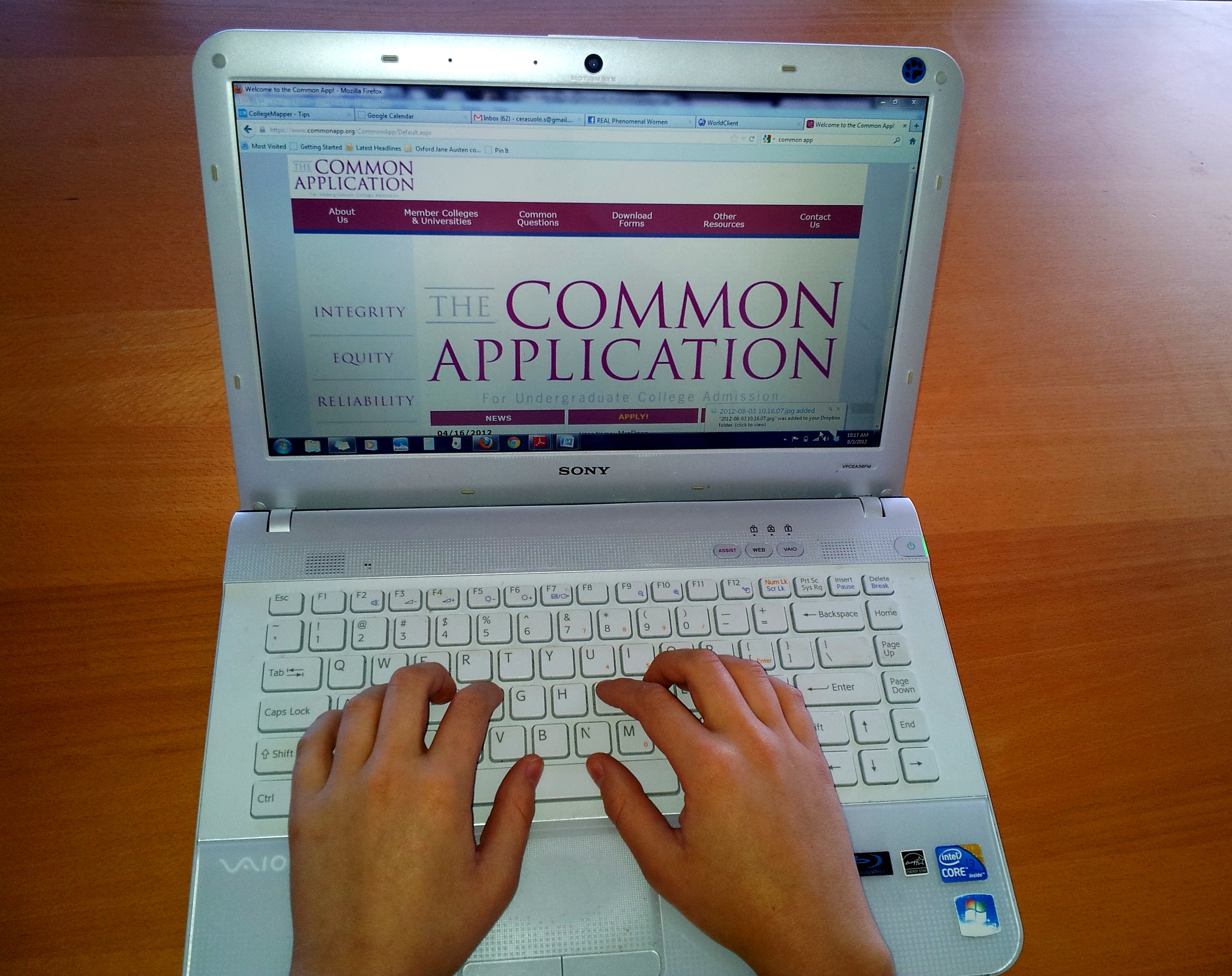
The Common App: Available August 1


common app

Starting August 1, the new Common App will be available for students to complete. The CA4, as it’s called, will have a few notable changes:

  • The online experience will improve–The questions will be tailored to each individual student’s relevant information, with help available onscreen alongside each question. The app will offer continuous status checks so students can keep track of their progress; and the school code search has been streamlined.
  • The Arts and Athletics portion of the application have changed–The Arts Supplement will be replaced by Slideroom.com for easy integration with the application. The Athletic Supplement will be discontinued and become a part of the application itself.
  • There will no longer be the option to print and mail your application–You can no longer print your application and mail it to the colleges. Students can print to preview, but all applications must be submitted online.
  • There will be unlimited edits–Recognizing the need to edit the Common App for errors or updating information, students can now make unlimited edits.
  • Students can have three submitted essay versions–The essay can have a maximum of three submitted versions, allowing students to make corrections and updates.

The Common App has also improved how it collects the information from the student throughout the application process.

When August 1st rolls around, it’s a good idea to take a look, fill out the parts of the application you know will not change, and save it for later completion. Doing this over the summer allows your student has time to pay close attention to detail and become familiar with the application components.

To view a more detailed explanation of the changes for this year, check out C4: The New Common Application. 


A new tool for college admissions


statfuse college admissionsWhen I come across a product or service that can benefit parents and students during the college admissions process, I like to pass it along. StatFuse.com is a FREE service to help in choosing a college.

Getting into college these days is not as easy as it once was. The process for college admissions has changed over the years and become increasingly difficult. Even though the bar has been raised, admissions to college still are at the forefront of every prospective students mind.
Creating a list of schools to attend and crossing off the list as you get to know these institutions better. StatFuse.com takes all of your information and compares it to the standards your choice colleges have set. Our services can tell if you have what it takes, what you should do next, and maybe find a school that you didn’t even think about.

StatFuse allows students to create a free account where they can calculate their chances to colleges (through the “Chanculator”), find recommendations to colleges, track their progress to specific colleges, and much more. Parents can now plan their students’ future properly with the help of these tools while saving money on applications and other unnecessary fees.

This company was launched by two Southern California students, Jeet Banerjee & Supan Shah (ages 19 & 17) who wanted to help their fellow students solve some of the problems they faced as high schoolers. These young entrepreneurs developed the algorithm and innovative tools offered on the website and are focused on keeping this website free so that it is accessible to all students.

When asking the co-founders what their plans in the future for this company were, they simply said: “Our goal is to let every high school student and parent know about our product and how they can benefit from it.”

While StatFuse is beneficial in the college process, it’s important for parents and students to remember that statistics may predict your chances, but the human factor is also important. Choose your college wisely: using statistics, preferences, academics and future goals.


Are private student loans right for you?


private student loansWhen considering different ways to fund college expenses, some students and parents focus on federal loans, scholarships and grants. While these types of aid can provide the necessary funds to complete a four-year or graduate program, they are not the only options available.

Several banks and private lenders offer private loans for college, which are essentially personal loans that can be used for tuition and other college related expenses.  Even if a student applies for federal aid, a private loan can pay for expenses not covered by their government loan.

If you or your child has never considered private student loans, here are four reasons to look into this option.

Flexible repayment plans

If a parent applies for a private student loan to pay his child’s tuition, repayment begins as soon as funds are disbursed. Fortunately, this is not the case for students who apply for their own private loan.

For student who apply, repayment does not begin until six months after graduation from school. This is a plus, as many students need time to find employment and adjust to their new expenses. Of course, students do not have to wait until graduation. There is also the option of making in-school payments. In-school payments can reduces how much a student pays in interest and lowers his overall balance.

Fixed and variable interest rates

Some college students shy away from private lenders because many private loans feature a variable rate. However, fixed rate private student loans do exist. To find these loans, students have to shop around and compare rates with different banks. Fixed rate student loans are desirable because the rate remains the same for the duration of the loan, thus eliminating payment increase and decreases.

Option to add a cosigner

Because private funding is a type of personal loan, banks do require a credit check. Good credit is a criteria for private funding. This can be problematic for college students who do not have a credit history, or those with a limited credit history. But there are ways around this hurdle. Students who need additional funding can add a cosigner – such as a parent – to their loan. This increases the odds of approval, however, the cosigner must have good credit.

Use funds for anything

If applying for a private student loan, funds can be used for more than tuition. This type of personal loan is helpful for covering all college-related expenses, such as books, supplies, a computer, rooming and board, and transportation.

College is expensive, and unfortunately, some people put off their dream of acquiring a higher education because they don’t have enough in savings. But with the help of private student loans, college can be a reality.

A word of advice: Be careful about how much you borrow and gage wisely your ability to repay after graduation. With student debt rising to record levels, smart borrowing should ALWAYS be a priority.


Oh Canada–heading north for affordable college


mcgill university
McGill University-Canada

With American college tuition rising and families feeling the economic pinch, universities in Canada are becoming more and more appealing. Graduating with student loan debt is forcing students to look north to Canada for a more affordable education. That’s right–Canada!

According to the Institute for College Access and Success, the number of U.S. students at Canadian colleges rose 50 percent in a decade, and now about 10,000 Americans attend Canadian colleges. The institute reports that graduates from an American university can expect, on average, to carry more than $26,000 in debt; and 9 percent of those graduates default on student loans within two years.

Compared to American universities, Canadian colleges clearly offer a better bargain (costs for one year of tuition):

  • University of Chicago – $45,945
  • George Washington – $45,780
  • Stanford – $41,250
  • McMaster (Hamilton, Ontario) – $20,966
  • McGill – $14,561
  • University of Winnipeg – $11,115

The overall costs are significantly lower with the added benefit of American students allowed to use college savings plans and U.S. student loans. Many universities also offer scholarships as well.

Continue reading Oh Canada–heading north for affordable college

Information Technology Careers: Keeping pace with innovation


it careersWe check our bank account online, couple our televisions to our in-home wireless networks, instant message our coworkers, stay connected via social networks, rely on the GPS navigation in our cars, and otherwise depend on information technology for our modern lifestyle. Behind all of these daily conveniences is a team of experts keeping systems up and running, securing our private data, and innovating new IT solutions.

Top IT Careers:  2013 – 2020

Almost every business you come in contact with each day uses information technology. Well-educated IT professionals who possess computer information systems degrees are truly surrounded by a world of opportunity. In fact, 4 of the top 10 jobs for 2013, as selected by U.S. News and World Report, are in the information technology field. These fast-growing, well-paying career choices are:

Continue reading Information Technology Careers: Keeping pace with innovation