Category Archives: admissions

The Common App: Available August 1


common app

Starting August 1, the new Common App will be available for students to complete. The CA4, as it’s called, will have a few notable changes:

  • The online experience will improve–The questions will be tailored to each individual student’s relevant information, with help available onscreen alongside each question. The app will offer continuous status checks so students can keep track of their progress; and the school code search has been streamlined.
  • The Arts and Athletics portion of the application have changed–The Arts Supplement will be replaced by Slideroom.com for easy integration with the application. The Athletic Supplement will be discontinued and become a part of the application itself.
  • There will no longer be the option to print and mail your application–You can no longer print your application and mail it to the colleges. Students can print to preview, but all applications must be submitted online.
  • There will be unlimited edits–Recognizing the need to edit the Common App for errors or updating information, students can now make unlimited edits.
  • Students can have three submitted essay versions–The essay can have a maximum of three submitted versions, allowing students to make corrections and updates.

The Common App has also improved how it collects the information from the student throughout the application process.

When August 1st rolls around, it’s a good idea to take a look, fill out the parts of the application you know will not change, and save it for later completion. Doing this over the summer allows your student has time to pay close attention to detail and become familiar with the application components.

To view a more detailed explanation of the changes for this year, check out C4: The New Common Application. 


A new tool for college admissions


statfuse college admissionsWhen I come across a product or service that can benefit parents and students during the college admissions process, I like to pass it along. StatFuse.com is a FREE service to help in choosing a college.

Getting into college these days is not as easy as it once was. The process for college admissions has changed over the years and become increasingly difficult. Even though the bar has been raised, admissions to college still are at the forefront of every prospective students mind.
Creating a list of schools to attend and crossing off the list as you get to know these institutions better. StatFuse.com takes all of your information and compares it to the standards your choice colleges have set. Our services can tell if you have what it takes, what you should do next, and maybe find a school that you didn’t even think about.

StatFuse allows students to create a free account where they can calculate their chances to colleges (through the “Chanculator”), find recommendations to colleges, track their progress to specific colleges, and much more. Parents can now plan their students’ future properly with the help of these tools while saving money on applications and other unnecessary fees.

This company was launched by two Southern California students, Jeet Banerjee & Supan Shah (ages 19 & 17) who wanted to help their fellow students solve some of the problems they faced as high schoolers. These young entrepreneurs developed the algorithm and innovative tools offered on the website and are focused on keeping this website free so that it is accessible to all students.

When asking the co-founders what their plans in the future for this company were, they simply said: “Our goal is to let every high school student and parent know about our product and how they can benefit from it.”

While StatFuse is beneficial in the college process, it’s important for parents and students to remember that statistics may predict your chances, but the human factor is also important. Choose your college wisely: using statistics, preferences, academics and future goals.


Are helicopter parents getting a bad rap?


helicopter parentIt’s no surprise. Colleges and universities view today’s breed of college parent with some disdain. They see us as interfering in our student’s lives and overly involved in the college admissions process. If you compare us to the parents of 20 years ago, you might draw the same conclusion. We’ve been given the following names: helicopter parents, snow plow parents, and bulldozer parents. These nicknames have emerged over the last few years viewing parents as “the enemy”.

But are these characterizations really accurate? One school administrator thinks otherwise. Beth Moriarty, Director of Residence Life and Housing at Bridgewater State University and adjunct faculty member in the Student Affairs Counseling Program believes that it is time to change our views on parental involvement. In a recent post, she prefaced her argument:

K-12 literature supports the premise that parents who are involved in their students’ education, have students who are more likely to succeed both academically and socially. Additional research states that parents who are involved have students who are less likely to participate in at-risk alcohol and drug behavior. Research on first-generation, low income, and minority students suggests that parental involvement can increase the likelihood of students in these groups persisting to graduation. With this being said, perhaps we should embrace parents as partners, rather than fearing them as the enemy.

It’s a fact that some parents do get overly involved in their student’s life. But saying that all parents are helicopter parents is wrong. Our roles as parents have changed and evolved over the years. Today’s parents are invested in their student’s educational future and success. With competition among students more prevalent than ever before, encouragement and support can often translate into over-involvement. How do we help university officials see that parenting can be viewed in a positive light? Should parents be embraced as partners and should the colleges help parents embrace that role?

Take a few minutes and read the complete content of Ms. Moriarity’s post and comment here if you agree or disagree. I would love to hear your thoughts.


4 Reasons to Consider a Business Degree


business degreeNarrowing down the best major is often difficult. Some students choose the wrong path and end up regretting their degree program. Likewise, other students choose degree programs with limited job opportunities. Choosing to enroll as a Cardinal Stritch business management student, for instance, can open the door to several career opportunities in the future. If your student is on the fence and can’t decide between a business program and another degree, here are four good reasons to pursue a business degree.

1. Better Job Security

There is no guaranteed way to avoid a job lay off. However, obtaining a business degree can provide greater job security. Education level can impact unemployment, as well as the type of education. Business is an in-demand degree, with many graduates able to find stable employment upon completion of their degree.

Continue reading 4 Reasons to Consider a Business Degree

How to Make a Winning College Application Video Essay


video essay

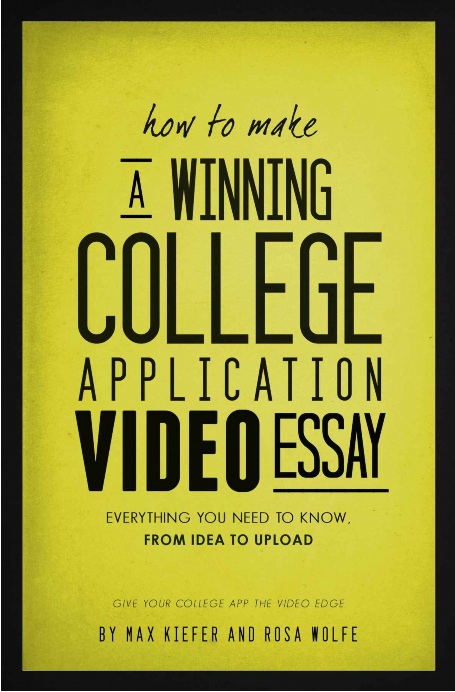
Today, I’m reviewing a book entitled “How to Make a Winning College Application Video Essay” by Max Kiefer and Rosa Wolfe. This book is written by parents for students: “We are a husband and wife writing and filmmaking team who have worked together so long that finishing each other’s written sentences is literally our stock in trade.”

In the beginning text in the book, they talk about the emergence of the video college application essay:

UTube officially arrived in 2009 when Tufts University invited applicants to submit an optional one-minute video. Tufts’ director of admissions, Lee Coffin, made this decision after being so impressed with a student video he famously remarked, “I thought, ‘If this kid applied to Tufts, I’d admit him in a minute, without anything else.’ ” With or without Tuft’s paradigm-changing decision, in the Internet age the college admissions video was inevitable. For a generation that has grown up swimming in social media, for whom images are a critical adjunct to communication, it’s hard to imagine that videos would not eventually become an element in the college sweepstakes. George Mason University, William and Mary, and St. Mary’s College have also begun inviting video submissions. More schools will surely follow. In any case, providing the colleges to which you apply with a DVD or a link to a short video essay won’t hurt. You don’t need to ask permission. If a college doesn’t want to look at your video, they simply won’t… but there’s every chance they will.

Continue reading How to Make a Winning College Application Video Essay

The College Application Process–New Tools for the Digital Age


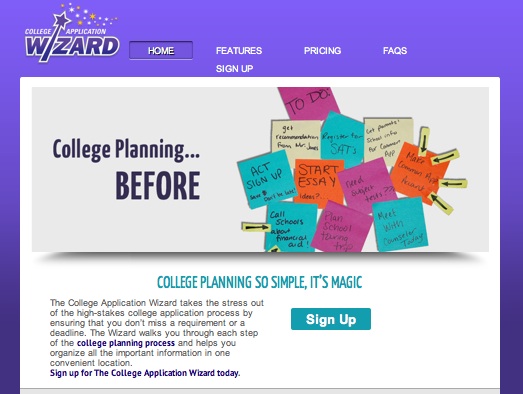
It always excites me when I find a tool that helps parents and students stay organized during the college admissions process. In the past, we have used filing drawers, wall calendars and to-do-lists to stay on top of all the admissions requirements. Then we moved on to usb storage drives, smartphone calendars and Evernote, which have worked seamlessly over the last few years. But today, there is a new tool for the digital age: The College Application Wizard.


College Application Wizard is the brainchild of Lynell Engelmyer and Kelly Herrington. Between Lynell and Kelly, they have over four decades of experience in college admissions, college counseling, and college financial aid.  Lynell, a former Director of Financial Aid, owns a successful college counseling practice in upstate New York, and frequently writes and speaks to groups about all aspects of applying to and paying for  college.  Kelly is the Director of College Counseling at a high school in the Pacific Northwest and is the former Associate Dean of Admissions at Union College.  Lynell and Kelly worked with a team of graphic designers, programmers and writers to create the first online personalized college organizer – The College Application Wizard.

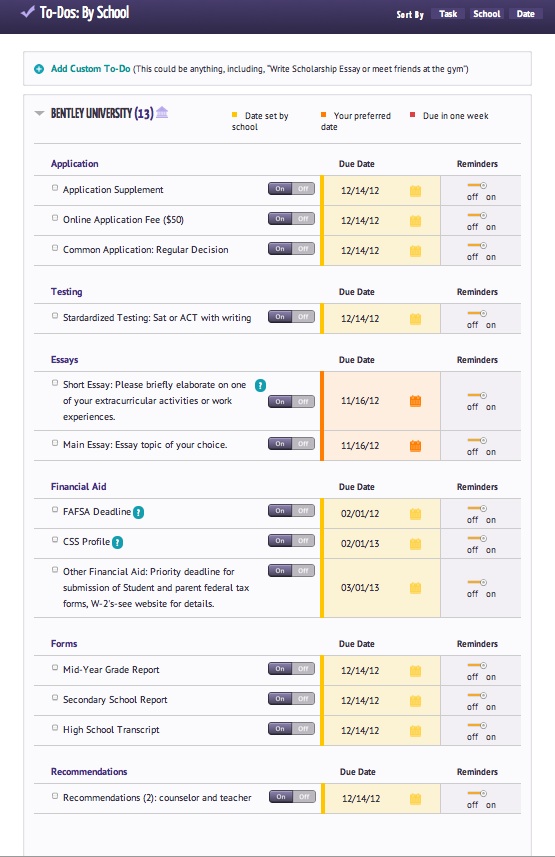
 Just to see how the program works, I signed up for a free account (one college) and walked through the process. It was simple, self-explanatory, and allowed you to tailor your list by setting your own deadlines on the tasks and adding any extra to-do lists for each task. The application gives you all the requirements for each individual college: transcripts you need to gather, recommendation letter requirements, forms required for financial aid, application and financial aid deadlines, and essay topics. Here’s a screenshot of the college that I set up–Bentley University.
The cost is free for one college and $9.95 for up to 15 colleges for one year of access (more than enough in a narrowed down list). The fee includes the customized online organizer tool and a host of other resources including the advice of professionals with almost a half-century of college admission and financial aid experience.  The fee also allows the student to share their account with two people (parents, counselors, mentors, etc.)  These mentors enjoy read-only access to the student’s file. In my opinion, this is a BARGAIN!

Why Do Students and Parents Need The College Application Wizard?

Gone are the days when every high school had enough college counselors with sufficient time to work with each student. Today, one counselor is often assigned to hundreds of students.  At the same time, the process itself has become more complex and the competition increased.  In the past, students applied to three or four colleges.  Today, students often apply to 7 to 10 colleges or more.  Students who used to take either the SAT or ACT now take both tests and may also need to take SAT Subject Tests as well.  Arts majors may need to prepare a portfolio.  Athletes must prepare an athletic resume and submit game film to schools.  Students need to request teacher recommendations and follow-up to make sure they were submitted by the deadlines.  Families applying for financial aid face another important set of requirements and deadlines with very high stakes attached.   It’s the rare person who can seamlessly navigate and organize every step of this process.  For many applicants, this process is a complex, confusing maze.

The College Application Wizard takes the confusion out of the process and straightens out the maze to organize, guide and support students along the path to college.  It helps students understand the steps they need to take and take those steps in the right order and at the right time.  It relieves anxiety and takes the stress out of the process for parents.  In the words of a parent who saw the prototype of the College App Wizard, “This is a parent’s dream come true!”

Comprehensive List of College Info Websites

college planning

Here’s a current comprehensive list of my picks for college info websites. Do you have any additional suggestions?

COLLEGE BLOGS

ParentingforCollege.com–You will find the MOST information ere olege news. Come here first to find the latest and bhest tools to hn our blog: college guidance, college planning, college coaching, and colelp you navigate the college maze.

TheCollegeSolutionBlog.com–An excellent resource for college-bound teens and their parents: admissions, testing, and financial aid.

UniversityLanguage.com/blog–Great blog articles about everything related to college admissions geared toward students.

GreatCollegeAdvice.com/blog–An excellent resource about the college admissions process providing expert advice helping students map their college journey.

USNews.com/Education–The education channel of U.S. News and World Reports providing the latest news and information related to college.

CollegeBasics.com–An excellent resource for information about college essays, college applications and high school resumes.

InsideHigherEd.com/blogs–Several different blogs related to higher education.

CollegeAdmissionsPartners.com/blog–An expert blog dedicated to helping students find the right college.

CollegeFocus.com/colleges–A virtual clearinghouse of blogs related to college life, parenting, college searches, etc.

Road2College.com–You can find just about any topic related to college prep at this site: financial aid, college planning, student loans, test prep, and more.

PARENT SITES

UniversityParent.com–A site where parents can ask questions, gather information, and download and view college guides and campus newsletters.

CollegeParentCentral.com–A blog created to give parents useful information about college and the college admissions process.

YourCollegeKid.com–A site with parent forums and other college prep tools.

CollegiateParent.com-A site dedicated to providing parents with information for their college students.

FINANCIAL AID

Fafsa.ed.gov–The official government website for the Free Application for Federal Student Aid.

SallieMae.com/plan–A FREE education investment planner that will help determine college costs, compare college costs, and provides information about student loan repayments.

SavingForCollege.com–Everything you need to know about financing a college education.

FinAid.org–An excellent resource for the answers to all your questions regarding college financial aid.

CollegeFinancialAidAdvisors.com–Help with the college financial aid process.

SCHOLARSHIPS

Fastweb.com–An extensive scholarship search website with a massive database of scholarships, along with articles and helps designed specifically for parents.

Chegg.com–A free service for students and parents where students can showcase themselves, connect with colleges, and search for scholarships.

Cappex.com–The place to go to find merit scholarships and academic scholarships from colleges across the country.

Scholarships.com–An extensive scholarship search engine that helps you search and schedule alerts for deadlines.

How2winscholarships.com–A guide for parents and students on how to effectively apply to and win scholarships.

COLLEGE VISITS

SmartCollegeVisit.com–Created to provide information about college visits, help parents and students plan, and view personal accounts from both parents and students.

CollegeWeekLive.com–A virtual college fair that sponsors free LIVE events with archived presentations, student chats, and college booths.

Youniversitytv.com–Learn about colleges by watching video tours, chat with students on campus forums, post questions and get answers.
CustomCollegeVisits.com–Offer custom tailored to your family’s needs, whether you’re visiting college & university campuses close to home, across the country or from overseas.

COLLEGE PLANNING

Cappex.com–A site created for students to help them simplify their college search, create a profile and search for scholarships.

CommonApp.org–The common application site used by 400 colleges and universities across the country.

PrincetonReview.com–The best value colleges list for public and private institutions across the country.

UPromise.com–UPromise partners return a portion of eligible purchase money back to you. Those earnings accumulate in your Upromise account until you decide to use it to invest in a 529 plan, help pay down eligible student loans or assist with college expenses—all tax-free!

CollegeBoard.com–It’s here you’ll find the CSS Profile application (required by many private colleges), register for the SAT, and read articles about planning for college.

CollegeXpress.com–A search site that groups colleges in categories and provides college “hot” lists (i.e. top college for late bloomers, colleges for students needing a second chance)

VolunteerMatch.org–Find local volunteer opportunities for your college-bound teen and teach them about the importance of giving back to their community with the added bonus of adding that service to their high school resume.

KnowHow2Go.com–A college planning site for college-bound students providing helps and aids from middle school to senior year: interactive and fun!

 BigFuture.collegeboard.org–A planning tool to help parents and students get ready for college.

TEST PREP / TUTORING

TutorsForTestPrep.com–An SAT expert and coach offering tips to help your college-bound teen improve their SAT/ACT scores.

FairTest.org–The site for the National Center for fair and open testing providing information about colleges who do not use the SAT/ACT for admissions decisions.

QuincyTutoring.com–A resource to find a tutor and schedule a tutoring session.

LaunchpadEducation.com–Tutoring to help students with learning disabilities and ADHD.

CramBetter.com–CramBetter uses bite-sized video lessons to help you focus on the material that’s most likely to show up on your exams in math, physics and chemistry.

TEXTBOOKS

ECampus.comFind textbooks, sell textbooks, search for college supplies and college apparel all on this one site.

Chegg.com–A hub for students to compare textbook prices, study for exams, and choose the right courses.

RECRUITING

NCSASports.org–The college recruiting site for athletes.

BeRecruited.com–If you have a teen that’s a student athlete, they can create an online profile here and help colleges and coaches find them and be recruited.

FindTheBest offers test prep comparison


For seniors, the end of the college application process has come to an end.  Acceptance letters should be rolling in and they should now start gathering information and comparing different schools to see which one they want to spend the next four years.

But for juniors, the process has just begun (if it hasn’t already).  Spring is not just the season of flowers and birds; it is also the season of standardized testing.  And since it is generally advised to take the SAT or ACT two to three times in order to get your best composite score, students should start taking the tests now.

For those who have already taken their first SAT, taking it a second time is almost statistically guaranteed to improve your score.  But what can improve your score even more is doing test prep.  Compare test prep courses based on exam, class size, category, total cost, and total hours.  

Of course, there’s also always the option of buying one of those giant blue practice exam books and teaching yourself through discovery.  But it is usually worth it to just attend even a few hours of class, even if it is just to learn a few basic tips that will allow you to squeeze every point that you can out of the SATs and ACTs. Remember, however, that not all test prep companies are alike. Do the research, ask around and talk to some experts on Twitter before you drop some serious cash on test prep.


[findthebest container_style=”width:500px;margin:0 auto;” width=”500″ height=”300″ style=”vertical-align:top;” src=”http://test-prep.findthebest.com/w/srp?new=2&w=500&h=300&filter_by=class_size,cost” after_style=”text-align:center;” link_href=”http://test-prep.findthebest.com” link_style=”font:10px/14px arial;color:#3d3d3d;” link_text=”Compare Test Prep Courses”]

Choosing the right college


choosing the right college
photo courtesy of esc1.net

Choosing which college to attend is an incredibly exciting, yet trying adventure.  With hundreds of universities to choose from, it can be frightening and overwhelming at times.  However, with proper planning and a great deal or research, choosing the right college is easier than you think .  Keep these tips in mind as you embark on this journey.

Identify what qualities you look for in a college

Incoming freshmen don’t necessarily need to have a specific major in mind, but it doesn’t hurt to have some ideas.  Knowing what major you want to pursue will help narrow down your college choices

Location and environment are two very important factors.  Do you want to attend a large university, or will you thrive better at a smaller university?  What environment are you looking for?  Is Greek Life an important part of the decision process?  Know what you’re looking for ahead of time.

Financial aid, tuition and other expenses are also an important consideration to keep in mind.  If you’re on a tight budget, it’s wise to consider an in-state university.  Another option is attending a community college for two years and then transferring to another university.  And don’t forget admission requirements.  Research the universities you’re interested in, and make sure that you meet their admissions requirements.

List, compare, and visit your college choices.

It’s important to do your research before applying to colleges.  Make sure the colleges you apply to cater towards your needs.  Don’t apply to a college that doesn’t offer the major you want to pursue simply because it’s been labeled as a party school or a cool school.  Go to as many college fairs as you can.  Most high schools will offer a few throughout the school year.  There are also college fairs in most major cities throughout the year that are often bigger than the ones put on by your high school, so make a point of attending at least one of these as well.

Make a pros and cons list of all your colleges, and then compare what each one has to offer.  This is an easy way to narrow down your selection.  Once you’ve weeded out the less appealing choices, it’s imperative that you visit as many of these colleges as possible.  College visits offer you a chance to experience campus life, tour the school, and learn more about what each college has to offer.

Make sure your grades are in check.

It never hurts to do well in school.  A high GPA will look a lot more impressive on your college applications than a mediocre one.  Remember, you want your application to stand out among the rest. A high GPA will also give you a better chance of receiving scholarships, so if tuition cost is a factor in your decision making process, picking up the books will work in your favor.

college culture
photo courtesy of youvisit.com

You’ll definitely want to take an SAT prep class, and, if your college choices require it, take an ACT prep course too.  Prep classes are known to increase your score by at least 200 points. The Princeton Review, Kaplan, and Sylvan Learning Center all offer a variety of SAT and ACT prep courses to students.  Whether you prefer a private tutor or a classroom setting, these programs offer a method for everyone, so research which classes are offered near you.

As you can see, there are many factors to consider when choosing a college.  Be thorough with each of your choices, and make sure that the college you pick fits your needs to a tee.  Having good grades and doing well on the SAT and ACT will go a long way, so remember to hit the books.

________________

You can follow CollegeFocus on Twitter at @CollegeFocus101 and Facebook at www.fb.com/collegefocus. Choosing which college to attend is an incredibly exciting, yet trying adventure.  With hundreds of universities to choose from, it can be frightening and overwhelming at times.  However, with proper planning and a great deal or research, it’s easier than you think to find the perfect college for you.  Keep these tips in mind as you embark on this journey.

collegefocusAbout the author: Kirstin Le Grice is a recent graduate of University of Colorado and a staff writer for CollegeFocus, a website dedicated to helping students deal with the challenges of college, including housing, finance, style, health, relationships, and transferring from a community college to a four-year university.


Selecting a college degree that brings reward


selecting a college degreeWith a tough job market awaiting those college students that will graduate within the next few years, selecting a college degree that brings reward has become paramount to finding gainful employment. So while parents certainly want to encourage their kids to shoot for a career they’re going to love, they definitely don’t want them staring down the barrel of student loan debt with nothing to show for it but a job at Starbucks and a stack of useless resumes.

The key for most parents is helping their students to find a major that they love that leads to a growing job market. This is no easy feat, but with a few simple tips and tricks at your disposal you should be able to uncover options for any student, regardless of their strengths and preferences. Here are some suggestions to get your student on track for a college degree that will really pay off after graduation.

Do the research

The first thing to do is compile a list of industries that currently seem to be expanding, and there are a few that fit the bill. Anything having to do with the medical industry seems to be on the rise these days, thanks in part to health care reform, but also related to the fact that the baby boomer generation is entering the age of retirement just when there looks to a drought of qualified medical professionals. So the healthcare industry is a solid choice for now and perhaps the next 10-20 years, if forecasts are to be believed. Engineering of all types is also growing, but especially the field of computer engineering (no surprise there). Also taking off is green industry, due in large part to the current administration’s eco-friendly policies, although a growing consumer market for green solutions doesn’t hurt. In truth, green technology is growing by leaps and bounds, so an eco-engineering sort of degree could be extremely lucrative in the years to come. There are, of course, other fields to consider, as well. Not only are kids strong in math and science doing well right now, but those who are creative are finding jobs in the online arena thanks to the growth of blogging and internet marketing campaigns (textual, graphic, and even video).

Match your student’s interests with the career paths

Once you’ve compiled a list of job markets that are growing steadily (without suffering periodic layoffs) it’s time to sit down with your student to talk about finding interests, talents, and skills that may match up with some of the exciting career paths that appear to be taking off at the moment. This is a great way for students to think about what they like and want and how their preferences align with markets that are currently growing.

Select the right fit colleges

From there it’s just a matter of selecting schools that offer reputable and highly-regarded programs in the specific major your student has chosen, whether that means attending MIT for a computer science degree or considering University of Miami masters degrees as your student plans for their future in engineering. The right fit colleges should not only offer these preferred degree plans, but fit your student’s academic and social needs.

Once you and your student have done the research to discover which types of degrees are currently in demand, all that remains is to select a major that best suits your student’s interests and abilities and choose a school that delivers the best opportunities for job placement. College isn’t “all about the money”, but you want your student to be able to enter the job market in their chosen field after graduation.