Category Archives: Wednesdays parent

Wednesday’s Parent: Spring Fever and Your Teen


Sign up for my FREE parent tips email and get my FREE Ebook on college financing! Or subscribe to my blog on the left and get email updates.

Wednesday’s child may be full of woe but Wednesday’s Parent can substitute action for anxiety. Each Wednesday Wendy and I will provide parent tips to get and keep your student on the college track. It’s never too late or too early to start!

Wednesday’s Parent will give twice the info and double the blog posts on critical parenting issues by clicking on the link at the end of the article from pocsmom.com to parentingforcollege and vice versa.

__________________

spring feverFor some of us (especially those of us in the South), spring has peeked it’s head out for a few days and spring fever has arrived. You know the feeling—restlessness creeps in, a desire to play instead of work, and a lack of motivation. If you have a teen, they struggle to get back into the swing of things, especially after their break.

Why do these feelings crop up, especially during a time of year when the dreariness of winter is lifting and the promise of warmer weather and sunshine should bring a positive attitude? There may be many causes:

  • It’s prom season. Need I say more?
  • Seniors are feeling the stress of college decisions and being on their own.
  • It’s also a time when parents may verbalize their own fears about the future, such as, “Do you know how much college costs?” making it a concern for the entire family.
  • Some parents don’t ask their kids if they even want to go to college, causing kids to feel pressured and panicked about the future.
  • Spring means midterms. Midterms bring pressure, especially with seniors who worry about graduating if they fail.
  • Parents are also tense wondering what kids will do to stay busy in the summer. Working parents wonder how they’ll keep the children from getting into trouble.
  • Parents of seniors begin to realize that the inevitable will happen: they will eventually have an empty nest and it’s a frightening feeling.

This is a time when tension rises and you hear parents say, “Just three more months, and you’re out of here!” Imagine the impact those harsh words have on kids already acting out because they are scared about leaving home.

Recognizing the symptoms of spring fever should help you weather the next few months with minimal upheaval and conflict. In addition, being open to communication from your children, can go far in your own awareness of your child’s particular situation so that you can stay ahead of more serious issues such as depression. And don’t forget to stop and smell the roses!

For some tips on how to deal with spring fever, read Wendy’s post on the

6 Antidotes for Spring Fever.

Wednesday’s Parent: Finding the Best Fits–A College List Part 2


A lot is riding on making a good college list. Your student will be applying to the schools on the final list so they better offer the best chance for student success. It’s so important that Wendy and I are giving our tips in two parts. Today’s Part 2 is about refining the college list.

_____________________

college listLast week, we discussed how to create a college list and what criteria to include. This week it’s time to refine the list and pick and choose which colleges would be a perfect fit. All the experts have advice on how many schools to apply to: some say 7, some say 10 and others say the more you apply to the better your chances. For me, the number isn’t as important as the content. A good college list needs to be well thought out and researched.

A good college list should have three “fit” criteria: financial fit, academic fit, and emotional fit. Once your student has a tentative list, ask if they have all three criteria before finalizing the list.

Financial Fit

Does the college fit into your family’s budget? If it doesn’t fit financially, cross it off the list. While you should never consider a college solely based on the sticker price, you should certainly examine what will happen if your student is accepted and doesn’t receive any financial aid. Remember when factoring in   cost, don’t forget about the add-ons. They can add up and have a substantial effect on your budget.

Academic Fit

Does the college fit into your student’s academic aspirations? This might seem like a no-brainer, but the education is a key factor in attending college. Cross the college off the list if it doesn’t fit into your student’s academic learning style. For instance, is your student looking for smaller class sizes and strong relationships with his professors? A larger university won’t offer this.

Emotional fit

Can your student see himself attending college there? When he visited the campus, did it “feel” right and did he have a rapport with the students he came in contact with? You might think college shouldn’t be an emotional decision, but it is. After all, they will be spending at least four years of their lives there. If they don’t fit into the social climate they will be miserable.

Another thing to consider is positioning. Is your student positioned well with the other applicants, especially if you are looking for merit aid. Are their scores, grades, and achievements good enough to put them at the top of the applicant pool?

As you can easily see, there’s more to refining a college list than picking a college with Greek life or college sports rankings. It’s a place your student will call home and he needs to feel comfortable there. Once you’ve determined if the college has all three criteria, add it to the list. It’s a keeper!

Read Wendy’s blog: Parent Hunting and Gathering-A College List Part 2

Wednesday’s Parent: You Want to Go to College Where?–A College List Part 1


A lot is riding on making a good college list. Your student will be applying to the schools on the final list so they better offer the best chance for student success. It’s so important that Wendy and I are giving our tips in two parts. Today’s Part 1 is about general criteria and next week’s Part 2 is about refining the list.

__________________________

college listParents of college-bound teens often ask this question in utter astonishment and trepidation. Following the paths of their peers or college notoriety can make for added stress and baffle and frustrate any parent when it comes to starting the college list. Their choices might also not be up to what you feel are your standards or choices, especially if you have your heart set on them attending your alma mater or a local college.

In spite of these obvious pitfalls, the conversation needs to begin and a preliminary list needs to be made. And with any good list, it’s important to ask your teen some serious questions, and then complete the responses.

What can the family afford?

Any list without this discussion is sorely lacking. It’s not prudent to add a college to the list when you know it’s unattainable for the family to finance. If the sticker price is high, and your EFC is high as well, it makes sense to steer clear of these colleges.

However, don’t discount a college solely on its sticker price. If your student is a top candidate (and only if), it’s possible they could receive substantial merit aid or scholarships. But don’t add a school to the list that attending will require substantial student loans if the aid doesn’t materialize.

What do you want to study?

It’s rare that high school students know what they want their career to be. But they do know what interests them and the type of degree they might want to pursue. Even though you may want them to be an aerospace engineer or a doctor, they may have their heart set on studying English literature and becoming a teacher. Don’t force them into a career just because you believe it pays well. Adults know that if you like your job, you will be happier and more successful.

However, you do need to have a conversation about pursuing a degree plan that might not be employable when they graduate. Even though a degree is a degree, finding work in a field of study that isn’t in high demand could have them working at a minimum wage job after graduation.

Where do you want to go to college?

Most students see college as a step toward independence, which usually translates into another state and as far away from home as possible. Don’t limit them to your home state or cities close by if they want to spread their wings and move further away. Additionally, if you limit their choices to your surrounding area (or a state college), you could be neglecting some excellent colleges choices. Be open to all options that fall within your financial capability, even if it means they are not as close to home as you would prefer.

What type of surroundings appeal to you?

There are so many levels to explore when asking this question. Does your student want to attend a small college or large university? Do they like an urban campus or a suburban one? Is the weather (climate) a factor? Is entertainment off campus a factor? Is Greek life, sports, or theater important? As you can see, exploring each of these questions further will help as you start the list and narrow down the choices.

Which college admission criteria do you meet or exceed?

This requires a little bit of research. If your student has less than stellar grades and standardized test scores, it’s not prudent to add MIT or Harvard to their college list. But, if their grades and scores meet those of qualified applicants and they have expressed interest in attending, consider adding that college to the list. Look at each college website, use CollegeData.com and the College Board’s site to determine what their average scores and GPAs are for accepted students. Don’t waste your time applying to schools that your student doesn’t have a chance to receive an offer of admission.

Be wise about choosing colleges that see them as top applicants, or at the very least, competitive with other applicants. Top applicants receive the most merit aid and scholarships. These colleges should go to the top of the list.

Before you balk at your student’s choices and say “absolutely not”, give them the courtesy of listening before you respond. After you listen, discuss your concerns and communicate those concerns without judgment or condemnation. Remember, they are the ones attending the college—not you. They should be the ones that make the list. Even if your choices are not their choices, it’s conceivable to find common ground and proceed with a final list.

For more advice on how to start the college list, read Wendy’s article:

Hunting and Gathering-a College List Part 1

Wednesday’s Parent: A Crash Course in Money Management


money managementBudget? For teenagers. Why on earth would they possibly need to learn to budget? Their every need is met: food, shelter, clothing and for most entertainment. The baby boomer generation has made sure that our kids want for nothing and their every need is met immediately. What is wrong with this picture? Simple. We’re raising a generation of children who end up drowning in debt as adults.

Before you send your child off to college and expect them to understand how to budget and not abuse credit, it’s time to give them a crash course in money management.

Money 101-The difference between wants and needs

This is the foundation upon which every other lesson is built upon. We all say it, especially our kids: I need (fill in the blank). But is it a need, or a want. Most of the time, it’s a want. And if it’s a want, you can 99.9% of the time, do without it. Understanding this concept will help your kid learn to spend wisely and if you teach them to ask this question before they make a purchase, it’s going to change their lives.

Money 202-Don’t spend more than you earn

Adults (or most adults) understand this concept. If your child doesn’t learn this before college, it is open season for college students by the credit card companies. It’s easy to “swipe” the card and rationalize they can pay for it later. Before long $20 becomes $50, $50 becomes $100, and $100 becomes $1000.

Money 303-If you want it, you have to earn it

This is an easy lesson to teach your kids, but many parents don’t. Start early with chores, then summer jobs, and then encourage them to save for that high ticket item. Purchasing a new car for your teenagers doesn’t teach them this lesson. Instead, consider a used car that needs some work, but only if they contribute some of the funds.

Money 404-Don’t depend on a rich benefactor

We’ve all seen those shirts in the mall that say: “My kid thinks I’m an ATM”. This is the mantra of today’s generation. If I want it, mommy and daddy will get it for me. If I want to go to college, mommy and daddy will foot the bill. Encourage them to always have some “skin in the game” when it comes to important purchases. If it’s their hard-earned money, it will have more value.

Graduate Course-Create a budget and stick to it

You can start early with an allowance and some weekly spending money for essentials. Explain to them that this is their money but it’s their responsibility to use it wisely. When it’s gone, it’s gone. They will have to wait until the next week before their funds are replenished. It’s as simple as sitting down with them every week and writing down how much money they have and what they will need to spend it on.

Kids who learn these lessons before college will be happier adults. They won’t become a slave to debt and they will work for everything they acquire in life.

For more budgeting tips read Wendy’s blog:

6 Circus Lessons for Balancing the Budget

Wednesday’s Parent: When Just Say NO Is Not Enough


just say noIf you or your child has been in the public school system in the last 30 years you’re familiar with the phrase–just say no. From first grade on, those words have been pounded into the heads of kids giving them an answer to anyone who offers them drugs or any other form of abuse. It’s not the answer sometimes that’s important, as much as the attitude behind the response.

Research shows that kids who have a good relationship with their parents are less likely to pursue a life of abuse. The drug awareness programs give parents some guidelines they say will help. They instruct parents to do several things and lead us to believe that if we follow those rules, our kids are less likely to succumb to peer pressure.

Their suggestions have merit. But the bottom line is that most kids, no matter how strong they appear or how great their relationship is with their parents, are going to find themselves in a situation where just saying “no” is not enough. Just saying “no” will be met with teasing, pressure, and even ridicule. It’s your job as a parent to prepare them for that moment.

Educate your kids about abuse.

You should be the one to give your kids all the information they receive about the consequences of drug use. Don’t use scare tactics. That never works. There’s not one kid alive who actually believes that if he tries a drug once, it will kill him; although, it can and has in many instances. They see themselves as invincible. Give them facts. If you’ve done your job and they trust you, they will listen and when the time comes, remember what you’ve said.

Prepare them for the worst case scenario.

Tell them it’s going to happen. Give them some suggestions on how to handle the situation. Assure them that no matter what happens, you will be there for them. You want them to tell you everything; no matter what decision they choose to make. Let them know they can call you, anytime, day or night, to come and rescue them and you will be there in a heartbeat.

Keep the lines of communication open.

Make sure your kids know they can tell you anything, and they won’t be judged. Kids tend to keep things from their parents; that’s just part of being a kid. Let them know that, no matter what they do, you will love them. You may not love their behavior, but everyone makes mistakes. Everyone messes up and does things they are ashamed of. Make it easy for them to tell you about those bad choices, so you can help them make the right ones the next time.

Before they leave for college have a conversation.

Your kids have listened to everything you have told them over the years. But this is a time to remind them that they have options. Talk about the drinking culture on campus. Discuss the “hooking up” culture and sexual abuse. Bring up the subject of drug abuse. You may need to do a little research before you tackle this conversation because your kids are aware, or have been confronted, with abuse throughout high school.

What do you do if the worst happens?

Consider this scenario and prepare yourself for a response. Your daughter goes to a fraternity party. It goes without saying that there is going to be underage drinking and drug use. (If you don’t face this fact, you are in denial). Someone brings Ecstasy to the party and is passing it out freely. If you’ve done your job as a parent, she knows what Ecstasy does to her brain and how it affects her body. The girl that’s willing to share is her best friend. She tells her that it’s supposed to make you feel “all warm inside” and tells her no one will know. She tells her that by the time she gets home, the high will have worn off and if she doesn’t like it, she doesn’t ever have to do it again. She reminds her that you can’t judge if you haven’t tried it. So against all the knowledge you’ve given her about the effects of drugs, she takes the pill. Then, in a conversation about college and how she’s doing, she tells you what she did.

Be prepared for a response. Just saying “no”, wasn’t enough. She’s going to need an understanding parent who doesn’t judge, but reminds her there are consequences to every decision. This is an opportunity for a life lesson. You may not be able to be with her 24/7 but your words will be. The next time, she will hopefully think twice about making such a dangerous decision.

For more parenting tips, read Wendy’s blog: 7 Deadly Sins, Teen Style

Wednesday’s Parent: Lessons on Decision Making from Olympic Athletes


athletesDecision making is definitely a learned behavior. As parents, it’s our responsibility to teach our kids not only how to make decisions, but how to deal with the consequences of those decisions. Decision making is never easy but if you teach your kids to stay the course they will win the gold, much like the U.S. Olympic athletes.

Here are some lessons we can learn from Olympic athletes that can help with decision making.

Start young

Olympians start young in their sport of choice. They start young because they know that with practice they will eventually improve. As with any lesson or task, starting young is the key. It’s easy to give them simple choices when they are young that teaches them to make decisions. These simple choices will be the beginnings of a decision master.

Add technique as you get more experience

A figure skater starts simply with learning how to skate, and then they move on to learning spins, jumps and other tricks. The more your children make decisions, the more decisions you should allow them to make. As they master small ones, move on to larger decision choices, such as purchases.

Stay focused

Olympic athletes stay focused on the end goal: to compete in the Olympics. With any decision, it’s important to keep your eye on the goal and focus on the decision that needs to be made. Teach your teens to break their decisions down, weighing the pros and cons of each.

Learn from defeat

Olympic athletes fall and fail many times. They learn from their defeats and improve to produce different results the next time. Not every decision you make will produce the desired outcome. There are consequences, both good and bad, to all your decisions. However, if you learn from those defeats and capitalize on the victories, you will be successful in reaching your goals.

Olympic athletes train for years to often compete just one time. Everything they have is put into planning for the competition. As you grow, decisions become an integral part of your life: choosing a college, choosing a career path, choosing a mate, purchasing a house, and deciding whether to have children. If your children start young making small decisions, the big ones will be much easier.

For more decision making tips, read Wendy’s blog:

7 Shakespearean Steps to Good Decision Making

Wednesday’s Parent: These Tactics Won’t Spur Action


college prep actionI tell so many people I work best under pressure. It’s not an excuse; it’s a fact. As you can imagine though, it’s stressful. Chasing deadlines may work when you’re self-employed, but it’s not a habit you want your college-bound teen to adopt. Every teen, unfortunately, procrastinates. It’s a part of their nature; and the college prep process on top of other life activities lends itself to procrastination.

Knowing that all teens (and some parents) procrastinate, what should you avoid when trying to motivate them to action during the college prep process.

Don’t be a bad example

We all know that our kids mirror us and our actions. If you college-bound teen sees you putting things off, procrastinating on tasks, and ignoring things that need to be done, why should they take action themselves? If you want you teen to tackle tasks as they become available and submit applications and forms before the deadline, model that behavior.

Don’t be a nag

Nagging never works with a teenager (and rarely works with a spouse). At some point they learn to tune you out. By the time they become teenagers all they hear is “blah, blah, blah”.

Don’t do it for them

Many parents get so tired of begging and nagging, that they opt to do it themselves. They complete the applications, write the essays, answer emails and take care of all the college related tasks. Yes, it happens; and colleges know when a parent is “helping” with the process.

Don’t lay on the guilt

Every parent uses the guilt tactic. Guilt will do more damage than motivate. If your teen begins to feel that they can never please you, it affects their self esteem. And they will stop trying because they feel whatever they do it’s not enough to please you.

Don’t jam it down their throat

There is a fine line between helping and encouraging and forcing your teen to do things. If your teen is not exhibiting any interest in test prep, college searches, scholarship searches and applications, perhaps there is a reason that needs to be addressed. Forcing them to write an essay will not produce a successful result. Making them apply to college when they don’t want to go will only cause bigger problems in the future.

You know your teen and you know what motivates them. Don’t use these tactics that rarely produce effective results.

Conversely, read Wendy’s blog on what you CAN do to motivate them to action.


Wednesday’s Parent–Parent Rivalries


Sign up for my FREE parent tips email and get my FREE Ebook on college financing! Or subscribe to my blog on the left and get email updates.

Wednesday’s child may be full of woe but Wednesday’s Parent can substitute action for anxiety. Each Wednesday Wendy and I will provide parent tips to get and keep your student on the college track. It’s never too late or too early to start!

Wednesday’s Parent will give twice the info and double the blog posts on critical parenting issues by clicking on the link at the end of the article from pocsmom.com to parentingforcollege and vice versa.

_________________

parent rivalriesIt’s college night at your high school and here she comes—THAT mom. We’ve all encountered her. As a matter of fact, a recent episode of a TV sitcom, “The Goldbergs”, described her perfectly. Her son is going to Harvard or Yale and she’s going to tell the whole school about it. Does she listen to you? Nope. She goes on and on about the colleges he applied to, the scholarships he’s going to win, and the awards he will receive at graduation.

Here’s the problem—you never asked. And thus begins the parent rivalries over college. It’s not pretty, but every parent will come across one or more of these parents while their teen is in high school. The danger is getting sucked in to the competition, which can only hurt your teen. But just how do you avoid it? It’s a parent’s natural instinct to be proud of their kids and you will be tempted to counter their bragging with bragging of your own.

Here are some tips on how to react when the situation arises (and avoid embarrassing your teen):

Don’t play their game

The easiest thing to do is offer a comeback but you should resist; especially if your teen is with you. The last thing they need is to believe that you need to one-up the other parent. Teens are already insecure and when their parents respond it just gives credibility to the other parent’s claims—that their son or daughter is better.

Take the high road

When you’re confronted by this type of parent, take the high road. Smile and congratulate them and walk away. If it’s a friend listen intently but don’t respond except to say that you’re happy for them. You can win with these parents and there’s no point in getting into a war over “my kid is better than your kid.” Don’t feel like a failure as a parent if you feel your child’s accomplishments don’t measure up.

Remember every child is unique

Don’t compare your child to others. Every child is unique, and every child has to follow their own path. Your child may be headed to community college, trade school or opting to take a gap year. The worst thing you can do for you and for them is start believing that anyone else’s kid is better than they are. When you are confronted with their bragging, don’t forget your child is moving toward their future—in the way that is best for them.

College is college and the name doesn’t mean much

Harvard, Yale, Brown, MIT or any other big name college isn’t the be all and end all of success. Your child has worked hard for four years and with college on the horizon, they have accomplished much. In the grand scheme of things, the name doesn’t mean much; it’s the education they will receive at college and the life experiences they have.

The college prep process brings stress and frustration, but don’t let the parent rivalries add to the stress. Smile and focus on your own child, because in the end, that’s really all that matters.

Check out Wendy’s blog on Taming the Green-Eyed Parent Monster

Wednesday’s Parent: Rivalries among college-bound teens


Sign up for my FREE parent tips email and get my FREE Ebook on college financing! Or subscribe to my blog on the left and get email updates.

Wednesday’s child may be full of woe but Wednesday’s Parent can substitute action for anxiety. Each Wednesday Wendy and I will provide parent tips to get and keep your student on the college track. It’s never too late or too early to start!

Wednesday’s Parent will give twice the info and double the blog posts on critical parenting issues by clicking on the link at the end of the article from pocsmom.com to parentingforcollege and vice versa.

 ________________

braggingIt’s that time of year again—college offers of admission will be arriving and students will be responding to those offers. Years ago, on the popular show Dawson’s Creek, the teenage characters were going through the college prep process. As the process unfolded the viewers shared in every part of the process, from application, to waiting, to acceptance and rejection. Obviously the writers of the show had experienced this before because they were dead-on about the types of emotions teenagers go through during this period in their lives.

One specific storyline involved a girl who was striving for an Ivy League acceptance and a boy whose grades were not quite as stellar and had set his sights low when it came to college. It created quite a conflict—one student excited about their college prospects and the other stressed about getting an acceptance at all. It’s a fine line between showing excitement and bragging so much that it’s offensive to others.

This is a time to teach some life lessons that your teen can take with them to college and into their life as an adult.

Tolerance

Kids will be kids. And unfortunately they often mimic their parents (in a negative way). Bragging will occur—you can count on it. The rivalry will intensify when the offers of admission arrive. When this happens, this is a great opportunity for you to teach your teen about tolerance. Although they may not like listening to other kids brag, it’s a fact of life. People will brag and boast and they are bound to run into this as adults. Learning to deal with it now should make it easier in the future.

Gratitude

As the offers of admission arrive it’s a great opportunity for them to learn about gratitude. Being grateful for their success should make it easier for them to avoid making others feel inferior.

Acceptance

Part of the process is learning to accept the outcome and adjust expectations, especially if the outcome is not what they expected. Often acceptance is not easily achieved but it is part of facing reality and becoming an adult.

Graciousness

When their friends receive offers of admission and they don’t, or they get waitlisted, it’s going to be difficult. In life others will be promoted before them, own bigger houses and more expensive cars. Instead of feeling jealous or envious, it will be much easier to be gracious and celebrate their accomplishments.

The rivalry that occurs among college-bound teens is hard to deal with as a parent. We don’t like to see our kids hurt or their self-esteem destroyed by other kids; but you can use the opportunity to build character.

Read Wendy’s blog post: College admissions rivalry

Wednesday’s Parent: The Dangers of Senioritis


Sign up for my FREE parent tips email and get my FREE Ebook on college financing! Or subscribe to my blog on the left and get email updates.

Wednesday’s child may be full of woe but Wednesday’s Parent can substitute action for anxiety. Each Wednesday Wendy and I will provide parent tips to get and keep your student on the college track. It’s never too late or too early to start!

Wednesday’s Parent will give twice the info and double the blog posts on critical parenting issues by clicking on the link at the end of the article from pocsmom.com to parentingforcollege and vice versa.

______________________

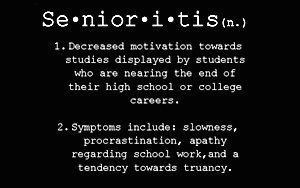
senioritisSenioritis is a disease contracted by most high school seniors. Its onset might be hard to recognize because it starts innocently. But once the disease has taken hold it can have a devastating effect on your senior’s future college aspirations. As with any disease, knowing the symptoms is the key to an early diagnosis and treatment.

All kidding aside, however, senioritis is a very real problem for most students, especially if they have already been accepted early decision or early action. They are coming into the home stretch and it’s only natural for them to try to rest on their laurels, so to speak. But every parent needs to be vigilant and act to stop it before it’s too late.

What are the symptoms?

Senioritis usually sets in as the holidays end in January after the winter break. The symptoms are obvious: laziness, lack of study, underachievement, skipping classes and lack of interest in school related activities, especially academics. They may be slight at first—a low grade, a lackluster composition, or an unwillingness to study for a test.

What is the diagnosis?

Senioritis is something students feel they deserve. They’ve worked hard and most likely have completed all their college applications. Why not skate through the last few months? Why not skip a few classes and not study as hard. After all, the colleges already have their grades. No harm. No foul. Or so they think!

What is the cure?

It’s simple: a reality check and ultimately graduation. This attitude can quickly affect their final transcript and possibly cause colleges to re-evaluate their offers of admission. Colleges look at those transcripts and if it appears that the student has not remained committed to academics and their grades drop dramatically, they will ask themselves if the student is college material. Read the college acceptance letters carefully. Many times colleges include clear warnings to students, informing them that admission is contingent on successful performance throughout senior year.

What can you do?

Pay attention to your senior’s study habits and grades. If you notice a slip, have a conversation. Pull out the acceptance letter and have them read the fine print. Remind them that the end does not justify the means.

For more insight into senioritis, read Wendy’s example:

6 Great Examples to Cure Senioritis