I’ll admit (willingly) that I like to offer my unsolicited advice to my children. Even though they are grown, I feel the need to continue to parent. As they did when they were younger, they smile, listen, and then do things their own way. It’s a type of dance parents and kids do with one another.
The hardest part of parenting during college prep is finding a balance in your parenting. You want to encourage them, guide them and help them make the right choices. But when you push too hard, nag and set guidelines that interfere with their independence and individual choices you create a stressful and frustrating college preparation experience. This is a monumental step in your child’s life and you don’t want to taint it with fighting, frustration and family discourse.
Common sense isn’t a flower that grows in everyone’s garden.
Following are 5 tips for parents of college-bound teens (based around good old southern truisms) to keep peace in the home and reduce the stress related to the college admissions process:
This article was originally written for University Parent as a part of their parent program.
Everyone likes a good bargain.
We rush out on Black Friday to get the best deals for Christmas — we stand in line in the freezing cold to save money! But do parents put as much effort and attention into finding a college bargain? Student debt statistics would say they don’t. Would you want your student graduating from college saddled with that debt? I imagine not!
College bargains do exist and if you have a student who intends to start college in the fall, it’s your job as a parent to point him in their direction. College is a huge consumer purchase which you can and should approach much as you would the purchase of a home or car. Do your research, compare the prices, and help your student choose a school that gives you the best bang for your buck.
One of my favorite movies is Mr. Blandings Builds His Dream House. In it, Mr. Blandings tells his lawyer that “some purchases you make with your heart and not your head.” As I said, I love the movie, but this is bad advice. When it comes to your college “purchase,” use your head first and then listen to your heart.
I understand that it can be challenging to get students to look at the college choice from this point of view. When my daughter was applying, all her choices were east coast private schools with huge price tags. As a parent, I wanted her to have her dream but, also as her parent, I wanted her to graduate without being burdened with debt. Her heart told her to go to the college that offered the least amount of merit aid. Her head, after a long “money talk” and re-evaluation of her second choice, led her to a school that allowed her to graduate with a small amount of student loan debt. She’s grateful every day that I guided her in that direction.
For decades, it’s been widely accepted that applying to college is a hard, stressful and time-consuming process. Students can easily spend months on university preparation and the application process, as well as thousands of dollars in application fees. Parents aren’t always sure which universities are the best fit for their students’ needs and qualifications. The anxiety is real, and when students receive rejection letters, it can be crushing.
All the experts have advice on how many schools to apply to: some say 7, some say 10 and others say the more you apply to the better your chances. For me, the number isn’t as important as the content. A good college list needs to be well thought out and researched.
A good college list should have three “fit” criteria: financial fit, academic fit, and emotional fit. Once your student has a tentative list, ask if they have all three criteria before finalizing the list.
Financial Fit
Does the college fit into your family’s budget? If it doesn’t fit financially, cross it off the list. While you should never consider a college solely based on the sticker price, you should certainly examine what will happen if your student is accepted and doesn’t receive any financial aid. Remember when factoring in cost, don’t forget about the add-ons. They can add up and have a substantial effect on your budget.
Academic Fit
Does the college fit into your student’s academic aspirations? This might seem like a no-brainer, but the education is a key factor in attending college. Cross the college off the list if it doesn’t fit into your student’s academic learning style. For instance, is your student looking for smaller class sizes and strong relationships with his professors? A larger university won’t offer this.
Emotional fit
Can your student see himself attending college there? When he visited the campus, did it “feel” right and did he have a rapport with the students he came in contact with? You might think college shouldn’t be an emotional decision, but it is. After all, they will be spending at least four years of their lives there. If they don’t fit into the social climate they will be miserable.
Where does your student fit?
Another thing to consider is positioning. Is your student positioned well with the other applicants, especially if you are looking for merit aid. Are their scores, grades, and achievements good enough to put them at the top of the applicant pool?
As you can easily see, there’s more to refining a college list than picking a college with Greek life or college sports rankings. It’s a place your student will call home and he needs to feel comfortable there. Once you’ve determined if the college has all three criteria, add it to the list. It’s a keeper!
It’s hard. I know. I’ve been there. You want your student to have the BEST education available. You want them to want it as much as you do. You see them making some choices that you know they will regret. As hard as you try, you find yourself pressuring them to make the right choice and the battle lines are drawn. They dig their heels in. You dig your heels in. And the tug of war begins.
What’s a parent to do when you feel your college-bound teens are making the wrong choices related to college? Take a deep breath and read these examples (along with my suggestions). Parenting for college can and probably will be a struggle.
Your college-bound teen tells you he doesn’t want to go to the college that is hard to get into and is opting for what you consider to be sub par.
Don’t panic or overreact. It’s possible he is scared. Try and ascertain the reasoning behind the decision. Don’t do this by badgering him or constantly asking him why. The best way to figure out what is wrong is to LISTEN. Listen to him talk about his day, about college, about how he feels. If fear is not the reason, perhaps he feels the other college would be a better fit. If that’s the case, do yourself a favor and back off. The worst thing you can do with a teenager is force him into a decision he feels is wrong. Sometimes the best lessons we learn are the ones that come from making our own decisions (right or wrong).
Your college-bound teen tells you that he simply MUST go to Private College A, even though she knows it comes with a high price tag.
Don’t let her bully you into sending her to a college you can’t afford AND one that will require a tremendous amount of student loan debt. Sit her down and explain to her the dangers of graduating in debt. Use the college repayment calculators if you have to. If she truly wants to go to Private College A, she needs to do the work (good grades, good SAT/ACT scores, great essay) to be awarded scholarship/grant money from that college.
It’s also worth considering that a private college may be similar in cost to a public university. Since many private colleges have generous alumni that donate, they often award large merit scholarships. Public universities are not as generous with aid.
Your college-bound teen is not interested in college, deadlines, studying for the SAT or any other path that leads him toward higher education.
If there is one thing I learned with both of my kids (and clients), if they aren’t invested in the college process they won’t be invested in college. Save yourself some time, money and heartache and wait until they are. If not, they can learn from the college of hard knocks–minimum wage jobs are the BEST motivator!
It’s also important to note that not every student is meant for college. There are, indeed, other options. Many have taken those different paths and been perfectly successful and happy. It could be time to consider alternatives to college.
Your college-bound teen misses deadlines, panics and comes running to you at the last minute to fix it.
The simplest way I know to avoid missing deadlines, is to get yourself a huge wall calendar and a fat red marker. Put it in a place that they have to pass by every single day. In addition, with all the smartphones and calendar apps available today, missing a deadline should be a thing of the past. At some point (hopefully when they go to college), they will have to fix their own problems. Let them do it now, while they live at home, and it will be easier for them once they are gone. Rescuing your kids all time only makes them into dependent adults and colleges aren’t impressed with those type of students or the parents that come with them.
Your college-bound teen suddenly announces she is not ready for college and wants to take a year off.
First of all, wait. Don’t react. Just listen. Odds are the mood will change with the wind and once all her friends are making college plans, that desire that she once had will kick back in. If not, let her know that it won’t be a “free-ride” year.
With the pandemic, gap years are becoming prevalent. Your student can use the time to investigate career options, work at an internship, volunteer in the community, or simply work and save money toward college.
If you have any questions or personal experiences you would like to share, please leave a comment here and share it with other parents. We learn from each other and from our mistakes and successes!
The world we now live in is resoundingly different than the world we grew up in. Applying to college has become the norm and parents and students take it seriously. The competition to get into college can be overwhelming at times for both parents and students.
Parenting has changed
In the 50’s, our parents let us have the run of the neighborhood. We rode our bikes everywhere, walked home from school alone, and rode the bus to the movies alone. In the summer, we left the house early in the morning and returned home in time for dinner. Our teachers terrified us and we knew if we misbehaved, our parents would back them up. There were no car seats or safety belts. You would never find anti-bacterial soap or even consider using it. When we turned 18, we either went to college or got a full-time job and moved out of the house.
began to change. Because of Adam Walsh, we watched our kids like a hawk. We weren’t quite ready to take away their freedom, but we worried. We worried about where they were, who they were with, and what dangers they might encounter when they were at school, outside, and at the mall. Parents began to question a teacher’s authority and loosened the grip on the discipline of their children. Spanking became taboo and “time out” emerged as a parenting technique.
At the beginning of the 21st century helicopter parenting emerged. It’s not like we planned for it to happen. It just did. We sheltered our children from any disappointment. Everyone on the team got a trophy. There were no winners or losers. We questioned all school authority. We would never consider letting them walk home alone or play outside without supervision. If they forgot their lunch, we took it to them. If they left their homework at home, we took it to school. We began to make every decision for them and protect them from every consequence. We began to feel the “parent peer pressure” for our children to be the best and the greatest. If they graduated from college and couldn’t find a job, they came home to live and thus the term “boomerang” generation was born.
How do you walk the tightrope of helicopter parenting?
How do we raise our children in this frightening world without overprotecting them from the disappointments and trials of life? What are the long-term risks of helicopter parenting?
Combine a little of the 50’s parenting, some of the 80’s style of parenting, and a very small amount of the 21st century parenting for the perfect parenting balance. There’s a fine line between cautious parenting and being a helicopter mom.
Ask yourself this question–Do you want your children to be independent successful adults or do you want them living in your basement for years and years depending on you to pay their bills and take care of them? Is it conceivable they will be going off to college and surviving alone, or calling you every day crying for help, or needing assistance with every life task? Will they be running home because they simply can’t survive without you?
My guess–your answers to every one of these questions would be a resounding NO!
I’m not really a math geek, but I do like to look at the statistics. Statistics are more than just numbers on a page; they tell a story. College statistics can tell you a story about the college your son or daughter is applying to.
Even though applying to college is an emotional decision, it’s important for parents to help students look beyond the emotions. Students use factors like sports teams, campus appeal, Greek life and more. While these factors should help your student choose the right college, it’s also a good idea to factor in the numbers.
Two good sources for college statistics are College Navigator and College Data. These two resources will help you make an informed college choice. Numbers aren’t everything, but consider these seven important stats when you and your student are looking at schools:
1. Financial aid percentages
If your student needs financial aid to attend college, these statistics are important. How much aid a college awards to its students is reported and tabulated each year. If your student needs financial aid, a college with a low percentage of merit aid might be eliminated from your list. Use the figures to help you refine your list.
2. Acceptance rates
There are many fine colleges that give credence to hard work and commitment. College truly is for everyone. If your student is an average student, don’t despair. Look for the colleges that will recognize potential and see your child as a viable applicant. Look for colleges with high acceptance rates. Better yet, look for the colleges where your child would be a top applicant in the applicant pool. This translates into more merit aid in the financial aid package.
3. Student-to-professor ratio
If your student has trouble focusing in class, is intimidated by large crowds, and needs more personal instruction to be academically successful, a large state university might not be a good fit. There are plenty of small liberal arts colleges with great academic records and majors. When my daughter was choosing a college, our decision was highly dependent on this factor alone. Once we found colleges that had low professor-to-student ratios, we were able to look at other key factors in making the decision.
4. Freshman retention rate
As many as one in three first-year students don’t make it back for sophomore year. The reasons run the gamut from family problems and loneliness to academic struggles and a lack of money. If schools you’re considering have a low freshman retention rate, there’s a reason. Some colleges do a great job of taking care of their freshmen; some don’t.
5. Graduation rate
Did you know that graduation rates differ wildly? About 400,000 students drop out of college each year. When you research the college, look up their graduation rates. Low rates could be a red flag. Graduation rates don’t necessarily determine the quality of a degree. Yet students who start college but don’t finish are typically no better off professionally and financially than those who never even started, and in some cases, if they took on debt, might be worse off.
6. Average indebtedness
Even if students graduate, it’s no guarantee they will secure jobs; at least not one that will pay enough to cover too much student loan debt. If the average student indebtedness is high, and your student needs financial aid, this college might not make the final list.
7. Percentage of students employed after graduation
If your student graduates and can’t find a job, it’s going to be a tough road ahead. Colleges with a strong alumni network and active career centers will have a high percentage of employment after graduation. Colleges with a high percentage of unemployed graduates should be avoided by students who need to incur high student loan debt.
*Portions of this article were written for TeenLife.com
Being an involved parent is crucial to your child’s success, especially as they explore the world of possibilities in high school. Not surprisingly, many kids don’t understand this; they want to do everything on their own.
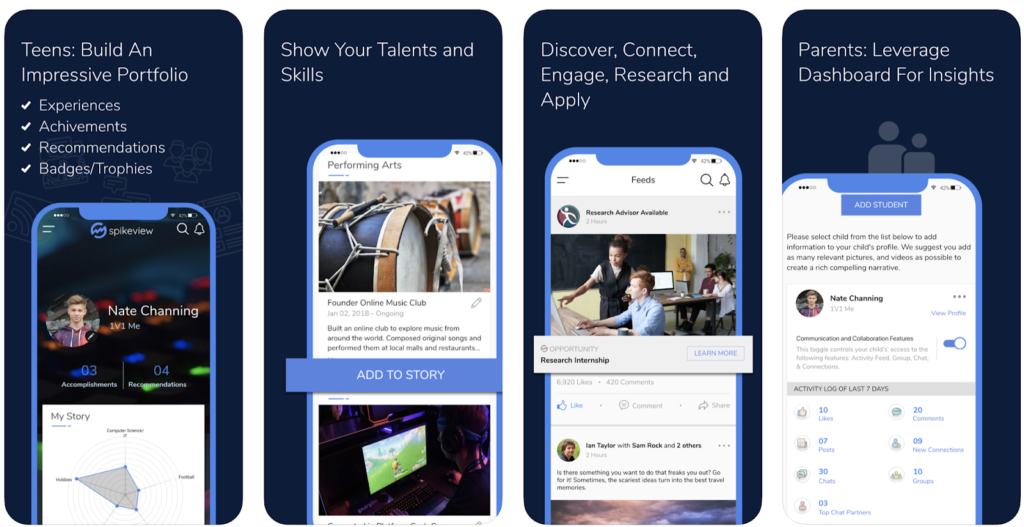
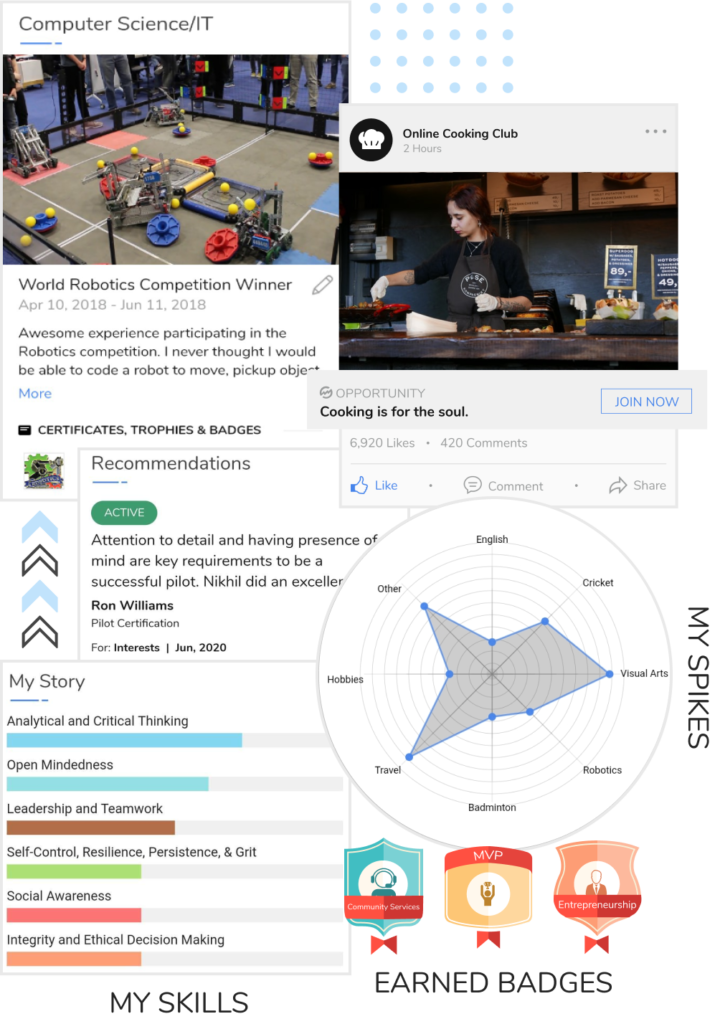
A new platform, spikeview, helps parents prompt meaningful conversations about interests and potential career tracks, in part by showing the big picture with the various explorations and steps in their journey so far. By making kids be a key stakeholder in navigating their journey through high school and into their dream college, spikeview helps with planning early and often to avoid unnecessary panic. Beyond just a well organized, secure, portfolio, teens are encouraged to build a network with others, take on leadership opportunities in interest-based online groups, and find opportunities (like internships, jobs, and high quality classes, tutors, career counselors, and summer programs) to strengthen their college application.
Here are 3 unique ways you can support your teens’ journey!
Drive Interest Aligned Discussions
Nothing is more off putting to a budding independent high-schooler then pushing all those amazing activities and experiences that YOU believe are so good for them. While you may be right, you might need to consider how those opportunities fit into the overall interests of the student. Looking at a snapshot view of their experience and interests and discussing why those are so valuable or exciting for them will establish trust and open them up to the possibility of considering other opportunities. This enables a “data-driven” conversation which tends to be more objective and palatable to a teens. We love the “My Story” visualizing tool that does the job and is a fun way to acknowledge your teens efforts.
Finding a supportive online community, and tapping new opportunities
Let’s face it, it is hard to be the parent of a teenager. Whether you have one or multiple kids, each is different and each has unique interests and hobbies. While we are always bombarded with camps, classes, online programs, it is not easy to find good quality opportunities that will interest your teen and will be worth the expense. It takes a lot of time to find the right fit opportunities and maybe requires you to ask other community parents. But, what if based on your kids’ past experiences and interests, you could see specific opportunities that helped magnify their impact, explore other avenues they may not have considered previously, or strengthen their college application? What if you could create and participate in discussions with other parents in the same situation as you, or those with older kids who have learned some of the harder lessons. What if you could get access to good quality content and opportunities that actually align to their interest. What if you could see students and parent reviews to help you decide? Think of how much time you would save, and discover something that will truly resonate. Easily create your teens profile and let the auto-discovery save you some time.
Preparation prevents panic and panic prevents progress
For this generation of teens, technology and media play a large role. Kids enjoy using media, digital content socializing through online platforms. They are not as interested in boxes full of photos , certificates or badges sitting in the garage that make up their experiences. So why not become a part of their world as a parent, and even better, use a medium that is fun, ubiquitous, and permanent. Help kids digitally organize their assets, and give them control of who gets to see what aspect of their data. Once uploaded into the secure spikeview cloud, you can decide what to share using custom views tailored to each opportunity or interaction. It can be polished and professional for applying for an internship, or casual and fun when reaching out to an online club. It can cover all your achievements, or showcase just one of them. The profile can be built over time with all types of experiences, achievements, thighs they are proud of. This can serve as a digital journey book across all phases of life and an invaluable shared asset between you and your teens. Best of all, parents can rest easy knowing that the default setting on spikeview is privacy.
With all the blood, sweat, and tears we put into them, it is almost criminal that all the planning for camps, internships, and classes, all the effort in polling other parents for the best coach or tutor, all the time invested in weekend games, and all the endless drives to and from activities – is forgotten within a few weeks, with nothing at all to show for it. What’s more, in most cases, the kids themselves don’t remember these critical building blocks of their life within a few years, losing the key formative steps, friendships, and memories that could make for an engaging, compelling life story. Rather than panicking looking at a last-minute sparse “brag sheet” to prepare for college admissions essays, these small nuggets instill confidence and make all the difference between getting into your dream college and opening a thin envelope.
Due to the pandemic, the college admissions system has been forced to adapt.
Last year’s group of graduating high school seniors and soon-to-be college freshman, could not visit colleges due to the nationwide response of sheltering at home to flatten the curve.
In addition, students dealt with problems regarding standardized testing online causing many colleges to eliminate or pause standardized testing requirements. Students will have limited access to traditional extracurricular and volunteer opportunities. In addition, sports programs have been shortened or eliminated at many high schools.
Parents and students are wondering how all these changes will affect the college admissions environment and will it change what colleges expect from this year’s crop of future students.
To answer these questions, The Harvard Graduate School of Education’s Making Caring Common project coordinated with admissions leaders to detail what exactly should be considered in the application process during the school year ahead. After interviewing 315 college admissions professionals, they published a joint statement:
“As admission and enrollment leaders, we recognize that we and the institutions we represent send signals that can shape students’ priorities and experiences throughout high school. This collective statement seeks to clarify what we value in applicants during this time of COVID-19. We are keenly aware that students across the country and the world are experiencing many uncertainties and challenges. We primarily wish to underscore our commitment to equity and to encourage in students self-care, balance, meaningful learning, and care for others.”
These admissions leaders emphasized that students should communicate if and how the coronavirus pandemic has negatively impacted them, including if they have not had access to the internet or a quiet place to study or if they have had increased family responsibilities such as taking care of sick relatives, supervising younger siblings or working to provide family income.
To sum it up, they will value five aspects in the upcoming admissions year: self-care; academic work; service and contributions to others; family contributions; and extracurricular and summer activities.
Following are the specific explanations provided for parents and students from the college admissions professionals outlined in their statement:
Self-care.
Self-care is of high importance, especially in times of crisis. We recognize that many students, economically struggling and facing losses and hardships of countless kinds, are simply seeking to get by. We also recognize that this time is stressful and demanding for a wide range of students for many different reasons. We encourage all students to be gentle with themselves during this time.
Academic work.
Your academic engagement and work during this time matters to us, but given the circumstances of many families, we recognize that you may face obstacles to academic work. We will assess your academic achievements in the context of these obstacles. In addition, we will assess your academic achievements mainly based on your academic performance before and after this pandemic. No student will be disadvantaged because of a change in commitments or a change in plans because of this outbreak, their school’s decisions about transcripts, the absence of AP or IB tests, their lack of access to standardized tests (although many of the colleges represented here don’t require these tests), or their inability to visit campus. We will also view students in the context of the curriculum, academic resources, and supports available to them.
Service and contributions to others.
We value contributions to one’s communities for those who are in a position to provide these contributions. We recognize that while many students are not in this position because of stresses and demands, other students are looking for opportunities to be engaged and make a difference. This pandemic has created a huge array of needs, whether for tutoring, contact tracing, support for senior citizens, or assistance with food delivery. We view responding to these needs as one valuable way that students can spend their time during this pandemic.
We also value forms of contribution that are unrelated to this pandemic, such as working to register voters, protect the environment, combat racial injustice and inequities or stop online harassment among peers. Our interest is not in whether students created a new project or demonstrated leadership during this period. We, emphatically, do not seek to create a competitive public service “Olympics” in response to this pandemic. What matters to us is whether students’ contribution or service is authentic and meaningful to them and to others, whether that contribution is writing regular notes to frontline workers or checking in with neighbors who are isolated.
We will assess these contributions and service in the context of the obstacles students are facing. We also care about what students have learned from their contributions to others about themselves, their communities, and/or their country (Please see Turning the Tide for additional information about the kinds of contributions and service we value). No student will be disadvantaged during this time who is not in a position to provide these contributions. We will review these students for admissions in terms of other aspects of their applications.
Family contributions.
Far too often there is a misperception that high-profile, brief forms of service tend to “count” in admissions while family contributions—which are often deeper and more time-consuming and demanding—do not. Many students may be supervising younger siblings, for example, or caring for sick relatives or working to provide family income, and we recognize that these responsibilities may have increased during these times. We view substantial family contributions as very important, and we encourage students to report them in their applications. It will only positively impact the review of their application during this time.
Extracurricular and summer activities.
No student will be disadvantaged for not engaging in extracurricular activities. We also understand that many plans for summer have been impacted by this pandemic, and students will not be disadvantaged for lost possibilities for involvement. Potential internship opportunities, summer jobs, camp experiences, classes, and other types of meaningful engagement have been cancelled or altered. We have never had specific expectations for any one type of extracurricular activity or summer experience and realize that each student’s circumstances allow for different opportunities. We have always considered work or family responsibilities as valuable ways of spending one’s time, and this is especially true at this time.
It’s a new world; especially in college admissions. What we did last year at this time has been obliterated by the coronavirus. Future college students (upcoming seniors) will have to adapt. Current college students are faced with all sorts of dilemmas.
Just for parents, I’ve compiled some of the articles I’ve found about navigating college during COVID-19. I hope you find them helpful for you and your student.
Amy Romm Lockard of Dovetail College Consulting in Portland, Oregon works with high school students nationwide to look at careers, majors, colleges and other post-secondary options as well as all the pieces in between (testing, financial aid, teacher recommendations, scholarship applications and more).
High school juniors may be wondering how the pandemic will affect their college plans. Your student may be asking:
How is this virus going to affect my future college application?
Are these abridged AP exams going to count?
I worked so hard this year, took a rigorous curriculum, but now how can this pass/fail grading highlight my improved grades?
My prestigious summer program was just canceled—what can I do for the next several months?
With all the seniors currently asking for gap years, will this mean there will be fewer spaces in future years?”
We can’t know the future, but we can deal with what we know now. As time progresses, the options will change, but for now, here is some helpful information.
We looked at the kinds of challenges and changes that rising high school seniors may face this fall.
Here’s what we found.
All schools that return to on-campus learning will have new procedures in place for keeping students and staff healthy. That includes whatever the state mandates for the number of students allowed in buildings, mask use, how far apart they can sit, where they can eat, hand-washing routines, changes in how clubs and extracurricular activities are handled, and whether sports are played and can be attended.
Collaborating with the Making Caring Common project at the Harvard Graduate School of Education, college admissions professionals have jointly issued “Care Counts in Crisis: College Admissions Deans Respond to COVID-19.” The statement focuses on five points students need to keep in mind this year: Self-care, academics, service, families, and extracurricular activities.
Before the COVID-19 pandemic, rising high school seniors would likely be spending some time during the summer and fall visiting prospective colleges, attending college fairs, or meeting with college recruiters who visit their high schools. But what about now? As you might expect, researching college options for the Class of 2021 just got very interesting! Let’s take a look at what some of these formerly typical activities might look like this year. It’s the COVID college search year!
As college move-in day approaches, parents around the country have understandable concerns about online vs. in-person instruction.
Many parents wonder if the quality of instruction will be the same if classes are conducted remotely, and if it’s worth the high cost of tuition they’re paying.
Parents are also expressing anxiety about student safety — both health safety because of the pandemic and physical safety in communities where protests and violence continue. Unlike the decision about how classes will be held, your student may have a choice about whether to return to campus or study from home (unless their school has closed all residential facilities or is permitting only certain grades to return).
If you’re still up in the air about this, or just want to prepare your student as well as possible for a safe and healthy fall semester, here are some things to know and talk about.
We looked at the kinds of challenges and changes that entering freshmen and current college students may face this fall.
Here’s what we found.
All schools that return to on-campus learning will have new procedures in place for keeping students and staff healthy.
That includes whatever the state mandates for the number of students allowed in buildings, mask use, how far apart they can sit, where they can eat, handwashing routines, changes in how clubs and extracurricular activities are handled, and whether sports are played and can be attended.
COVID-19 has impacted many families financially — including their ability to pay for college. What may have been a positive financial outlook in the fall of 2019, when students applied and accepted admission, has changed dramatically for many families with the nationwide shutdowns and changes in employment.
Student athletes have been hit hard as many colleges are cutting programs to save money and stay afloat. Needless to say, athletes aren’t the only students who are impacted. Many students who’d planned to use family funds to pay for college are now faced with financial hardship and left wondering how they will be able to afford college. Families are being forced to get creative and look for funds in the form of scholarships and grants if they wish to avoid borrowing to pay for college.
If you find you are short on funds to pay for college, use these tactics before you decide to take out loans.
As freshmen and upperclassmen start thinking (dreaming?) about heading to college this fall. They’re going to be packing more supplies than usual, however. What will be different on campus this year, due to the continuing COVID-19 pandemic? Maybe more elbow bumps than hugs! Here are five things you may not have thought of. Make some preparations if possible!
In one of the most challenging periods in the last century, the Coronavirus has roiled healthcare systems and everyday life, with citizens wondering what the ramifications are for society and their everyday lives.
While public health and government officials are providing their expertise to the specifics of health and everyday life, high school students, college students, and their parents face special complexities in managing their finances and their college experiences.