Category Archives: college majors

Wednesday’s Parent: The #1 Question to Ask Before Applying to College


#1 questionThe new school year is beginning and high school seniors will be making that difficult choice: choosing a college. It’s certainly a process of eliminating the unaffordable ones, the ones that are either too far away or too close to home, and the ones that simply don’t interest your student. But before applying to college, there is a #1 question you should ask your student.

What is the first question you ask your student before he applies to college? Here are a few standard inquiries:

  • Where do you want to go?
  • What do you want to major in?
  • What size college do you want to attend?
  • How far away from home do you want to go?

and the ever popular, What do you want to be?

But are these the best questions to ask when applying to college? Should your student be thinking beyond the obvious and delve deeper into what they expect to get from their education?

So many students enter college without a goal or purpose. This can end up costing parents money and added years of college attendance. You can’t, of course, expect every 18-year old to know what they want to do after graduation, but you can guide them on the right path.

POCSMom and Long Island College Prep Examiner Wendy David-Gaines sheds some insight into the question you SHOULD be asking your college bound student. Once you read it, you will say DUH! It makes perfect sense!

Answer this, and then apply to college

+++++++++++++++++++

Wednesday’s child may be full of woe but Wednesday’s Parent can substitute action for anxiety. Each Wednesday Wendy and I will provide parent tips to get and keep your student on the college track. It’s never too late or too early to start!

The bonus is on the fourth Wednesday of each month when Wendy and I will host Twitter chat #CampusChat at 9pm ET/6pm PT. 

Wednesday’s Parent will give twice the info and double the blog posts on critical parenting issues by clicking on the link at the end of the article from parentingforcollege to pocsmom.com and vice versa.

Is Your Student Considering a Career in Nursing?


nursingObamacare is changing the face of healthcare, and with it the nursing profession. Here’s what you need to know if you’re considering this field.

LPN

An LPN is one of the most widely-recognized types of nursing degrees out there. LPNs are licensed practical nurses and perform a variety of tasks under supervision of an RN. They administer medication to patients, check vitals, and give injections. They can also take blood.

RN

A registered nurse, or “RN,” is what you probably think of when you think of a nurse. It’s an individual with an associate or bachelor’s degree in nursing. They often assist physicians in hospitals and have extensive job responsibilities that can include management. But, they are also responsible for hands-on care of patients. Then consider upgrading your RN to a BSN here: RN to BSN San Antonio.

Clinical Specialist

A clinical nurse specialist is an advanced practice nurse. This type of nurse is proficient in diagnosing and treating illnesses within a specialized niche. These types of degrees are available through online colleges in Florida or specialized nursing schools.

A clinical nurse can focus on patients and families, staff management, or administration. They are often placed in leadership roles because of their extensive medical knowledge.

Nurse Practitioner

A nurse practitioner might work under the supervision of a doctor, but more and more of them are becoming autonomous and taking on the role of a physician. NPs can diagnose and treat diseases, prescribe medicine, and initiate treatment plans for patients. This is basically the nurse equivalent of a medical doctor.

Nurse Case Manager

A nurse case manager coordinates long-term care for elderly or disabled patients who need long-term skilled nursing care.

They often choose to specialize in treating people with diseases like cancer or the elderly.

PhD

Getting your PhD in nursing almost always means you’re headed into teaching or some kind of educational role. A PhD in nursing is heavy on theoretical knowledge, but also allows a nurse to gain a deeper understanding of the practical application of the nursing profession.

Travel Registered Nurse

This type of nurse works in temporary jobs across the country or in foreign countries, sometimes for weeks at a time, and even years at a time. Travel nurses may perform many of the same duties as a traditional RN, but often work for an agency that needs to supplement core staff at a facility.

Staff Nurse

A staff nurse works in a variety of different settings, including rehab centers psychiatric wards, ICUs and critical care, and outpatient facilities. They often provide direct care to patients and administer medications, perform IV therapy and assist LPNs and RNs.

Emergency Room/Triage Nurse

This type of nurse treats patients in an ER, and often works with trauma victims, though many types of individuals enter an ER and a triage nurse needs to be quick on his or her feet in order to address emergency and life-threatening situations. The job is stressful, but the pay is commensurate. If you don’t mind working in constant chaos, this job is for you.

______________________________

Audrey Lovett works in a senior role involved with medical recruitment. She likes to be able to share her insights and experiences with an online audience. Her thoughts have been published across a variety of different websites.

Is Your Student Interested in a Career in Communicative Disorders?


communicative disordersCommunication is an important part of a person’s daily life. While there are many ways people communicate with each other, verbal communication is the most prevalent means of conveying needs and wants. For people with communicative disorders such as speech problems and hearing loss, giving and receiving basic information can be a challenge. These individuals need the assistance of trained professionals to provide them with tools and resources to help them navigate their daily lives as easily as possible.

A career in the communicative field can be incredibly rewarding. If you’re considering this career path, here are a few examples of jobs you can apply a communicative disorders degree towards.

Speech Pathology

A speech therapist, also called a speech-language pathologist, diagnoses, treats, and works toward preventing communicative disorders. These disorders may or may not be related to the following factors:

  • Cognitive communication
  • Fluency
  • Swallowing
  • Language
  • Speech

As a speech-language pathologist (SLP), you may work with individuals who cannot produce sounds or do not produce sounds in a clear manner. Examples of voice disorders include stuttering, inappropriate pitch, and rhythm difficulties.

Many different organizations hire speech therapists such as schools, private businesses, and therapeutic groups. Whether you work for an organization directly or have a private practice, this particular area of the communicative disorders field has plenty of opportunity for career growth. Keep in mind that a master’s degree is almost always a requirement for most positions in this field.

Deaf Education

A career working with deaf or hard-of-hearing students is rewarding on many levels. Did you know that according to the Hearing Health Foundation (HHF), 1 in 5 Americans have some hearing loss in one ear? Also, 3 out of every 1,000 children born in the United States are born hard of hearing or deaf.

Do these statistics shock you? Do they make you wonder what it is like for people who, on a daily basis, struggle to communicate with their peers and family members? If so, you may want to consider a career in deaf education. Here are just a few of the many jobs that are directly related to individuals experiencing hearing loss:

  • Sign language interpreter
  • Audiologist
  • Social worker
  • Child care worker
  • Employment counseling

As you can see, the types of jobs that appeal to people interested in deaf education are varied. Some jobs provide direct service to individuals with hearing loss while other jobs may focus on educating hearing people about the struggles that their non-hearing counterparts face. These particular jobs focus on finding solutions to make it easier for deaf or hard-of-hearing individuals to function in a hearing world.

Audiology

The audiology professional is continuously growing and has many career opportunities. One of the reasons for the increased need for professionals in this industry is the growing geriatric population. Baby boomers are entering the later stages of their lives and with this comes hearing loss that can make communication difficult.

Audiologists strive to improve the quality of life for their patients and take on many different roles. Some audiologists provide rehabilitation services while others monitor and prevent hearing loss. Places that hire audiologists include the following:

  • Private, medical practices
  • Public health services
  • Long-term care facilities
  • Rehabilitation facilities
  • Public and private schools (educational audiology)
  • Health insurance providers
  • Research facilities
  • And more!

For a successful and lucrative career in the audiology field, you’ll need to complete as many as 8 years of schooling. The field is slowly transitioning into a doctoring-level profession, which includes an additional year of internship study.

To learn more about the opportunities in the communicative field, work closely with your counselor to find an educational path that will help you fulfill your career goals.

___________________________________________

USU - Heather Jensen[5]Heather Jensen is an Audiologist and Clinical Assistant Professor for Utah state University.  She received her Doctorate of Audiology from Arizona School of Health Sciences in 2004.  She has been an adviser for the student academy of audiology organization at USU for 11 years.  Before coming to USU, she owned her own private practice, but decided she wanted to give back to the field of audiology by teaching students.  When she’s not working she spends time with her four children, she also enjoys doing hearing related humanitarian missions.

What You Can Do With a Math Degree


math degree
Image by AJC ajcann.wordpress.com used under the Creative Commons license.

The study of numbers is a constantly growing field, and thanks to the explosion of the technology industry, mathematics has become one of the most lucrative majors in higher education. The study of math not only creates a technical ability to deal with numbers, but it teaches many analytical and problem-solving skills that are sought after and prized by employers across all industries. So if you’re wondering what it is that you can do with your degree in mathematics, here is just a small selection of options.

  1. Accountancy and finance

Accounting and finance firms are constantly looking for employees with strong technical skills in mathematics and an ability to follow complex algorithms and economic equations to determine the strength of a company’s financial positioning. The various types of jobs include roles such as auditor, tax accountant, forensic accountant, management accountant and corporate advisor.

  1. Actuarial sciences

As an actuary you will utilize various statistical information in order to create probabilities to inform your clients on different types of financial risk. Actuaries tend to be focused on business strategy, combining mathematically derived economic trends and information with practical solutions to insure sound investments and to minimize potential losses.

  1. Banking

Banking careers that are open to students who’ve studied mathematics range from general retail banking to corporate investment banking. Both forms of careers deal mainly with financial assessments of various public and private financial structures, and the largest opportunities lie in departments of merger and acquisitions and lending and IPOs.

  1. Statistics

If your main focus in mathematics was statistics, than your options for career industries are great, as virtually all major businesses and corporation employ statisticians to collect, analyze, and contextual data. Many statisticians also possess advanced IT skills, as they are usually required to work on larger company databases.

  1. Academia

For mathematicians looking to pursue a career in academics and teaching, a great step is to study for a master of science in mathematics education. The academic side of math will allow you to not only teach the future generations of mathematicians, but to continue your own research pursuits within the field, usually leading to publication in magazines and journals. Academic postings can be wide-ranging, and your choice of specialty will dictate what level of education you teach at and in what department.

With such a specific degree like a BSc in mathematics, it can be easy to see why many people might think their future career prospects would be held to a few select fields, but in truth the study of math is a doorway to many prospects.

Degrees That Work: Planning for a Career, Not Just a Job


careerWouldn’t it be great to graduate from college with a career and not just a job? Students all over the country dream of graduating from college with a job. Penn College students graduate with a career.

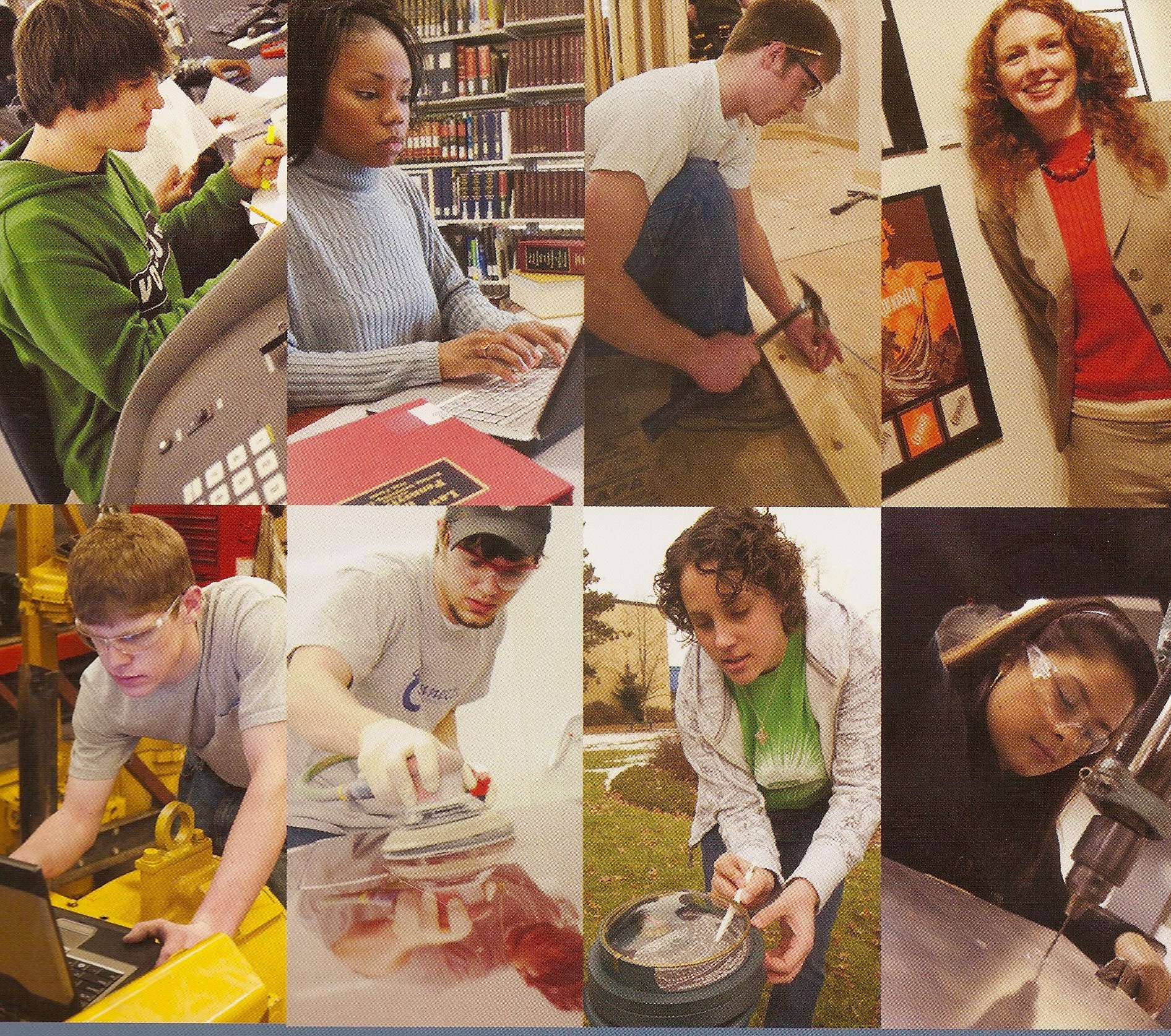
During my time on campus I spoke with students from all career concentrations and the overwhelming response was, “This education is preparing me for a career, and for a career that I love.” That’s the key—students at Penn College don’t just earn a degree; they discover their true passion and learn the skills to pursue it.

There’s no better way to see the impact of this college than through the words of its students and the companies who employ them.

94% of graduates responding to a survey were employed, continuing their education, or serving in the military within one year of graduation.

“I will … not be left with what so many college graduates are left with … uncertainty about the future. All the degree programs at Penn College prepare students for having a job and take away the uncertainty.” — Matthew Stoltz, Physician Assistant

“My major was a mix of theory and lab … that’s why I came here (Penn College). The reward for completing this major is job security.” —Jorgette Grosso, Systems Application Engineer, Schneider Electric Co.

“In this field (Building Automation Technology), you can write your ticket before graduating … I couldn’t have picked a better place to go.” — Adam Yoder, Service Energy Analyst, Honeywell International

“Throughout each day I am faced with a very wide variety of troubleshooting issues. From networking and communication, to PLC programming, to component and other circuit issues, Penn College has prepared me for it all. I would not be as successful as I am today if I hadn’t made the decision to get my degree from Pennsylvania College of Technology.” –Francis “Dave” Nevill, Controls Engineer, First Quality Enterprises, Inc.

“The hands-on education from Penn College allowed me to hit the ground running from day one on the job. I was able to contribute to my company with the technical skills I’ve learned from college.”—Zachary Brook, Pennsy Corporation

“I attribute the hands-on, strong, and practical work ethic I received from Penn College as the building block to my accelerated career path.”—Sean Stabler, Business Development Engineer, Arkema, Inc.

“Industrial and technological change is inevitable and these changes require a deeper understanding of asset procurement, integration, and organizational-change management … take advantage of the diverse curriculum and extracurricular activities at Penn College to advance in industry, as well as in life.”—Robert Blauser, Manufacturing engineer leader, Harley-Davidson Motor Company

In 2013-14, more than 75 employers participated in on-campus recruiting information and interview sessions, 34 Fortune 500 companies recruited Penn College students and alumni, and 367 employers offering more than 5,200 jobs attended the Penn College Career Fairs.

“We are proud that we have added another Penn College graduate to our team.” — Roger Kipp, Vice President-Engineering, McClarin Plastics, Inc.

“Pennsylvania College of Technology has provided Synthes, USA with a valuable talent pool of manufacturing engineers, engineering technicians, and CNC machinists over the past eight years … In fact, our #1 source for manufacturing engineers over the past several years has been Penn College alumni.”—Mike Sticklin, SPHR, Human Resources Manager, Synths USA Brandywine Plant

Penn College is providing its students with more than a college education. It is preparing them for a career coupled with a unique college experience, a college with all the offerings of any four year university, and a faculty committed to giving their students a hands-on education.

Check out the other articles in the Degrees That Work series: Degrees That Work: One College’s Best Kept Secret; Degrees That Work: A Working World Within a College

Degrees That Work: A Working World Within a College


This week I continue my series on Degrees That Work—a look at Pennsylvania College of Technology. Take a visual walk with me across the campus and you will see there are labs; and then there are labs.

Anyone who has ever been to high school or college has done lab work related to a class. But as I mentioned previously, Penn College is no ordinary college. What does that mean? The labs on their campus are no ordinary labs. It’s one thing to add a lab to coursework days after the subject is studied. It’s another thing to use the lab for hands-on training and experience immediately after learning about it in the classroom.

Penn College has taken this concept and turned it into a well oiled, rock star training, job securing, life-altering education.

penn college constructionThese labs simulate the working world

It may be hard to visualize the scope of these on-campus labs, but imagine several mini-worlds all operating under one roof. You have a chef’s kitchen, fully equipped with students taught by professional chefs and a fully staffed restaurant serving their culinary creations. Across the campus you have a construction zone with miniature houses from foundation to roof, with plumbing, electrical, and trim work all being completed by the students. In another facility on campus you have welding cubicles where each student has the opportunity to practice his craft with real-world simulations on pipes and fittings. Walk down a long corridor and you find yourself in a full automotive diagnostic room and automotive bay with actual vehicles and students solving electrical and mechanical problems.

Off campus on separate facilities you can find an aviation hangar with every flying craft imaginable from a helicopter, to a small single engine plane, to a private jet, to a commercial airliner donated by FedEx. A short drive down the road there is a forestry department with actual logging facilities, greenhouses, and several working oil rigs used to train students for the oil industry.

penn college degrees that workThese labs teach students how to deal with real world problems and issues

Students are given hands-on experience dealing with and diagnosing problems as their education progresses. By providing students with actual problems, Penn College teaches them to master these problems and find solutions before they enter the workforce. The automotive training requires students disassemble and reassemble a complete engine, diagnosing any problems that might occur upon reassembly. The aviation training gives student actual simulation experiences with warning lights, faulty wires, and instrument malfunctions.

Have you ever wished that the student nurse trying to draw blood had actually practiced on a live human before you? Penn College solved this problem with their SIMM family. Students in their health science program get the opportunity to practice using this SIMM family. These simulations cover everything from live childbirth (I got to experience this!) to caring for the rest of the family. Instructors can simulate illnesses and emergency situations that might arise during a healthcare situation. This SIMM family is like no other in any education training program.

degrees that workThese labs prepare students to enter the workforce as fully trained employees

Once students graduate from Penn College they can hit the ground running. It’s not necessary for employers to train them on basic techniques or skills. They are familiar with equipment, tools, practices and techniques used to work at their chosen career immediately after graduation. Employers hire Penn College students because they know these students have been trained properly and are familiar with their products, services, and equipment.

penn college chefsThese labs spawn creativity, innovation, and confidence

Students from Penn College compete in competitions all across the country. They are challenged to search for ways to solve common problems and push the boundaries using the skills and techniques they learn in these labs. Manufacturing engineering technology students have spent the past year constructing, from scratch, a battery pack intended for lithium batteries and an electric car. Just recently, Penn College student chefs helped prepare the Kentucky Derby feast for 140,000 fans. Students are encouraged to move beyond the basic textbook knowledge and find ways to improve the working world with the skills and technology they receive from a Penn College education.

Watch this short video to see why students love the working world within Penn College:

If you missed the first article in the series, click here–>Degrees That Work: One College’s Best Kept Secret

Finding a Job: How to Help Your Student Be a Perfect Match

Teens go to great lengths to find and win the perfect match to share their personal lives, even during high school and onto college. Just as there are interpersonal relationships in social circles, you and your teen might not realize there are personality interactions in the workplace. Prospective employers are looking for the worker they deem to be the best fit for their company’s personality and aspirations. When your teen graduates from college and can show the hiring managers that he is the one they are seeking, the search will be over. To bring about this intended match, think of the future job hunt as a courtship and picture your student’s resume as the missive suitor.

finding a jobAnnounce Availability

Social networks afford wonderful opportunities to get the word out about your job search, even starting with internships. Join groups and link to professional associations that can share your capabilities in areas of interest that may be outside your geographic sphere. This broadens your scope and increases the chances of finding the right match for your skills. It also provides networking opportunities which will help later as your job search becomes more focused. Once you locate a desirable prospect, you can begin your courtship.

Get to Know Your Intended

When one person finds another to be of interest, all efforts are centered on discovering likes and dislikes and understanding important relationship parameters. In the same way, when looking for a job, the applicant needs to understand the specific desires of the prospective employer. As you begin to personalize your resume for the opening, read the job description carefully. Do extensive research on the company and learn its purpose and major accomplishments. Find out what its long-term goals are. The more you know, the better you will be able to match your skills with the company’s needs and pique the interest of the hiring staff.

Turn the Resume Into a Matchmaker

Armed with the information from your study, craft your resume to pair your skills and experience with the requirements listed for the position. Show your recent accomplishments that exhibit proof of desired qualifications shown in the advertisement for the opening, along with any internship experience. When completed, your resume should read like answers to the employer’s job search questions, so that once the hiring staff picks up your information, they need look no further.

Become Irresistible

In all your interactions with the company, whether by resume, cover letter, phone conversation, or face-to-face interview, pay careful attention to interpersonal relationships. You want to make an unforgettable, positive impression in every instance so that all the hiring staff will see the importance of bringing you into their workplace.

Clinch the Deal

Although a job search is no romantic courtship, the rules of human attraction work in much the same way. By approaching the hiring process as a quest for the ideal relationship, you can make your application more relevant to the needs of the workplace. Your expectations become more clearly defined through your efforts and your student’s future employer enjoys the benefits of having hired the perfect candidate for the job.

Payscale’s 2015 College Salary Report


salary reportWith college costs rising, along with student debt, it’s more important than ever for parents and students to look carefully at college ROI (return on investment) when creating the college list. Payscale recognizes the importance of choosing a college major that will be a good return on investment and has released their 2015 College Salary Report.

Following are just a few of the categories covered in the data:

Majors That Pay You Back (Associate and Bachelor’s Degrees)

When somebody tells you they are headed to a college or university, whether it’s for an associate degree, bachelor’s degree, master’s degree, MBA or PhD, the first question out of everybody’s mouth is “Where are you going to school?” In reality though, the choice of major can have a much bigger impact on your future earnings than the school you attend. PayScale ranks the top college majors by salary to help you figure out how much you can earn after graduation.

Most Recommended Majors (by alumni)

What makes graduates recommend their major to students trying to pick a major today? One look at this list of most recommended majors shows us that the majors that people rave about are the ones that allow them to easily find a job in their intended field. It’s not necessarily how much money a person makes, but the likelihood that they can find work doing what they want to do.

Best schools for particular majors (by earning potential)

Choosing a college and deciding to get a degree are big decisions, so do your homework and choose the degree and school that will set you up for the career of your dreams. PayScale’s 2015 College Salary Report ranks undergraduate and 2-year colleges by the highest earning graduates.

Common jobs for particular majors

Choosing a college and deciding to get a degree are big decisions, so do your homework and choose the degree and school that will set you up for the career of your dreams. PayScale’s 2015 College Salary Report ranks undergraduate and 2-year colleges by the highest earning graduates.

College Comparison Tool (compare up to 5 colleges side by side)

Trying to decide which college or university to attend? PayScale has alumni salary data about more than 1,000 schools. Select up to five schools and see how they compare based on earning potential and more.

Most Meaningful Majors

When it comes to choosing a career and picking a college major that will help you achieve your goals, money isn’t everything. Job meaning counts for a lot too. That’s why PayScale asks everybody who takes our survey if they feel like their job makes the world a better place. This list ranks 207 college majors by the percentage of graduates in each major who answer that question with a resounding “yes.”

Here’s an article published in Money Magazine, “Choosing a College Major by Age 16 Pays Off”, proposing that students should think about choosing a major early to avoid spending more for the college education than necessary.

A college choices isn’t all about the money, but it should certainly factor into such a large financial investment. Parents and students should do their homework, just as they would if purchasing any other big ticket item.

The College Major Debate: 4 Points to Steer Teens in the Right Direction


college majorParents raise children, and often help pay for college educations, so they feel they have a right in lending their advice regarding selecting a major.

However, it’s the child’s future at stake, so they should have a say regarding their interests and passions.  Yet, the wise know that not every diploma earns a good salary, so in order to steer children in the right direction, parents and students need to consider the following.

Gain Experience

A young high school student may have a great science teacher that inspires the child to study chemistry in college.  Yet, the charisma of a teacher does not guarantee a student’s future success in an industry.

It’s important for aspiring workers to gain experience in a field, whether that means working a part-time job through high school or doing volunteer work while earning college credits.  Students often switch majors, and it’s a person’s prerogative to change interests as they mature, yet college credits cost.  Students need to do all they can to complement theory with actual experience in a given field.

Speak with a Professional

Who better to ask about a profession than those with current jobs?  Students benefit from keeping contact with a professional within a field of interest and inquiring about college workloads, job opportunities, and daily tasks regarding the profession.

Some have grand illusions about making a lot of money doing a job they never actually performed.  Speaking with a professional helps align insinuation with reality and can either help fuel or diffuse a student’s interest.

Choose a Practical Minor

Some tell students not to worry about how much money they will make in the future, but it’s practical to think about the eventual value of your time and money spent.  Those who choose majors due to love and not money benefit from selecting a more practical minor area of study.

That way, if the philosophy degree doesn’t materialize into much on the job market, a minor in business helps get an entry level position to begin a career.  In an ideal world, students would make great money doing what they love, but in the real world, it’s important to prepare for the actual job market.

Get Help

The dialogue about choosing a major should involve other parties aside from the parents and student.  An objective third party can steer students toward goals while maintaining the latter’s happiness.

Professional services provide resources like these templates and give advice about college majors and chosen industries.  In addition to high school and college career planning services and counselors, professionals are available who have the insight that helps students and parents make the right decisions.

It’s difficult to understand that the choices you make now will influence your lifestyle and happiness in the future.  But, it’s important for students to focus on the decision of choosing a major (and minor!)  Speak with those already working, gain experience in a field, and seek services that help high school graduates make present decisions that help benefit the future.

__________________

Jim Hearne is a high school counselor and busy dad of four. When he has the time, he enjoys helping others by sharing what he has learned over the years. Look for his helpful posts mainly on career, education and job blog sites.

Educate To Career: Helping Students Chart a Course for Success


Today’s guest post is from Mike Havis from Educatetocareer.org, a non-profit organization with the goal of providing free, online college and career planning tools for high school students and their parents.

____________________

educate to career

There is a huge problem affecting our young people today – those very people who wish to go out and start making a life for themselves – and do great things for our society.

The problem is evidenced by the massive amount of college graduate unemployment and underemployment – coupled with the absolute crisis of $1.1 trillion in non-performing college student loan debt.  It is hard to find a family in the U.S. that has not been touched by these problems.  I learned all about this myself when my son Ben graduated from Rancho Buena Vista HS (in Vista, CA) in 2008.

My wife and I, along with our son, asked ourselves questions such as:

  • Should Ben go for a college degree in the subjects that he likes and is good in?
  • Do all college degrees lead to an actual job in that field?
  • How much does a college education cost?
  • In actuality, which degrees lead to obtaining a real job?

The answers to these questions were not readily at hand, or even easy to find.  The crisis that I referred to stems from poor choices made due to lack of good information + an abundance of misinformation.

This inspired me to create Educate To Career (ETC). We feel that students should make well informed and pragmatic decisions about college and career – based on the reality of what the job market is looking for and the ROI of a college education.  ETC’s tools and programs are very easy to use, and address these issues with real facts and figures.

The innovative CareerBuddy program allows students and parents to apply the student’s personal academic strengths and weaknesses to research college majors for over 6,000 two and four year colleges.  The CareerBuddy program assists users in selecting majors which lead to real careers with good employment opportunities and earnings.  The program is free, easy to navigate and requires no registration by the user.

The information provided includes:

  • Recommended colleges
  • Recommended careers
  • Starting salaries

CareerBuddy, used in conjunction with ETC’s other programs – CollegeBuddy and SalaryBean, enables a student to find all of the pertinent information they require to sensibly plan his or her post high school career and college path – all in one place.

Students have been unable to find the proper tools to assist them in making informed decisions about their future – as evidenced by the over $1 trillion in nonperforming college student-loan debt, coupled with the very high unemployment and underemployment of college graduates.

_______________________

Educate To Career was founded to provide high school students with free, online navigator and calculator programs to ultimately guide them to a real career – defined as one in which their education leads to a real job with a good salary.

Educate To Career is the leader in providing information, data, tools and programs in the area of college and career outcomes.

Educate To Career : The Leader in Educational Attainment to Career Outcome Information.