Category Archives: admissions

Wednesday’s Parent: What is a Perfect Fit College?


perfect fit collegeWhat is a perfect fit college? When asked, “how do you determine if a college is the right fit?”, overlook all the emotional motives:

  • Your friends are going there
  • Your parents went there
  • You like the football team
  • Your boyfriend/girlfriend has chosen it
  • You want to impress your friends by the name
  • You want to stay close to/or move far away from home

Once you remove those emotional motives, you can concentrate on six criteria that will help you determine whether or not the college is a “perfect fit”:

  1. A place you can afford.
  2. A place that provides the academic program that meets your needs.
  3. A place that provides the style of instruction that best fits your learning style.
  4. A place that provides a level of rigor and challenge equal to your ability.
  5. A place that feels like home.
  6. A place that values you for what you do well.

You will notice that #1 is about the financial fit. Before you even look at 2-6, you MUST be the “voice of financial reality”. This will save you much heartache in the future. In an article on University Parent’s blog: Reality, fit and substance—The ultimate college list, financial fit is key:

Before your student gets her heart set, get clear on what your family can afford. Take half an hour to work through the “net price calculator” available on most school websites, or use the FAFSA4caster to estimate federal student aid. These tools calculate your family’s financial need — essentially the difference between the college sticker price and what the formula says you are able to contribute.

Net price calculators don’t assess potential merit aid — institutional money set aside for students based on varying factors like GPA, standardized test scores, advanced courses, etc. Some institutions include merit calculators on their websites; many do not. To learn how specific schools determine merit aid, don’t hesitate to call the admissions office and ask.

With net price and merit aid estimates in hand, your student’s list can be more economically viable. If you and she have assumed that private scholarships and loans will fill gaps, the amounts you are supposing are now clearer, and that’s a good thing.

Once #1 is addressed, you should encourage your teen to “chew” on each of those remaining and think about what it is they want to get out of a college education. College is more than bricks and mortar and a place to get a diploma. It’s a place where the mind is challenged, social interaction abounds, friendships are formed and a place your college-bound teen will call home for at least four years of their life. That “perfect fit” will assure your teen is comfortable, challenged and ready to learn.

Read Wendy’s Post: The Prime Relationship Between College List and College Fit

+++++++++++++++++++

Wednesday’s child may be full of woe but Wednesday’s Parent can substitute action for anxiety. Each Wednesday Wendy and I will provide parent tips to get and keep your student on the college track. It’s never too late or too early to start!

The bonus is on the fourth Wednesday of each month when Wendy and I will host Twitter chat #CampusChat at 9pm ET/6pm PT. This week’s guest will be Jessica Velasco (@Admissions411) discussing college fit.

Wednesday’s Parent will give twice the info and double the blog posts on critical parenting issues by clicking on the link at the end of the article from parentingforcollege to pocsmom.com and vice versa.

Degrees That Work: One College’s Best Kept Secret


degrees that workImagine knowing when your student graduates from college he will have a skill, a high quality liberal arts education, and a job. Imagine a technical education with a liberal arts degree. Imagine your student doing a job he actually enjoys and is related to his major after graduation. Until recently, these claims did not seem possible—that was until I visited and met the students at Pennsylvania College of Technology.

After the first hour of my visit at Penn College I said, “This is the best kept secret in college admissions.” Why haven’t I heard of them? Why haven’t other colleges adopted this philosophy? And why on earth aren’t more parents aware of this college option?

This is no ordinary college. It’s a college with a national reputation for education that impacts real life. Companies support the college, sending equipment and materials for training because they know the college will train competent students they can hire after graduation.

This is no ordinary campus. From the day a student arrives on campus he begins to have a hands-on education. Students spend a significant amount of time practicing what they learn in class. The campus labs simulate real working environments.

This is no ordinary faculty. The faculty of Penn College are industry professionals. They have worked in these industries developing hands on experience, sharing that expertise with their students.

This is no ordinary tuition bill. Four out of five students receive financial aid to cover the cost of college. To top it off, this college is a bargain: tuition room and board for in-state residents is under $30,000 a year; out of state students pay just a few thousand more.

This is no ordinary degree. A Penn College degree combines a comprehensive liberal arts education with hands-on experience using advanced technologies. This is a real advantage for graduates, who have the experience upon graduation to go immediately into the workforce.

This is no ordinary technical college. From sports, to greek life, to student led clubs, to full on-campus housing, to a faculty and administration (right up to the President of the college) that can be found walking around campus, interacting with students on a daily basis, this college has it all. It’s just like any traditional college campus–but so much more.

These are no ordinary alumni. During their centennial celebration the alumni launched their Penn College Scholarship Campaign. They raised $6.4 million for scholarships, increasing the college’s scholarship aid by 165 percent from 2011 to 2014.

10957589_10153540588216992_8911315681295231037_n

If this isn’t enough to cause you to schedule a visit to Penn College, take a walk around campus and look at the companies who support the college. Their banners and company logos are scattered throughout campus. These companies promise to employ their graduates, and most students have job offers before graduation. I spoke to students in the automotive fields, welding, aviation, and health careers. Every one of the seniors I spoke with were looking forward to joining the workforce in a career that they love after graduation with secured jobs.

In the next few months I will be showcasing Penn College and their Degrees That Work. At the end of the series, this college will no longer be “the best kept secret” in college education.

Wednesday’s Parent: Deadlines and College Prep


college prepThe college admission process is all about deadlines. On May 1, students must respond to the colleges they applied to and were offered admission. This date is set in stone. If you don’t respond, your offer of admission will be passed along to a student on the wait list.

If you don’t stay organized, it’s easy to miss any number of critical deadlines. Missing those deadlines could cause dire consequences and change the course of your student’s future. The only solution to surviving the tremendous number of deadlines is to get organized early and stay organized all the way to the end. Here are a few tips to help with each phase of the process:

In the beginning of college prep

The first year of high school is the best time to begin the organization process. Start collecting every report card, every award, every volunteer certificate, and if you really want to be organized, every paper, especially tests. Get a file cabinet strictly designated for college prep and create folders for each category. For a great organization system, check out my Parents Countdown to College Crash Course.

In the middle of college prep

Sophomore and junior year begins test prep. Sophomores often take the PSAT (since that year it’s a true practice test) to prepare for the test that counts during their junior year. For these tests there are registration deadlines and test dates. You can use any number of calendar tools to keep track of deadlines: a wall calendar or an organization app. Using an app like Cozi helps the whole family stay in the loop and remind each other of the deadlines.

At the end of college prep

Senior year is when the most important deadlines kick in: the college applications, scholarship applications, the SAT/ACT tests, the FAFSA and May 1 deposit deadline. These dates are critical because missing even one of them can affect your student’s college admission. Use calendar apps, text messages, wall calendars and to-do lists to make sure you don’t miss them. Some test prep experts suggest you have a backup plan (register for a 2nd test) in case your student gets sick or something unforeseen happens. To avoid waiting until the last minute on any of these tasks, set your own deadline two weeks before the actual one.

We all dread deadlines. Some of us use them (me especially) to get motivated. But you simply can’t wait until the last minute during college prep. Trying to fill out the Common App at 11:59PM the night before it’s due will only lead to stress, mistakes, and sometimes failure to complete. There are no second chances with these deadlines.

Read Wendy’s post: 3 Step Plan to Make Deadlines an Asset 

++++++++++++++++++++++++

Wednesday’s child may be full of woe but Wednesday’s Parent can substitute action for anxiety. Each Wednesday Wendy and I will provide parent tips to get and keep your student on the college track. It’s never too late or too early to start!

The bonus is on the fourth Wednesday of each month when Wendy and I will host Twitter chat #CampusChat at 9pm ET/6pm PT. We will feature an expert on a topic of interest for parents of the college-bound.

Wednesday’s Parent will give twice the info and double the blog posts on critical parenting issues by clicking on the link at the end of the article from parentingforcollege to pocsmom.com and vice versa.

Wednesday’s Parent: Don’t Be Fooled


don't be fooledToday is April Fool’s day. I have to admit, it’s not one of my favorite Hallmark holidays. I’m not much of a prankster and I always disliked being on the receiving end of a prank. None of us do. But colleges, all over the country, are pranking parents and students today. How? With the financial aid award letter. But don’t be fooled.

Colleges don’t back their admission offer up with money–if a college wants your student, they will back it up with a financial “reward”. No award indicates they are counting on your student declining their offer. Read this…

Colleges pack those letters with loans–a prank because every student and parent can get a student loan. Read this…

Colleges misrepresent their true cost on those letter–often leaving out expenses that should be considered and not giving the true cost of attendance. Read this…

Colleges “gap” students–they don’t award enough financial aid to meet the family’s EFC. This leaves a gap in the award and what the family has to pay. Read this…

Colleges consider it an award letter although there’s no award–even if all they offer is a student loan. That’s not an award. That’s not even an olive branch. It’s a slap in the face. Read this…

Be a wise consumer. Don’t be fooled by award letters. Do your due diligence and compare offers, crunch the numbers, and make a wise financial decision. Remember that part of the perfect fit college is the financial aspect. A college who won’t back their offer up with money isn’t a college you should consider.

Don’t be pranked by the colleges. I would never fool you; but Happy April Fools Day!

Read Wendy’s post: How a Joke Helps No Fooling College Prep

++++++++++++++++++++++

Wednesday’s child may be full of woe but Wednesday’s Parent can substitute action for anxiety. Each Wednesday Wendy and I will provide parent tips to get and keep your student on the college track. It’s never too late or too early to start!

The bonus is on the fourth Wednesday of each month when Wendy and I will host Twitter chat #CampusChat at 9pm ET/6pm PT. We will feature an expert on a topic of interest for parents of the college-bound.

Wednesday’s Parent will give twice the info and double the blog posts on critical parenting issues by clicking on the link at the end of the article from parentingforcollege to pocsmom.com and vice versa.

Tips for Getting Off the Wait List


wait listThe life of a high school and ultimately college student is often filled with opportunities to navigate through new situations, learn new competencies and skills, and deal with problems that haven’t been faced before. Your chances of being successful and overcoming perceived barriers are entirely dependent on your ability to remain positive and take initiative to alter your outcome.

Take for example, the ever notorious college wait list. Students work hard to get advice from academic counselors regarding available options, explore different schools of interest, and work feverishly to complete the often rigorous process of applying. Then, the moment comes when you receive notification that you have been wait listed and will be contacted if and when any changes are made to your status. Rather than sit idly by, here are some proactive tips you can use to increase your chances of getting off the wait list a securing a spot on the college campus of your choice.

First: Know What NOT To Do

Have you ever tried to acquire a certain outcome only to discover your efforts have actually been counterproductive? In this specific situation, there are definitely behaviors that can come across as desperate, selfish, and even unprofessional which could potentially cost you an opportunity to become a student. These behaviors include:

  • Continuously contacting admissions counselors
  • Having your parents argue your case to the school
  • Compiling irrelevant or trivial messages and material to send to the school
  • Relying on gimmicks like gift giving
  • Recruiting alumni to write letters on your behalf

Second: Contact Admissions

An initial phone call to the admissions office may help reveal the reason you were placed on the wait list. Often, admissions staff is happy to talk with you and provide some insight into your academic standing. Once you have a better idea of why you were wait listed, you can make confident decisions going forward in your quest to be accepted.

Third: Be Informative and Honest

An excellent way to proactively move your way to the top of the wait list is to write a letter that clearly states your interest in the school, its extracurricular programs, and its relevance to your area of study. Be sure to include any updated information regarding awards you have received or recognitions you were given in regards to your academic successes. Speak with your school’s college counselors to learn if they have any insight; perhaps they’ve worked with students who have also been on your dream school’s wait list.

Conclusion

Your efforts to proactively work with the school staff will be far more effective than simply waiting and hoping for the best or being overly obsessive and making endless phone calls to argue and pester. With the right amount of determination, a professional demeanor, and a positive attitude, you may find success in working your way off of the college wait list.

Mom-Approved Tips: “Where You Go Is Not Who You’ll Be”


where you go is not who you'll beRecently a new book was released by the New York Times op-ed columnist Frank Bruni: Where You Go Is Not Who You’ll Be: An Antidote to the College Admissions Mania. As you can imagine, it’s quite the controversial topic, especially among Ivy League colleges, current students and alumni.

Of course, I (and so many other college counselors) have been saying this for years: Does it Matter WHERE You Go To College? Mr. Bruni just put it down on paper and in a best-selling book. Parents and students are resonating with its message. Why? Students and parents are filled with stress, anxiety, and frustration over the college prep process–test prep, essays, college choice, financial aid decisions and more. We are tired of our students putting all their future expectations of success on a college name or reputation.

Read some of the reviews of the book:

“For students, parents, teachers, and everyone else suffering during the college admissions process, Frank Bruni offers an outstanding resource. Where You Go Is Not Who You’ll Be is a thought-provoking look at how the system works-and a fresh, reassuring reminder of what really matters in the college experience.”
-Gretchen Rubin, bestselling author of The Happiness Project and Happier at Home

“The supposition that intelligence can be measured, that success can be predicted, and that the combination of the two creates happiness is rightly exploded in this sharply observed and deeply felt book. In deconstructing the college admissions process, Frank Bruni exposes the folly by which enfranchised people measure their own lives. He speaks with a voice of urgent sanity.”
-Andrew Solomon, National Book Award-winning author of Far From the Tree: Parents, Children and the Search for Identity

“Frank Bruni provides the perfect course correction for students and parents who get sucked into the college admissions frenzy. I should know. I was one of them.”
-Katie Couric

“Frank Bruni has a simple message for the freaked-out high school students of America. Calm down. Where you go to college matters far, far less than what you do once you get there (and afterward). He urges families to look beyond the usual suspects and find a school that’s going to offer something more useful than a window sticker. His clear, well-researched book should be required reading for everyone caught up in the college-admissions game.”
-William Deresiewicz, bestselling author of Excellent Sheep: The Miseducation of the American Elite and The Way to a Meaningful Life

“For families caught up in college-application madness, this book provides a much-needed tonic. For the rest of us, it’s an inspiring call for a wiser, saner approach to American higher education.”
-Paul Tough, bestselling author of How Children Succeed: Grit, Curiosity, and the Hidden Power of Character

“Your worth is not determined by the university you went to. Or, in other words, “Where You Go is Not Who You’ll Be.” Alleluia. That’s the exact mantra every student and parent must heed as they navigate the stressful college admissions process. I’m doing it for the fourth time and this excellent writer’s new book could not have come at a better time for me. As Frank Bruni brilliantly demonstrates, your worth is your worth and it’s yours to make wherever you go.” 
-Maria Shriver

Read this quote from Frank Bruni’s guest post on The College Solution:

…What we desperately need to do in this country is change the focus of the discussion from where you go to college to how you use college. In what directions do you need to grow? In what ways does your frame of reference need broadening? If kids were coached to worry about that, and not about the college name splashed across the sweatshirts they’re wearing, they’d be better for it. All of us would.

Do yourself (and your teens) a favor–focus on the education, the experience, and the joy of the college search. Years down the road, it really won’t matter where they got their diploma.

Mom-Approved Tips: How to Help Your Child Get Into College (Without Being a Helicopter Parent)


Today’s guest post is from Ryan Hickey, Managing Editor of Petersons & EssayEdge

how to help your child get in to collegeYour child is filling out forms, applying to schools, and getting ready to take the leap into the world of college life. As a parent, you may feel like your baby is slipping away, and as they begin acting more like an adult, your role becomes increasingly blurry. It’s not uncommon for parents to feel as confused, anxious, and overwhelmed as their college-bound kids.

The truth is, the college search process requires a delicate balancing act between parents and their children. As parents prepare to let go of their kids, they must offer their support and guidance while encouraging independence. In other words, show them that you trust them enough to make their own decisions, but be prepared to speak up when they make questionable choices.

Ultimately, establishing a parent-child relationship built on mutual respect and trust is one of the most rewarding things you can ever do for your offspring. By following these tips, you can help your child get into college, adjust to the coming changes and keep your sanity, making you proud of what you’ve both accomplished.

Set aside plenty of time and energy to focus on the college search.

Taking the time to really decide on a college is not a simple or straightforward process — for you or your child. In fact, it can be unpredictable and haphazard. Don’t put things off until the last minute, when you might be distracted by work or they’re just trying to get through exams. Instead, get started early; ideally, you should begin looking for schools at least in your child’s junior year. If you organize right and work together, you can get it all done during their senior year, especially if you start early in the semester.

Use the resources available to you.

Colleges and universities know that this can be a trying time for both you and your child, and they have numerous resources available. Even before your child gets accepted into a school, ask as many questions as necessary to your contacts in the school. Knowing the answers to your questions gives you a leg up on the future, as well as helping alleviate some of your fears. Find out what kinds of resources are available before your child starts class, and use them early and often. It’s important to keep your child up-to-date on any communications you may have with contacts at schools — they should feel just as involved in the process as you do. When they have questions of their own, guide them to the resources they need to find answers.

Let your child make the final decision.

You may have your own ideas about where you want your child to go, but remember that choosing is an important part of growing into an adult. Make them part of the process, helping them to identify what draws them to one school versus another. This can help you bridge the gap between what you both want. Showing support for such an important decision can also help you, as the parent, show that you trust your child, something that can pay dividends down the road.

These tips can help you get started, but it’s up to you and your child to keep the momentum going. By making the process a unified approach between yourself and your child, you stand a better chance of making everything come together when your loved one steps out of your home and into their first college classroom.

_______________________

About the Author

Ryan Hickey is the Managing Editor of Peterson’s & EssayEdge and is an expert in many aspects of college, graduate, and professional admissions. A graduate of Yale University, Ryan has worked in various admissions capacities for nearly a decade, including writing test-prep material for the SAT, AP exams, and TOEFL, editing essays and personal statements, and consulting directly with applicants.

Mom-Approved Tips: Skip the Wait List


It’s college decision time and there will be disappointed teens receiving those words from the college, “You have been placed on the wait list.” You might think it somewhat softens the blow of the rejection, but does it? What are the odds that your student will be taken off the wait list and offered admission?

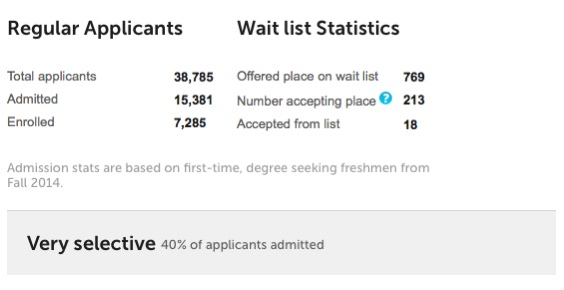
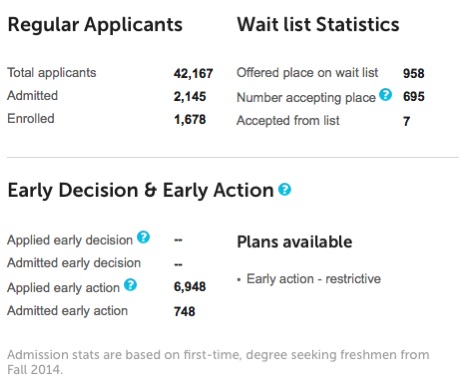
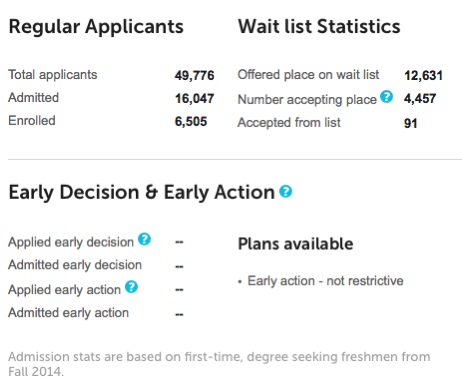
My advice: skip the wait list. Why? Getting off the wait list is like playing the lottery. Here’s are three examples of wait list statistics taken from the College Board’s website:

University of Texas

wait list

Stanford University

wait list

University of Michigan

wait list


(Note: To see any college wait list statistics, click here, type the college name, and select “applying” for the specific college)

As you can see, the odds are NOT in your student’s favor. And for highly selective colleges like Notre Dame and Dartmouth, the number is zero. Students who place all their cards on the table for their wait list schools are often disappointed. They reject offers of admission from perfectly good colleges hoping against hope that they will be taken off the wait list.

Instead of playing the wait list odds, take a second look at your second choice colleges. Read my list of 5 Good Reasons to take a look at your 2nd Choice College.

Colleges who offer admission want your student. They see potential and have offered them a spot in their freshman class. And if a college backs that up with an excellent financial aid package, all the more reason to reconsider your options.

Why do colleges use the wait list?

Lynn O’Shaughnessy on The College Solution blog, explains the college’s rationale when using wait lists:

Schools use their wait lists as a way to manage their admission yield. They’d rather put more students on a wait list and pluck teens off as needed than accept more students and then see too many of these teenagers spurn their admission invitation.

Schools want to be in control of saying, “No.” And when they say no to more students, they look more selective which appeals to families looking for elite schools.  And U.S. News & World Report’s also rewards schools that reject more applicants.

One major reason why highly ranked schools are placing more students on wait lists because admission administrators are stressing out that ambitious applicants are applying to a very large number of elite schools and they can’t get a handle on which teens would accept an invitation to their school.

With help from the Common Application that makes it easy to apply to many schools, some high-achieving, affluent students are treating college admission to elite schools like a high-stakes lottery. The application mania also explains why prestigious private schools are accepting more early-decision candidates whom they can lock up early.

Using a wait list is also a way to reject students without completely demoralizing them. It can be a helpful tool, for instance, to turn away students of alumni, who are not desirable candidates. Some students see an invitation to a wait list as something to even brag about. I’m not joking.

The wait list also allows some schools to generate more revenue by not offering financial aid to anyone rescued from their lists.

Don’t fall prey to these tactics. Encourage your student to consider the colleges who have offered admission. In the long run, it will probably be the best decision you ever make.

Mom-Approved Tips: What Frustrates Parents Most About College Prep?


college prep

What frustrates parents most about college prep? I hear the frustration in parents’ voices every day about the overwhelming amount of knowledge a parent and student need to navigate the college maze. I call it a maze because that’s exactly how it feels. All throughout the process, parents feel lost, confused, off-track and often bewildered.

Not understanding your part in the process

It’s difficult for parents to know how involved you should be in the college prep process. It’s a balancing act between helping and hurting. Where do you pitch in? Should you teen handle everything alone? When do you cross the line?

In today’s world of highly involved parents, you need some help to define your boundaries and give your student the slack he needs to become independent:

Top 10 Dos and Don’ts of Parenting a College-Bound Teen

Motivating your student

I had an unmotivated student. It’s not that he wasn’t capable of achieving academic success; it was just that he didn’t have the motivation or the desire to do his best. He never soared in high school, or in the first semester of college, but he did reach his academic potential, finally.

It was hard having a child who didn’t grasp his full potential, no matter how much I told him he was capable of straight A’s. It just didn’t matter to him. Passing with average grades was good enough for him. Those grades, however, contributed to some difficult life choices and some hard lessons along the way. In the end, there were four tips that finally motivated him academically:

4 Tips to Motivate an Unmotivated Student

Finding a way to pay for the high costs

If you have a college-bound teen you’re well aware of the cost of college–it’s high. In a recent story in Business Week, one graduate confessed she had given up on her student loan debt of $186,000. She is not alone. With the nation struggling under a $1 trillion student debt crisis, stories like hers are nothing uncommon. For the first time ever, the national student loan default rate exceeds the credit card delinquency rate, and so long as student loans remain one of the few types of debt that can’t be discharged in bankruptcy, chances are the situation won’t improve any time soon.

As her parent, it’s up to you to make sure she doesn’t fall prey to debt that she cannot repay after graduation. Before she ever accepts an offer of admission, you need to talk to her about financing college. Following are a few tips to help broach that uncomfortable topic with your college-bound teen:

Talking to Your Kids About Financing College 

And you might also like to read:

10 Ways to Attend College for Free (or almost free)

Getting help and knowing who to ask

I was speaking with a parent the other night about advice her daughter received from an independent college counselor regarding standardized tests. The counselor told the student not to bother with either the SAT or ACT; they weren’t necessary. He made this statement before receiving a list of colleges and asking if she was applying to test optional schools! The parent questioned the validity of this advice, and rightly so.

With college admissions becoming ever more competitive, it may seem logical to consider working with an independent counselor. They can offer expertise and a personalized approach to the complex, time-consuming, and often stressful college prep, search and application process. But ask any group of parents and you will hear a variety of opinions. While some parents feel that engaging an independent counselor is an essential part of helping their student be a competitive applicant to his or her top choice schools, others question whether hiring someone adds value beyond what a student can already receive from parents and the high school.

Some parents choose to guide their student through the process and some choose to hire a professional. Neither is right nor wrong. The decision should be based on each family’s individual needs and resources.

Need some help trying to decide? Here’s an article I wrote for University Parent:

Should You Work With an Independent Counselor?

How to handle rejection

It was the best of times; it was the worst of times. The best of times—getting an offer of admission. The worst of times—getting a letter of rejection. Or is it really? Is there any way to spin the disappointment? Parents have dealt with their kids facing rejection throughout their lives, but there is no greater disappointment that losing what you feel is your dream—getting in to your dream college.

I’ve found some very wise words from some very wise experts over the last several weeks. When the emotions subside and your college-bound teen is ready to talk, show them these words. It could open their eyes to the truth about college rejection letters:

The Truth about College Rejection Letters

Before the Offers of Admission and Financial Aid Awards Arrive


offersCollege acceptances for regular admission will be posted and arriving soon. Just a little later, will come the financial aid award packages. Before you and your student have to make the final college choice and before the financial aid awards arrive, consider these four activities in preparation:

1. Revisit colleges that have offered admission

Early spring is the perfect time to revisit the colleges that have offered admission. If possible, attend an admitted student session, stay on campus overnight, or just revisit to help your student refresh his memory of the setting and the students. While most would advise that you not accept an offer without a visit, some might disagree. Personally, I believe that visiting campus will help cement the decision in your student’s mind.

2. Discuss money

If you haven’t already done so, discuss what you will contribute and what your student will contribute toward the cost of college. This is an important discussion because once the offers of admission arrive and the financial aid package, it’s conceivable that your student’s decision will be based purely on emotions and not take into consideration the financial aspect of the decision.

University Parent has two great articles that address this topic:  The Money Talk Part 1: Setting expectations with your student and The Money Talk Part 2: Put college funding into high gear!

3. Take a look at your 2nd, 3rd and 4th choice colleges

Before the offers (and rejections) arrive, take a look at your student’s 2nd, 3rd and 4th choice colleges. If necessary, revisit them. Re-examine why these colleges made the list and take a closer look at their offerings. This second look might move one of the colleges to the top of the list.

4. Understand the components of the award letter

Before you start receiving those financial aid offers, you should understand what’s in a typical award letter. Thankfully, there are tools available and information to help you look at these letters for what they are: the college’s pitch for your student to accept their offer of admission. You are in control of this process and you hold the cards. It’s your decision to accept or reject their offer based on the amount of aid they are willing to give your student. Money, in this situation, is everything.