
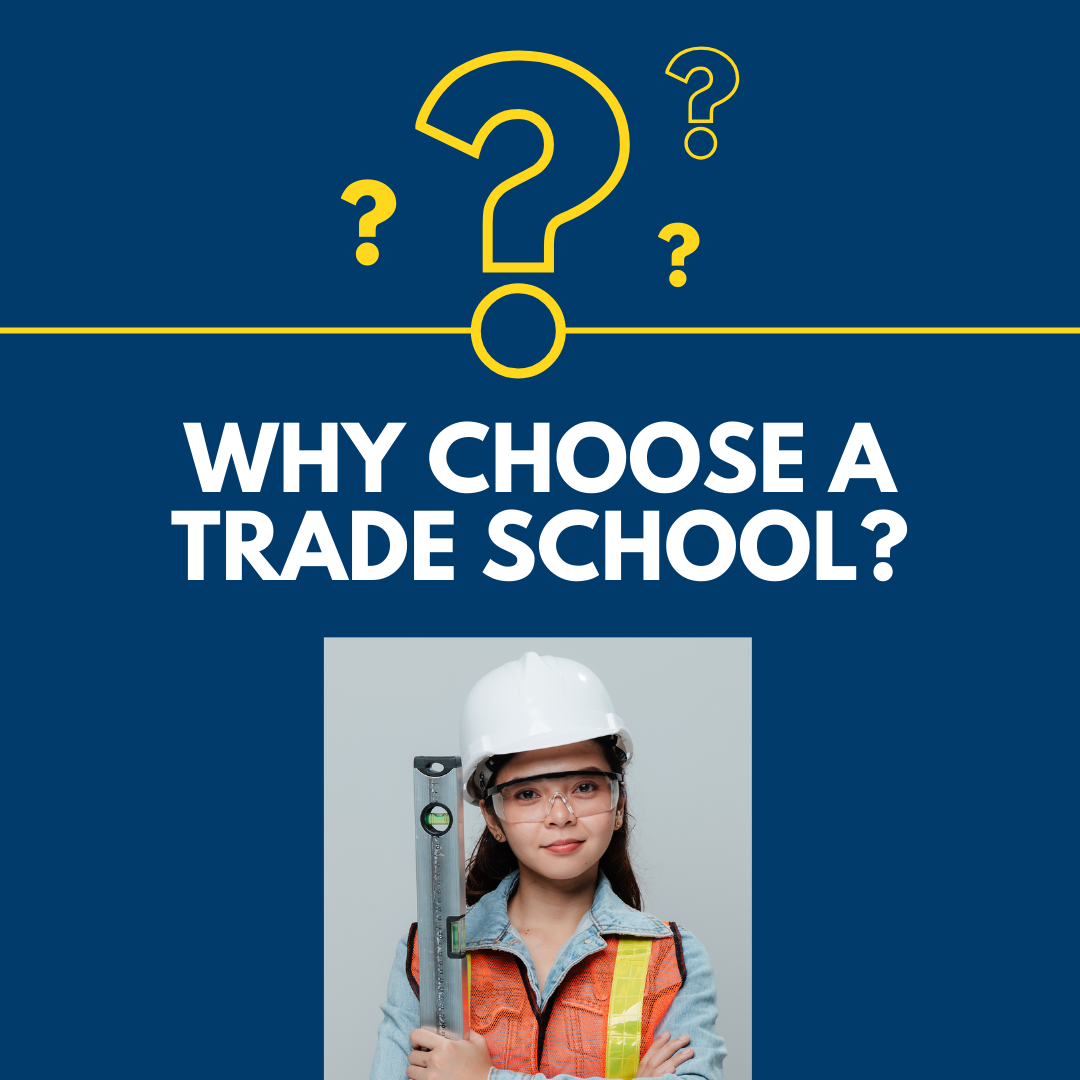
Many parents (and students) still assume that a 4-year college is the default “successful” path. But trade (or vocational) schools offer real advantages that, depending on your child’s interests and goals, can lead to well-paying, stable, and fulfilling careers.
Why trade school deserves serious consideration
- Shorter training, faster entry into the workforce. A typical trade-school program lasts 6 months to 2 years, compared with 4 years (or more) for a bachelor’s degree.
- Lower cost, less debt. Trade school tuition tends to be much lower than a full four-year degree, meaning your child can start working with little to no student-loan debt.
- Hands-on, career-focused training. Rather than four years of general education + specialization, trade programs emphasize practical skills that directly apply to a job.
- Strong demand and growing acceptance. Many trades continue to have high demand for qualified workers. As labor markets shift and tuition costs climb, more families are recognizing trades as legitimate, respectable career paths.
In short, trade school can offer a more direct, affordable, and efficient route into a stable career, especially for students who prefer hands-on work, want to avoid heavy debt, or want to start earning sooner.
What to keep in mind — trade school isn’t “one size fits all”
That said, trade school isn’t automatically a better choice for everyone. It helps to be realistic and thoughtful before committing:
- Limited breadth and flexibility. Because trade programs focus narrowly on a specific skill or career (e.g., plumbing, HVAC, welding, medical assisting), switching fields later may require retraining or additional education.
- Local job market matters. The demand for certain trades and resulting job availability varies by region. What’s in high demand in one city may be saturated in another. It’s worth checking local labor statistics before choosing a trade.
- Smaller “college-experience.” Trade schools often don’t offer the same social, extracurricular, or broad-educational experiences as 4-year colleges, fewer clubs, fewer liberal arts classes, and possibly less exposure to diverse academic fields.
- Fewer financial-aid options. While trade school is cheaper overall, there might be fewer scholarships or grants available compared to traditional colleges, so making sure the program is accredited and affordable matters.
Questions you (as a parent) should help your child explore
Before committing to a trade school (or a particular program), talking through a few key questions can help clarify whether it’s a good fit:
- What are their strengths and interests? Are they naturally hands-on, good with tools or machines, or enjoy practical problem-solving or do they thrive on abstract thinking, research, or wide-ranging academic subjects?
- What is the job demand for the chosen trade locally and long term? Are there ongoing needs for that skill in your area, or will your child need to relocate?
- What are the real costs: tuition, supplies, tools, licensure, commuting, etc.? And could they do an apprenticeship or paid internship that offsets costs?
- Does the program provide credentials employers recognize (certificates, licenses, apprenticeships)? Is the school accredited, and does it offer support (career services, placement help)?
- What are their “fallback” and long-term growth options? Could they return to school later if desired? Could their trade lead to advancement, specialization, or even self-employment (e.g. contracting)?
How parents can support — even if you had a traditional college mindset
As a parent, your guidance and support can make a big difference, especially if you grew up thinking “college = success.” Here’s how you can help:
- Keep an open mind. Acknowledge trade school as a valid, respectable path. Resist equating “prestige” with “true success.”
- Research together. Visit trade-school programs, talk with instructors, meet working tradespeople, check job-market data, and consider alternatives like apprenticeships or community-college certificates.
- Encourage realistic planning. Help your child think through cost, potential earnings, and what life will look like right after graduation, as well as 5–10 years down the road.
- Support their strengths and preferences. If your child enjoys hands-on learning, building things, and working with their hands, encourage that. If they value academic exploration, maybe consider a hybrid route (e.g. trade now, college later or part-time).
- Stay connected and flexible. Career paths are rarely linear. If they choose trade school now, that doesn’t close the door on more education later, and vice versa.
Conclusion: Success comes in many forms
Choosing post-high-school education isn’t about “college or bust.” It’s about finding the right path for your child’s strengths, interests, values, and goals. Trade school is a legit, often smart option, especially for kids who are hands-on, ready to enter the workforce sooner, or don’t want decades of loan debt.
As a parent, your role isn’t to dictate but to guide, question, explore, and support. By doing that, you help your child build a future that fits who they are, not who society says they should be.